
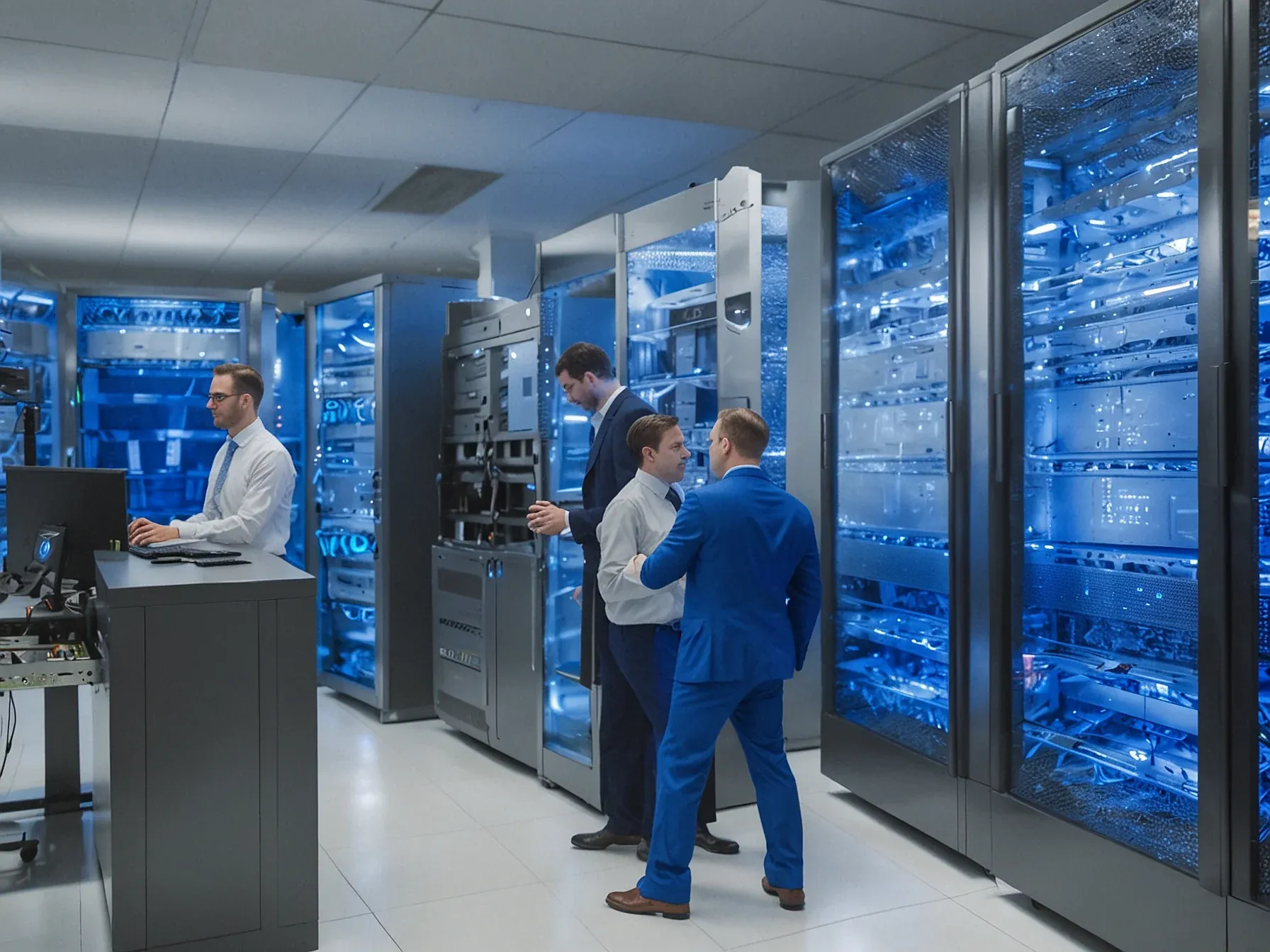
Editorial illustration for AI's Quiet Revolution: Practical Breakthroughs Emerging Beyond the Spotlight
AI's Hidden Frontier: Practical Breakthroughs Reshaping Tech
Beyond the Hype: AI's Real-World Progress in Fall 2025
The keynote stages are dark. Over in engineering, the lights are still on. This fall's fundamental shift isn't about a new model.
It’s the sound of a company, somewhere, finally getting an old one to work—day after grueling day. The work is brutally unglamorous. It is also the only work that matters now.
While the headlines might focus on the latest model releases and benchmark wars, they’re far from the most transformative developments on the ground. The real change is playing out in the trenches — where data scientists, data + AI engineers, and AI/ML teams are activating these complex systems and technologies for production. And unsurprisingly, the push toward production AI—and its subsequent headwinds in Here are the ten trends defining this evolution, and what they mean heading into the final quarter of 2025.
“Data + AI leaders” are on the rise If you’ve been on LinkedIn at all recently, you might have noticed a suspicious rise in the number of data + AI titles in your newsfeed—even amongst your own team members. No, there wasn’t a restructuring you didn’t know about. While this is largely a voluntary change among those traditionally categorized as data or AI/ML professionals, this shift in titles reflects a reality on the ground that Monte Carlo has been discussing for almost a year now—data and AI are no longer two separate disciplines.
From the resources and skills they require to the problems they solve, data and AI are two sides of a coin.
That flood of new "Data + AI" titles on LinkedIn is a direct response to friction. Professionals are rebranding because their Tuesday stand-up now pivots on a single question: why did the chatbot give bizarre answers overnight? The answer, always, is in the data.
One fails without the other. So the distinction for the next few months will be stark. It’s the line between a company that installed an AI feature and one that built an operational system.
The flashy demo era is over. Welcome to the age of maintenance.
Related Reading
 Research & Benchmarks
 Microsoft AI Chief: "If It Isn't Safe We Shouldn't Build It
 Research & Benchmarks
 Google's FACTS benchmark shows 70% factuality ceiling across four tests
 Research & Benchmarks
 Nvidia's DLSS 4.5 beta adds 6x Multi Frame Generation for RTX 50 GPUs
 From Archives
 India's unique AI edge lies in development-to-deployment synergy, expert says
 From Archives
 NVIDIA Blackwell Tops New AI Benchmark for Performance and Efficiency
Common Questions Answered
How are AI practitioners moving beyond media hype and creating real-world value?
AI practitioners are focusing on practical implementation by building artificial intelligence systems that deliver tangible results rather than chasing viral demos or headline-grabbing moments. They are working in operational spaces to methodically integrate AI technologies into production environments, prioritizing actual problem-solving over theoretical potential.
What distinguishes the current AI evolution from previous technology trends?
The current AI evolution is characterized by a shift from spectacle and benchmarking to serious, unglamorous work of creating functional systems that generate real business value. This approach emphasizes production-ready AI solutions developed by data scientists, engineers, and AI/ML teams who are focused on practical transformation rather than theoretical capabilities.
Why are the most significant AI developments happening behind the scenes?
The most significant AI developments are occurring quietly because serious practitioners are concentrating on methodical integration of complex technologies into operational environments. These behind-the-scenes efforts involve transforming advanced AI systems into practical solutions that can be reliably deployed across different business contexts, moving beyond the initial excitement of new model releases.
Further Reading
- AI Progress in 2025: What's Happened and What's Next - Digital Bricks
- Top 10 Real-World AI Applications You Should Know in 2025 - ICert Global
- Google's year in review: 8 areas with research breakthroughs in 2025 - Google Blog
- AI in 2025: AI Milestones in 2025 and what to expect in 2026 - OpenFabric
- Predictions for 2025: How AI's real world value will come to life - LinkedIn Pulse
