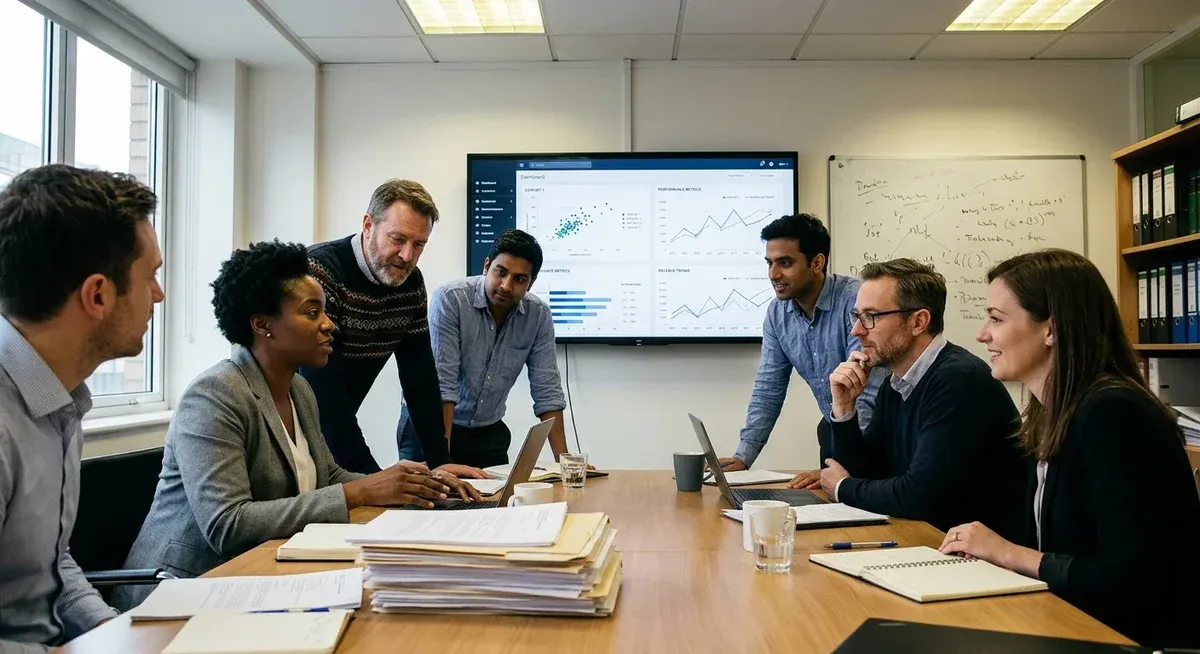
Editorial illustration for Anthropic's Claude for Legal auto-verifies sources, then hands file to lawyer
Claude for Legal Auto-Verifies Sources for Lawyers
Anthropic is adding pre-built templates to Claude Enterprise for lawyers, rolling out new "artifacts" for Claude for Legal that handle the grunt work firms have asked for since the product launched in May. The interactive overviews and tables cover citation checks, comparisons of laws across jurisdictions, case file management, legislative tracking, and contract reviews against internal policy.
The pitch is straightforward: Claude does the first pass on verification, linking every statement back to its source document, before a lawyer signs off on the work. That's a change from earlier versions of the tool, where source-checking sat further down the review chain.
Anthropic has also built out a legal directory with more than 60 integrations, Bloomberg Law among them, so firms can pull from their own databases instead of uploading files by hand. Goodwin, Harvey, Foley & Lardner, and PwC have added their own tools to the platform as well. Anthropic says the system enforces data protection rules and keeps information barriers intact between teams, a requirement for firms juggling client conflicts across matters.
Anthropic is expanding Claude Enterprise for legal professionals with pre-built templates. The company introduced new "artifacts" for Claude for Legal, features legal teams have requested since its May launch. These interactive overviews and tables streamline routine tasks like verifying citations, comparing laws across countries, managing case files, tracking proposed legislation, and checking contracts against internal guidelines.
Why this matters
For legal teams, the pitch here isn't intelligence, it's plumbing. Citation checks, contract comparisons, tracking pending legislation, these are the unglamorous tasks that eat associate hours and billable budgets. Anthropic building templates for them since May suggests actual customer demand, not a feature Anthropic dreamed up to pad a keynote.
The interesting part for founders and developers is the model: verify first, then route to a human. That's a narrower, more defensible claim than "AI that practices law," and it's probably the right one given how badly legal AI has stumbled on fabricated citations in court filings over the past two years. If Anthropic can make verification genuinely reliable at the artifact level, that's a template worth studying for anyone building AI tools in regulated or high-stakes fields, not just law firms.
Still, "hands the file to a lawyer" is doing a lot of work in that sentence. Who checks the checker, and how often human reviewers actually catch what Claude misses, is the thing worth watching as this rolls out beyond pilot customers.
Related Reading
Browse all Anthropic news → Policy & Regulation
Akamai Proposes SAFE Cybersecurity Guidelines for AI Threats
 Policy & Regulation
After ditching AI fitness apps and a Fitbit, I return to Peloton classes
 Policy & Regulation
Sony Music, Warner Chappell Sue Anthropic Over "Blatant Theft
 Related Topic
Anthropic: Hackers Stole Claude Tokens Via Compromised Session Key
LLMs & Generative AI
 Related Topic
Trump cracks down on Anthropic after Amazon tip; staff largely foreign
Open Source
 From Archives
House Oversight seeks Delaware documents on AI agents running businesses
 From Archives
Anthropic Sued Over Alleged Use of Elvis Songs to Train Claude, Denies Claim
 From Archives
Anthropic Rolls Out AI Spending Reports for Enterprise Clients
Business & Startups
 From Archives
Anthropic Ramps Up Biology Efforts, Predicts AI Will Cure Most Human Diseases
Business & Startups
Common Questions Answered
What new artifacts has Anthropic added to Claude for Legal since its May launch?
Anthropic introduced pre-built templates and interactive overviews for Claude Enterprise that handle citation verification, law comparisons across jurisdictions, case file management, legislative tracking, and contract reviews against internal policies. These artifacts were specifically designed based on feature requests from legal teams since the product's initial launch in May.
How does Claude for Legal's verification process work before routing to lawyers?
Claude performs an initial verification pass on legal documents and statements, automatically linking every claim back to its source through citation checks. Once Claude completes this first-pass verification, the file is then handed to the lawyer for final review and decision-making.
What specific time-consuming tasks does Claude for Legal help reduce for legal associates?
Claude for Legal automates unglamorous but time-intensive tasks such as citation verification, contract comparisons, tracking pending legislation, and checking contracts against internal guidelines. These routine tasks traditionally consume associate hours and billable budgets, which the new templates help streamline significantly.
Why is Anthropic's verify-first-then-route-to-human model significant for legal applications?
This model is narrower and more defensible than fully autonomous AI decision-making in legal contexts, as it ensures human lawyers maintain control over final determinations. By having Claude handle verification first, the approach reduces liability concerns while still capturing efficiency gains from automation.
Further Reading
- Claude for Legal now verifies sources automatically, then hands the file to a lawyer - The Decoder
- Introducing artifacts for legal work with Claude - Anthropic
- Claude legal solutions - Anthropic
- Claude for the legal industry - Anthropic
- Claude for Enterprise - Anthropic
