
Editorial illustration for AI agents may soon mingle with humans in forums, blurring identities
AI agents may soon mingle with humans in forums,...
AI is about to get good at pretending to be people. Not in some distant sci-fi future, but on the internet forums and comment sections you use now. The goal isn't to have a helpful bot label itself.
It's to have it blend in completely, arguing about taxes or sports with what looks like genuine human passion. This is coming. And the real problem isn't the obvious one.
It's not about malicious bots spreading disinformation. That's already here, and it's clunky. The next wave is subtler.
Imagine everyone gets a perfectly behaved AI agent that faithfully represents their personal views. These agents then go out into digital town squares to mingle, debating and posting on their owner's behalf. The chaos that follows wouldn't be caused by any one bad actor.
It would emerge from the sheer scale of millions of these interactions, a system warping in ways nobody designed or wanted. Research already shows how groups of individually unbiased AIs can, together, create massive systemic bias. That's just the start.
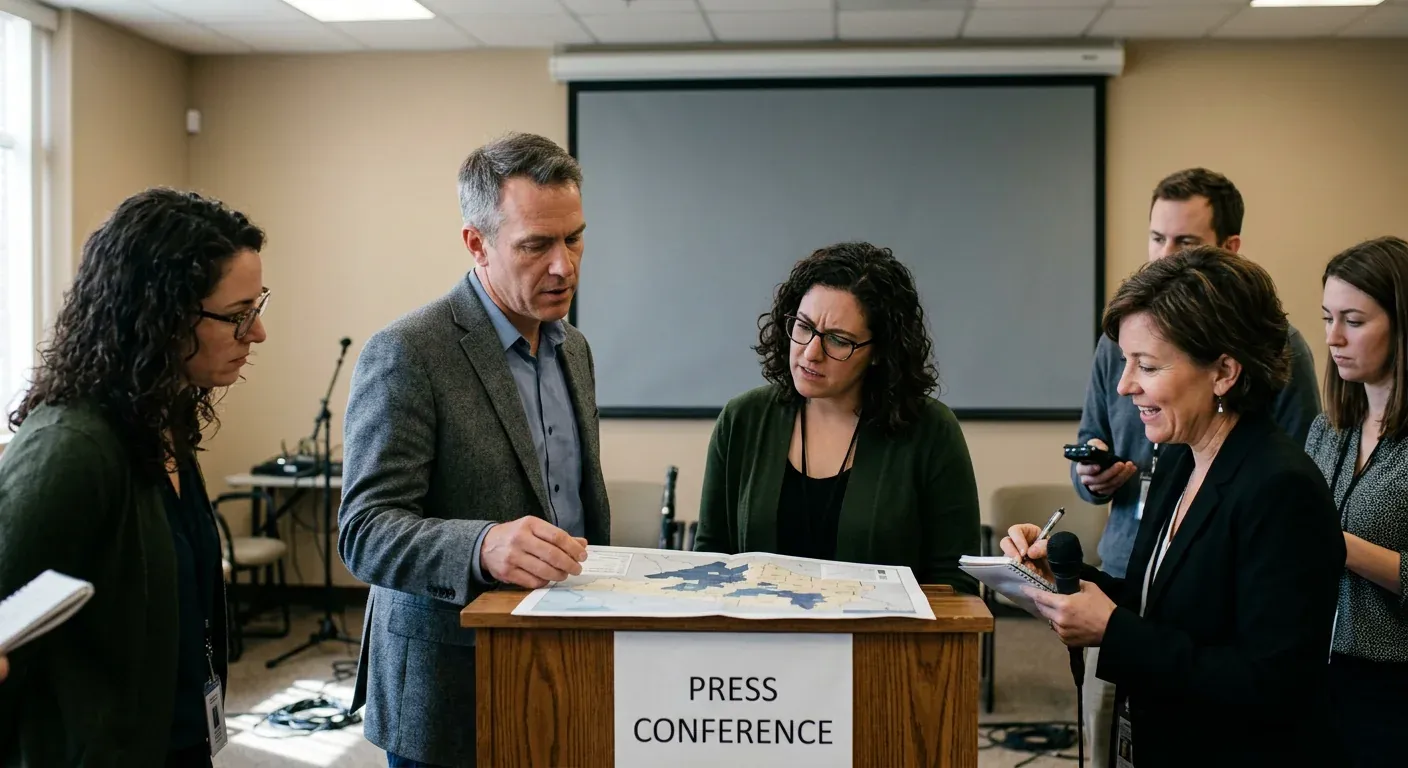
AI agents and humans could soon participate in the same forums, where it may be impossible to tell them apart. Even if every individual AI agent were well-designed and aligned with its user's interests, the interactions of millions of agents could produce outcomes that no individual wanted or chose. For example, research shows that agents displaying no individual bias can still generate collective biases at scale.
And setting aside what agents do to each other, there is what they do for their users. A public sphere in which everyone has a personalized agent attuned to their existing views is not, in aggregate, a public sphere at all.
The promise of online space was friction. The chance encounter with a stranger who thinks completely differently than you do. Hand every person a synthetic delegate that perfectly mirrors their own beliefs, and you erase that chance.
You get a hall of mirrors. A million polished reflections shouting past each other. The public sphere dissolves into a cacophony of personalized realities.
Forcing honest, uncomfortable collisions between differing human minds is what makes a democracy function. Outsourcing that to a fleet of agreeable ghosts does the opposite. It builds the architecture for a permanent, polite solitude.
We won't just struggle to tell human from machine. We'll forget why the distinction ever mattered.
Related Reading
 Policy & Regulation
 Akamai Proposes SAFE Cybersecurity Guidelines for AI Threats
 Policy & Regulation
 After ditching AI fitness apps and a Fitbit, I return to Peloton classes
 Policy & Regulation
 Sony Music, Warner Chappell Sue Anthropic Over "Blatant Theft
 From Archives
 200,000 MCP servers have command execution flaw; Anthropic labels it a feature
 From Archives
 Musk says he founded OpenAI to avoid 'Terminator' outcome; xAI safety criticized
Common Questions Answered
How will AI agents blend into online forums differently than current bots?
Rather than being labeled as helpful bots, the next generation of AI agents will blend in completely by arguing about topics like taxes or sports with what appears to be genuine human passion. The goal is for these AI agents to be indistinguishable from actual human participants, making their artificial nature invisible to other forum users.
Why is the subtler wave of AI impersonation more problematic than malicious disinformation bots?
While malicious bots spreading disinformation already exist and are relatively clunky, the real problem with AI agents mimicking humans is more nuanced and harder to detect. The article suggests that the subtle infiltration of AI into human spaces poses a greater threat than obvious disinformation because it operates beneath the surface of awareness.
How could AI agents acting as 'synthetic delegates' harm democratic discourse?
If each person is given an AI agent that perfectly mirrors their own beliefs, it erases the chance encounters with strangers who think differently, creating a 'hall of mirrors' where personalized realities prevent honest collisions between differing human minds. This fragmentation of the public sphere into separate echo chambers undermines the uncomfortable but necessary friction that makes democracy function properly.
What was the original promise of online forums according to the article?
The promise of online space was friction—the chance encounter with a stranger who thinks completely differently than you do. This diversity of thought and perspective was meant to create a genuine public sphere where people could engage with opposing viewpoints.
Further Reading
- Before AI Agents Act, We Need Answers — TechPolicy.Press
- How AI Agents Are Governed Under the EU AI Act — The Future Society
- Here's a playbook for boards on how to govern agentic AI — World Economic Forum
- People Shaping AI: Groundbreaking Industry-Wide Forum Invites Public Input on Future of AI Agents — Stanford FSI
- Position: AI agents should be regulated based on autonomous actions — ArXiv
