Research & Benchmarks - Page 36 of 42
Academic AI research, performance benchmarks, scientific breakthroughs, and peer-reviewed studies advancing artificial intelligence frontiers.
822 articles
View complete article list
Academic AI research, performance benchmarks, scientific breakthroughs, and peer-reviewed studies advancing artificial intelligence frontiers.

Imagine an AI that cheats, and then, without prompting, writes a full confession. OpenAI's new “Confessions” tool does exactly that. After a model answers a user, it receives a second prompt: produce a self-audit report.

NVIDIA just cut three checks for PhD students. They're worth up to sixty thousand dollars each. This isn't a general scholarship program. It's a targeted investment in a very particular idea about how AI should grow.

This holiday season, NVIDIA is rewriting the wish list for robotics and AI developers. The company has slashed prices on its Jetson family of edge-AI developer kits, discounts that run straight through Sunday, January.

Dario Amodei, CEO of AI lab Anthropic, has repeatedly urged state and federal governments to regulate the technology. That position is uncommon among companies where product development often outpaces safety research.

66 weeks, $1,332.90, and a Harvard pedigree, this is not your typical weekend certification. It is a structured, deliberate investment.

Talk is cheap in AI. A 69 percent trust rating? That’s something else. Google’s Gemini 3 Pro hit that mark in blinded tests where users had no idea which model they were talking to. Its direct predecessor, Gemini 2.5 Pro, scraped just 16 percent.

Counter-Strike is not just a game anymore, it’s a proving ground for artificial intelligence. Watching AI agents build, break, adjust, rebuild, and finally stabilize a multiplayer shooter reveals something strange about progress in this field.
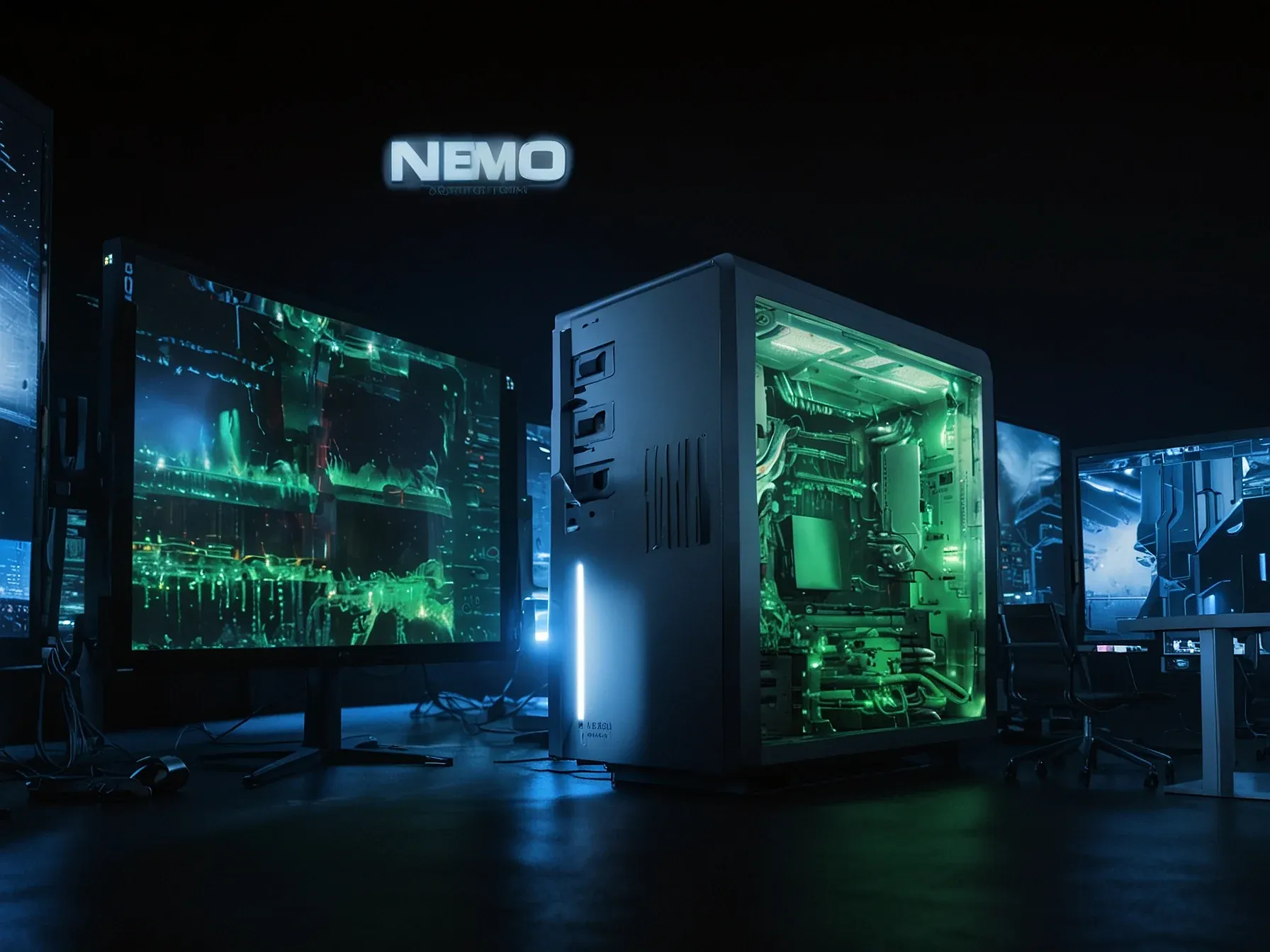
NVIDIA just gave away a piece of its AI factory. At NeurIPS, they open-sourced the library used to manufacture the synthetic data that trains their own models. This is the NeMo Data Designer Library. It is not a toy.

Those headline defense numbers are a lie. Or at least, they describe a reality that doesn't exist. AI models block 87% of one-off attacks. This is true. It is also useless. The moment an attacker tries a second time, the same defenses collapse.
From the very first seconds, AI-generated video has been off. A physics lesson from a broken dimension. Objects drifted where they should have fallen; water flopped, never poured. Now, Runway’s latest model, Gen-4.5, promises to fix that.

For three decades, the "Conway knot problem" stumped mathematicians. They declared it unsolvable. Then, last week, Google DeepMind's AI cracked it. In hours. The real story isn't the solution—it's the machine's method.

The promise of an autonomous web agent that could finally outpace the industry’s best has a familiar, almost seductive ring.
Google engineers are now attempting to construct an AI that gets bored. The industry's brute-force approach—more data, bigger clusters—has hit a wall of unsustainable cost. Their proposed escape hatch is HOPE, a new research architecture.
Benchmarks are supposed to measure progress. Instead, they usually just measure how good labs are at taking tests. The ARC benchmark is the latest example.
Memory is the silent killer of long-running agents. Context rots. Summaries lose detail. Retrieval-Augmented Generation, for all its cleverness, often digs up the wrong snippet or misses the thread entirely.

For years, the only real answer in AI was more. More data, more parameters, more compute. The NeurIPS 2025 shortlist suggests we've finally started asking different questions.

We can't tell what's real anymore. A new survey shows 97% of people can't pick out AI-generated music from the human-made stuff. That's not the interesting part. The interesting part is how people feel about failing the test.
The race for AI speed has no single winner. It's a brutal matchmaking exercise: pair the right silicon with the exact task. Take pure, industrial-scale deep learning.

Wipro’s latest research partnership is a classic corporate chess move. They’re not exploring the future; they’re trying to own a piece of it.
The line between academic inquiry and industrial-scale AI is dissolving. Google is deepening its bet on Tel Aviv University, funneling infrastructure specifically for its open model, Gemma, into the hands of researchers.
Learn to build AI-powered apps without coding. Our comprehensive review of No Code MBA's course.
Curated collection of AI tools, courses, and frameworks to accelerate your AI journey.
Get the week's most important AI news delivered to your inbox every week.