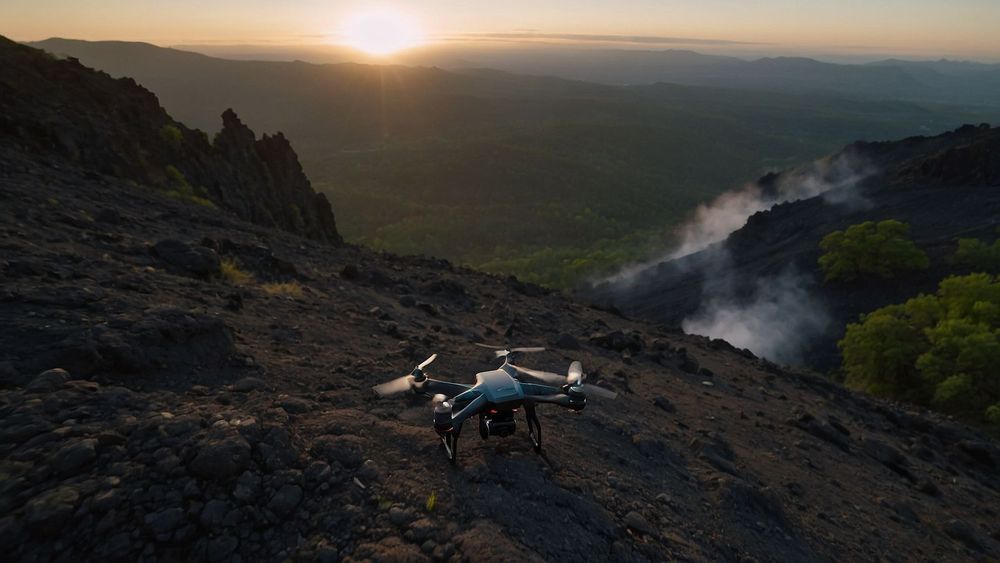
Editorial illustration for Yandex Develops AI Tool to Track Volcanic Ash and Protect Local Communities
Yandex AI Tracks Volcanic Ash to Protect Communities
Volcanic ash is a logistics problem. It drifts for hundreds of miles, grounding aircraft, poisoning fields, and filling lungs. Tracking it has always been a slow, messy business of interpreting grainy satellite pictures. Yandex built a machine to do it faster.
Their new service uses AI to analyze satellite data and predict ash movement in real time. It is a deliberately unsexy tool for a deadly serious job. The company frames it as part of a broader engineering philosophy: apply technical skill to problems that actually affect people.
This approach extends to their global Yandex Cup competitions, which aim to find and fuel similar pragmatic innovation from other regions.
Another example is our AI-powered service for monitoring volcanic ash movement, designed to help protect communities and ecosystems. These projects reflect our passion for combining technological strength with a responsibility to improve human life. What message would you give to aspiring innovators and participants in Yandex competitions?
Dima Masyuk: Innovation is one of the most powerful forces shaping human progress. Those who pursue new technologies with passion and courage not only contribute to global improvement but also receive genuine gratitude from the millions who benefit from their work. It's one of the most meaningful ways to apply yourself in life.
How do you see Brazil's role in the global innovation landscape? Dima Masyuk: Brazil has a remarkable combination of creativity and determination. For years, many of us have been inspired by Brazilian companies -- from gaming studios like Wildfire to fintech innovators like Nubank.
That mix of imagination and practicality is precisely what we hope to support and reflect through the Yandex Cup. We look forward to welcoming more Brazilian participants into this global community of problem-solvers. What role do you see India playing in global AI?
Dima Masyuk: India is known worldwide for exceptional engineering talent -- and leadership. Today, talent is the rarest and most essential resource in AI. India plays a significant role in driving this global revolution.
While global AI players make remarkable advances, I believe local engineers and companies can create solutions uniquely relevant to their own cultures, economies, and communities. I strongly encourage Indian developers and students to build something significant for local users -- while also contributing to the global AI movement.
The ash tracker is a specific answer to a specific threat. It works because the goal is narrow. Masyuk's comments suggest Yandex sees this focus as a replicable model.
Their pitch to potential competitors in Brazil and India is not about joining a vague revolution. It is about solving local problems with global tools, and in the process, becoming the kind of engineer whose work earns thanks, not just applause.
Related Reading
 Business & Startups
 Nordic pilot adds Gemini for Education, NotebookLM to boost AI literacy
 Business & Startups
 Kling launches Video O1, all-in-one model with MVL bridge using transformer
 Business & Startups
 DeepSeek Seeks More Capital Weeks After USD 7B Funding Round
 From Archives
 OpenAI to acquire Neptune to speed AI model training and decision-making
 From Archives
 AI-driven consulting startups now outpace Big Four, Business Insider reports
Common Questions Answered
How does Yandex's new AI tool help protect communities near volcanic regions?
The AI-powered service is designed to monitor volcanic ash movements with high precision, providing early warning systems for local communities living near active volcanic zones. By tracking ash dispersal patterns, the tool can help residents and authorities prepare and respond to potential environmental hazards more effectively.
What makes Yandex's volcanic ash tracking AI tool unique in environmental monitoring?
Yandex's AI tool represents an innovative approach to environmental safety by using artificial intelligence to track volcanic ash movements with unusual precision. The technology goes beyond traditional monitoring methods by offering real-time, detailed insights into ash dispersal that can help protect both human communities and local ecosystems.
According to Dima Masyuk, what is the broader significance of AI innovations like the volcanic ash tracking tool?
Dima Masyuk emphasizes that innovation is a powerful force for human progress, and technologies like the volcanic ash tracking tool demonstrate how AI can be applied to improve human life. The project reflects Yandex's commitment to developing technological solutions that not only showcase technical capabilities but also provide tangible benefits to communities.
Further Reading
- Yandex Utilizes Neural Networks to Address the Challenges of Volcanic Ash Monitoring — Yandex
- How neural networks help track and respond to volcanic ash clouds — Yandex Cloud
- Yandex Introduces Volcanic Ash Distribution Monitoring Service — VOI
- Full-Scale Operation of AI Volcanic Ash Detection System for Aviation Market Begins — Weathernews
