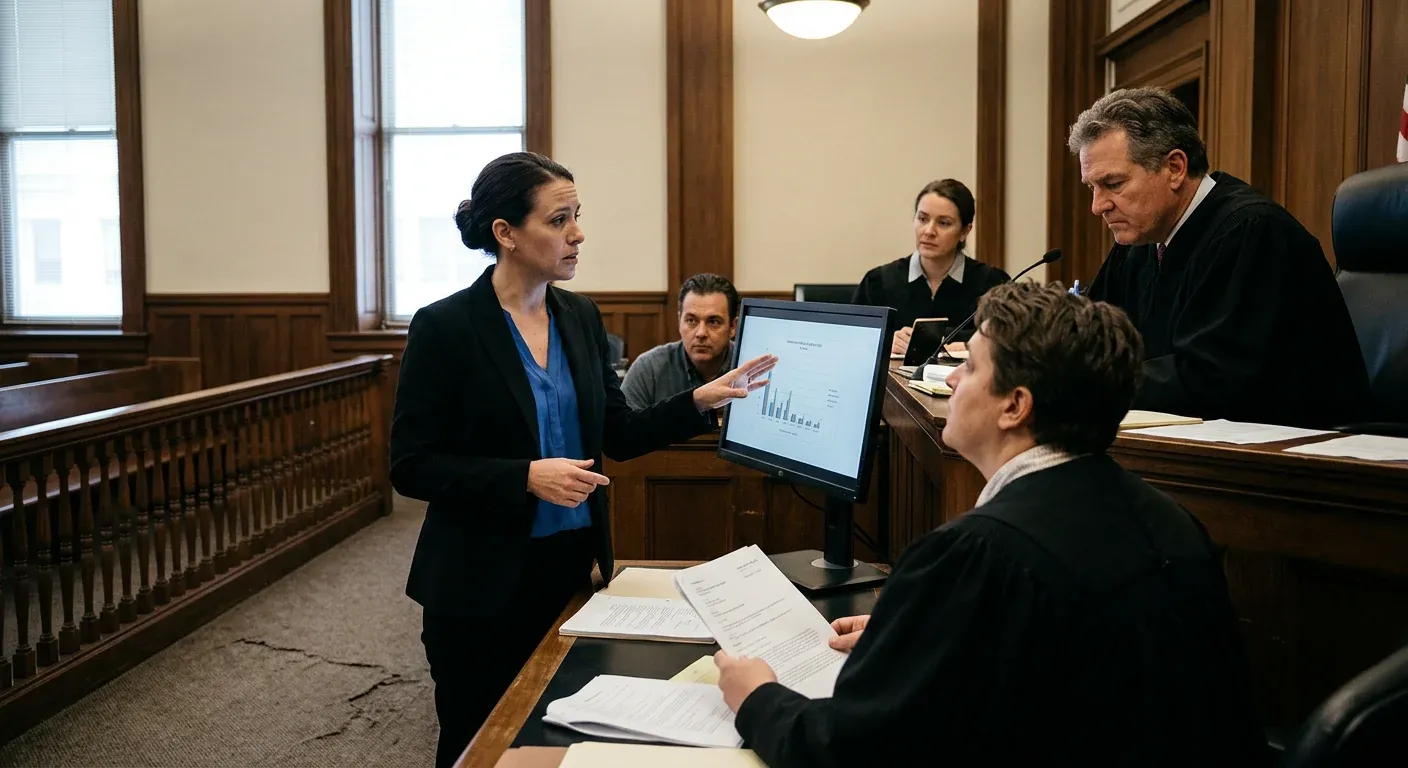
Editorial illustration for Trump Administration Backs OpenAI in Copyright Case
Trump DOJ Backs OpenAI in NYT Copyright Fight
Trump Administration Backs OpenAI in Copyright Case
The Justice Department filed a letter in federal court Tuesday backing OpenAI in its copyright fight with The New York Times, a case that's been grinding through the Southern District of New York since December 2023. The Times sued OpenAI and Microsoft that year, claiming the companies trained their AI models on millions of its articles without permission or payment. Now the government wants a say in how that question gets settled, and it's not on the newspaper's side.
The filing frames this as bigger than one lawsuit. Government lawyers argue the outcome will shape whether American AI companies can keep pace globally, and they've told the court their reasoning should apply not just to OpenAI and the Times but to every similar case working through the system, including suits brought by other publishers and authors. At the center of the dispute is "fair use," the legal doctrine that determines when copyrighted material can be used without a license. The administration's letter takes direct aim at how the Times has defined that term, calling its interpretation out of step with existing law.
On Tuesday, the federal government submitted a letter to the court stating that the United States has a “strong interest” in whether AI training on copyright works is considered “fair use,” because it connects to whether the country’s AI industry can “retain global leadership in artificial intelligence.”
Why this matters
The Justice Department weighing in on OpenAI's side changes the political weather around this case, but it doesn't settle the legal question. Courts have already split: the Meta ruling found no proven harm from training while warning that unauthorized use of copyrighted work could still be illegal under different facts, and Anthropic lost outright, on the hook for damages to authors. That inconsistency is the real story for anyone building on these models.
A government letter arguing "fair use" carries weight with a judge, but it's not a ruling, and it won't stop the next lawsuit from a publisher, musician, or author with better evidence of harm. For founders and researchers, the practical takeaway is that training-data provenance is now a legal exposure line item, not a footnote. Anthropic's payout proves damages are real money, not theoretical.
Watch how Judge Sidney Stein handles the OpenAI-Times case specifically, and whether other administrations or courts treat this letter as precedent or as one voice in a fight that's still wide open.
Related Reading
Browse all OpenAI news → Policy & Regulation
 Akamai Proposes SAFE Cybersecurity Guidelines for AI Threats
 Policy & Regulation
 After ditching AI fitness apps and a Fitbit, I return to Peloton classes
 Policy & Regulation
 Sony Music, Warner Chappell Sue Anthropic Over "Blatant Theft
 Related Topic
 OpenAI researcher quits, citing distrust over ad‑driven engagement metrics
LLMs & Generative AI
 Related Topic
 OpenAI launches GPT-Image 1.5 with precise editing for enterprise visuals
LLMs & Generative AI
 From Archives
 DOJ Backs Fair Use for AI Training in Copyright Case
 From Archives
 US Government Backs OpenAI in New York Times Copyright Case
 From Archives
 OpenAI Limits Astra's AI Reasoning Technique for Safety Monitoring
Open Source
 From Archives
 OpenAI Faces Dozens of Lawsuits Over Tumbler Ridge Shooting
Common Questions Answered
Why did the Trump Administration's Justice Department file a letter supporting OpenAI in the copyright case?
The Justice Department stated that the United States has a 'strong interest' in how courts rule on whether AI training on copyrighted works constitutes 'fair use,' because the outcome could affect whether the country's AI industry can maintain global leadership in artificial intelligence. The government's filing essentially argues that a ruling against OpenAI could harm American competitiveness in the AI sector.
What is The New York Times claiming in its lawsuit against OpenAI and Microsoft?
The Times alleges that OpenAI and Microsoft trained their AI models on millions of the newspaper's articles without permission or payment. The lawsuit, filed in December 2023 in the Southern District of New York, seeks compensation and legal remedies for this unauthorized use of copyrighted content.
How have other courts ruled in similar AI copyright cases?
Courts have issued conflicting rulings: a Meta ruling found no proven harm from training on copyrighted works but warned that unauthorized use could still be illegal under different circumstances, while Anthropic lost its case outright and was ordered to pay damages to authors. This inconsistency creates uncertainty for companies building AI models about what constitutes legal training practices.
Does the Justice Department's support for OpenAI guarantee a favorable court ruling?
No, the government's filing changes the political context around the case but does not settle the underlying legal question. The court must still determine whether OpenAI's use of copyrighted material qualifies as fair use under copyright law, and the Justice Department's position is just one factor the judge will consider.
Further Reading
- Trump administration backs OpenAI in newspapers' copyright case - Politico
- Trump admin backs OpenAI ‘fair use' argument in suit from New York Times - The Hill
- New York Times-led group asks court to sanction OpenAI in US copyright dispute - Reuters
- Judge allows 'New York Times' copyright case against OpenAI to proceed - NPR
- Judge allows newspaper copyright lawsuit against OpenAI to proceed - AP News
