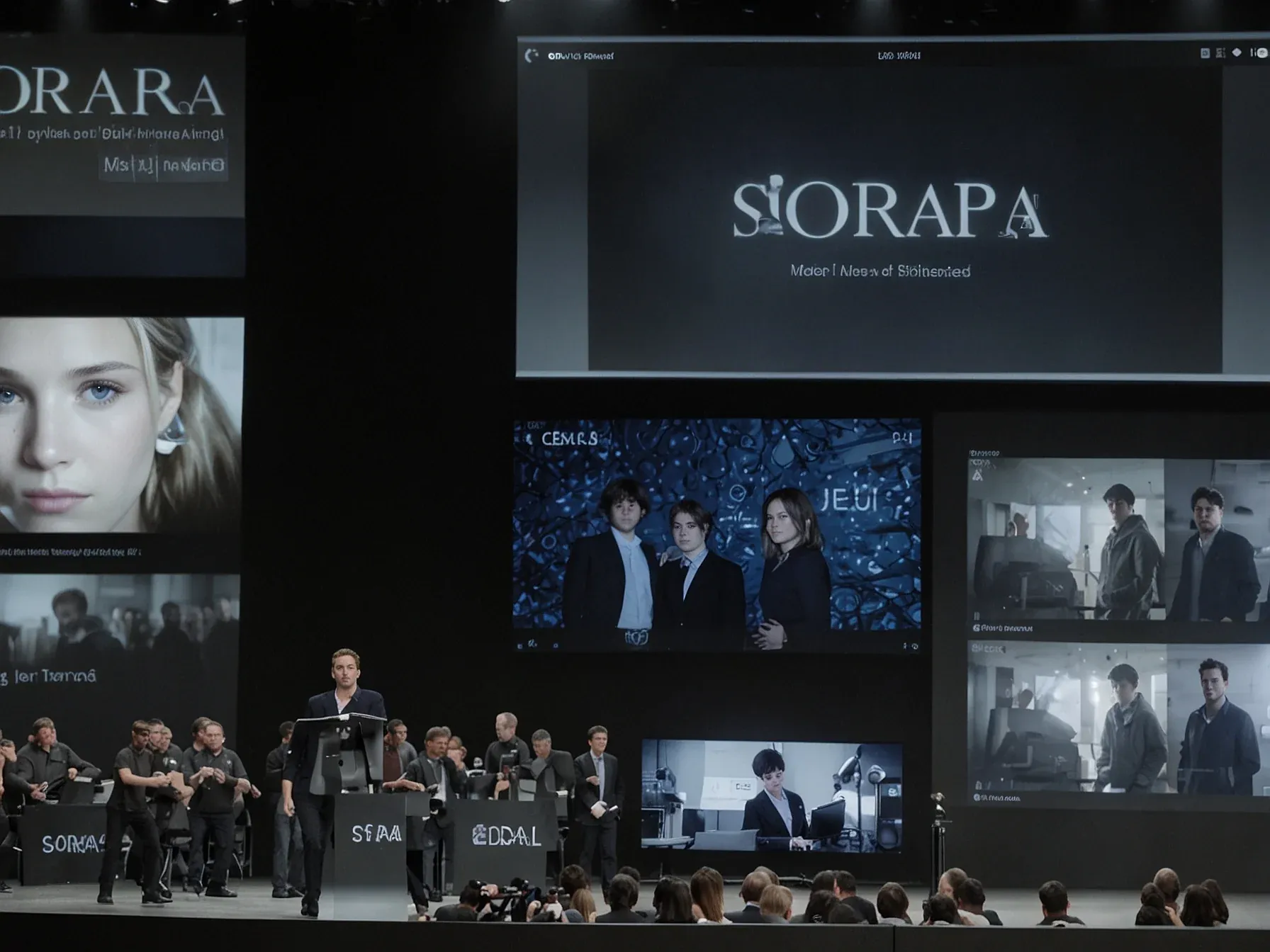
Editorial illustration for OpenAI's Sora Introduces Paid Tier, Reduces Free AI Video Limits
Sora AI Video Tool Launches Paid Tier, Cuts Free Limits
Sora adds paid option for extra AI videos, trimming free allowance
Sora, OpenAI's video generator, is no longer a free ride. The company just cut its daily free allowance and launched a paid option for anyone who wants more clips.
The move is obvious and inevitable. Generating video is computationally brutal, a fact the free tier was designed to obscure while Sora gathered users and hype. That phase is over. Now the bill comes due.
Peebles's admission that the economics are "completely unsustainable" is the only part of this story that qualifies as news. Everything else is logistics. The free limits were a temporary subsidy, a marketing cost. The new pricing, starting at $4 for an extra ten generations, is the real product emerging.
It's a standard tech lifecycle, accelerated. Attract users with a magical free toy, then gently guide the obsessed toward a price list. The numbers tell the tale: 100 free videos a day for Pro users wasn't a ceiling, it was a threshold.
Enough to get you hooked, but not enough to do real work. That was the point.
This isn't a shift in strategy. It is the strategy. The question was never if Sora would charge, but when, and for how much.
The answer is now, and the price scales directly with the computational intensity of your request. The era of pretending AI video is cheap is officially closed.
Further Reading
Related Reading
Browse all OpenAI news → AI Tools & Apps
 Claude gains shared context in Excel, PowerPoint; Microsoft adds Copilot Cowork
 AI Tools & Apps
 OpenAI Developer: AI Agent "Swarms" Waste Tokens, Create "Coordination Tax
 AI Tools & Apps
 LG's recent webOS update adds Microsoft Copilot app, now removable
 Related Topic
 OpenAI researcher quits, citing distrust over ad‑driven engagement metrics
LLMs & Generative AI
 Related Topic
 OpenAI launches GPT-Image 1.5 with precise editing for enterprise visuals
LLMs & Generative AI
 From Archives
 Canva launches AI-Powered Creative OS with Design Model for editable designs
 From Archives
 xAI launches Grokipedia, an AI-driven, real-time, bias-free encyclopedia
 From Archives
 OpenAI safeguard models outpace GPT-5-thinking and OSS versions in tests
LLMs & Generative AI
 From Archives
 AI Psychosis Highlights Mental Health Pros' Lack of ChatGPT Access
LLMs & Generative AI
Common Questions Answered
How many free AI video generations does OpenAI's Sora currently offer?
OpenAI's Sora currently provides 100 free video generations for Pro model users and 30 free generations for standard users. These limited free tiers reflect the platform's acknowledgment of the high computational costs associated with AI video generation.
Why is OpenAI introducing a paid tier for Sora?
OpenAI is introducing a paid tier because the current free model of AI video generation is economically unsustainable. Bill Peebles, who leads the Sora team, has explicitly stated that the platform's current economics cannot support the massive computational resources required for generating AI videos.
What does the new monetization strategy suggest about the future of AI video generation?
The new monetization strategy suggests that AI video generation is moving from an experimental phase to a more serious, commercially viable platform. OpenAI's approach indicates that platforms must balance user accessibility with the substantial computational costs of generating high-quality AI videos.
Further Reading
- OpenAI To Bring Paid Video Generations on Sora App — Republic World
- OpenAI Tells Users to Pay for Extra AI Video Generations on the Sora App — Gadgets360
- OpenAI Will Soon Make Users Pay For Extra Video Generation On Sora 2: All You Need To Know — Times Now
- Sora 2 pricing: A complete guide to OpenAI's new video model costs in 2025 — eesel.ai
