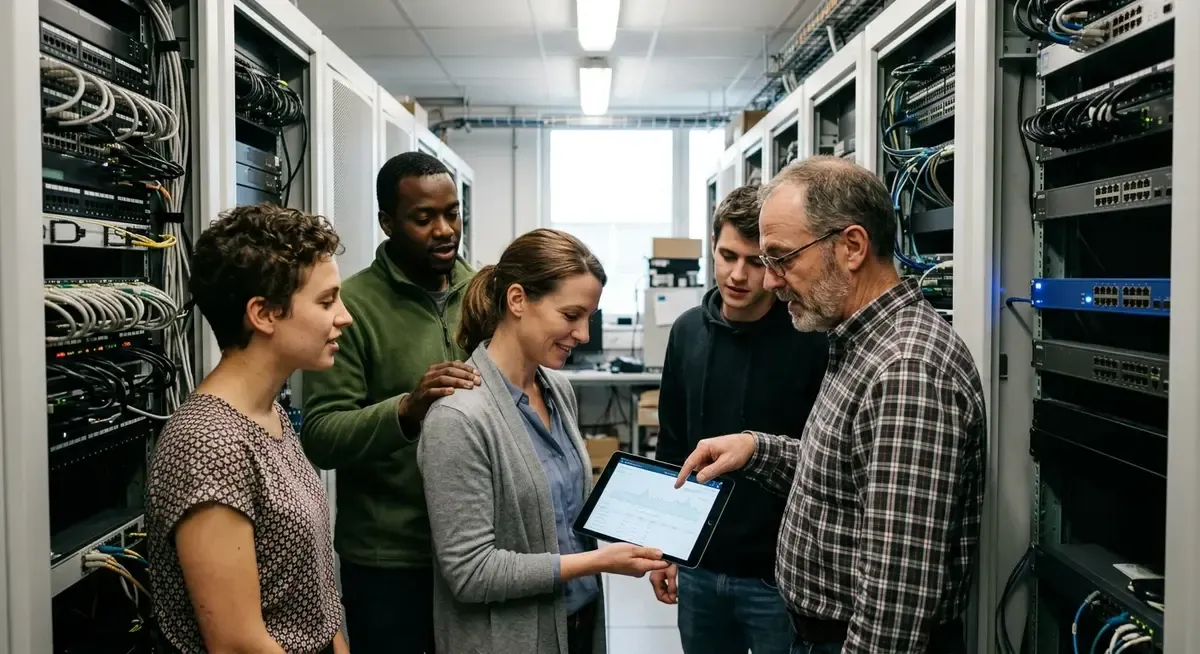
Editorial illustration for SAM Network Enables AI Agents to Self-Configure Nodes
SAM Network Enables AI Agents to Self-Configure Nodes
Google's GitHub account just published a project called SAM, and the name is the first thing worth clearing up. This isn't Segment Anything Model, the computer vision tool researchers know from 2023. This SAM stands for Sovereign Agent Mesh, an Apache-2.0 licensed networking layer built for a problem that's gotten messier as AI agents spread across infrastructure: one agent running on a cloud server, another on a Raspberry Pi, a third on someone's laptop, all needing to share tools and call each other's APIs without exposing internal endpoints to the open internet.
The typical fix is ugly. Teams punch holes in firewalls or publish internal scripts and LLM endpoints publicly just so agents can reach them. SAM's answer is a zero-config, zero-trust peer-to-peer overlay, something like a private VPN but purpose-built for agent-to-agent tool sharing over the Model Context Protocol.
Nodes find each other automatically, work around NAT, and every call gets checked cryptographically before it goes through. Google has attached a disclaimer: this is not an officially supported product. Whether it's ready for real workloads is a separate question, and the repo gives a specific answer.
SAM here means Sovereign Agent Mesh, an Apache-2.0 networking project for autonomous AI agents. The problem it targets is concrete. Agents now run across cloud servers, on-prem datacenters, laptops, Raspberry Pis and Android devices.
Why this matters
SAM is betting that the next security headache in AI isn't model weights, it's the plumbing connecting agents to each other and to the tools they call. That's a fair bet. Teams already running agents on a mix of cloud instances, Raspberry Pis and old laptops know the current options are exposing an endpoint publicly or building custom tunneling by hand.
A zero-config P2P mesh with `sam-node skill install` writing its own `SKILL.md` is a genuine convenience, letting a node bootstrap itself while keeping the actual login credential in human hands. That split, machine handles setup, human handles authentication, is the right instinct even if it won't satisfy every compliance team.
The part worth watching closely is the Secure Outbound Gateway. `nano-init` running as PID 1 inside the sandbox to control egress is a real answer to a problem most agent frameworks still ignore: what happens when your autonomous agent decides to phone home somewhere it shouldn't. Apache-2.0 licensing means anyone can inspect that gateway logic directly. We'd want to see it audited before trusting it with production credentials, but the design targets the right threat.
Related Reading
 LLMs & Generative AI
 ChatGPT's 'Nerdy' tweak rewards goblin metaphors in answers, study finds
 LLMs & Generative AI
 Google tests visual 'magazine-style' UI for Gemini 3 Pro users
 LLMs & Generative AI
 AI Engineers Face Rising Costs, Need New Strategies for Efficiency
 From Archives
 ChatGPT Launches Dedicated Mode for Teen Users Aged 13-17
 From Archives
 AI Agents Fail to Solve Hidden Papers With USD 3,000 and Six Days
Further Reading
- Node Configuration Guide - SAM - SAM Mesh Docs
- Learning to Configure Agentic AI Systems - arXiv
- A Survey of Self-Evolving Agents What, When, How, and ... - arXiv
- Building Self-Evolving Agents via Experience-Driven Lifelong Learning: A Framework and Benchmark - arXiv
- A Comprehensive Survey of Self-Evolving AI Agents - arXiv
