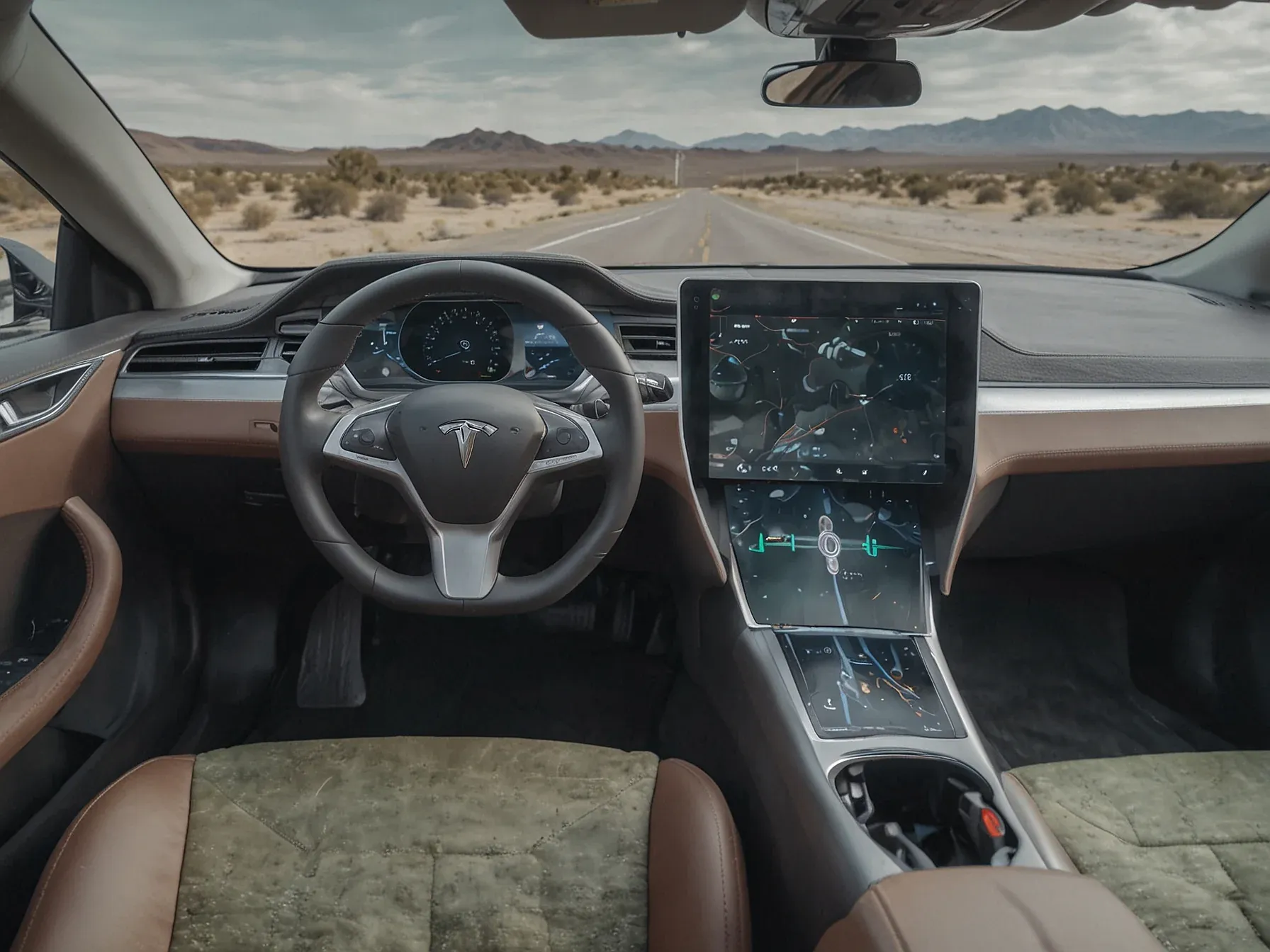
Editorial illustration for Drivers Face Charges in Autopilot Cases Despite Advanced Vehicle Technology
Autopilot Crashes: Drivers Face Legal Charges Despite Tech
Prosecutors charge drivers, not autopilots, in eyes-off driving cases under new law
Cars can't get arrested. That's the short version of a new legal doctrine forming around crashes involving automated driving systems. Prosecutors are charging the people in the driver's seat, not the software guiding the car.
It's a direct answer to a question the industry has avoided. Who is responsible when the machine fails? The answer, so far, is you.
Two recent cases set the pattern. Drivers faced criminal charges even with their vehicle's autopilot engaged. The message from courts is blunt.
These systems are fancy helpers. They don't replace you.
In both cases, prosecutors pursued criminal charges against the human behind the wheel, theorizing that despite the presence of an automated system, the driver was the one that was ultimately responsible for the vehicle. Automakers are likely thrilled with the outcomes of these cases. But there have been other cases that have found the car company could share the liability when something bad happens.
Take for example the recent jury verdict in Florida, where Tesla was held partially responsible for a crash that killed two people. In that case, the owner of the Model S who was using Autopilot was also found liable -- but it was Elon Musk's company that was ordered to pay $243 million to the victims' families. Mike Nelson, a trial attorney who specializes in mobility, notes that legal precedent for automation-related crashes is still embryonic.
That Florida verdict is the complicating factor. It shows the legal ground is still soft. A jury can agree the driver bears criminal blame while also deciding the carmaker shares financial liability.
Automakers might prefer the first outcome, but the second one opens a door. The law is figuring this out case by case, and the results are not uniform. For now, the safest assumption for anyone behind the wheel is that the system's promises are not a legal defense.
You are still driving the car. Treat the machine like a distracted co-pilot, not a replacement. The charges will land on you.
Further Reading
Related Reading
 AI Tools & Apps
 Claude gains shared context in Excel, PowerPoint; Microsoft adds Copilot Cowork
 AI Tools & Apps
 OpenAI Developer: AI Agent "Swarms" Waste Tokens, Create "Coordination Tax
 AI Tools & Apps
 LG's recent webOS update adds Microsoft Copilot app, now removable
 From Archives
 One of 7 MCP Projects Demonstrates LLM Real-Time Financial Data via GitHub
 From Archives
 Perplexity launches AI tool that lets users search patents with natural language
Common Questions Answered
How are prosecutors determining driver responsibility in cases involving Autopilot technology?
Prosecutors are pursuing criminal charges against human drivers, arguing that despite advanced automated systems, the driver remains ultimately responsible for vehicle control. These legal approaches suggest that automated technologies do not absolve drivers of their duty to maintain active oversight and control of the vehicle.
What legal precedents are emerging around autonomous driving technology and driver accountability?
Recent court cases demonstrate that human drivers can be held criminally responsible even when Autopilot features are engaged, indicating a clear legal stance that technology cannot replace human judgment. The emerging legal landscape consistently emphasizes that drivers must remain alert and prepared to take control, regardless of the vehicle's advanced technological capabilities.
How are automakers being impacted by current legal rulings on autonomous driving incidents?
Automakers appear to be benefiting from initial legal rulings that primarily hold drivers accountable in accidents involving autonomous technologies. However, some cases, like a recent jury verdict in Florida, have also found car companies could share liability, suggesting a complex and evolving legal framework around autonomous vehicle responsibility.
Further Reading
- Tesla on Trial: $243M Verdict, Cybertruck Fire, and the Future of EV Accident Liability — RMD Law
- Tesla driver to stand trial for causing fatal accident while on autopilot — CD Lawyers
- $240 Million Awarded in Tesla Autopilot Accident Case — HHJ Trial Attorneys
- Tesla Autopilot Verdict and Robotaxi Safety Concerns in California — Taheripour Law
