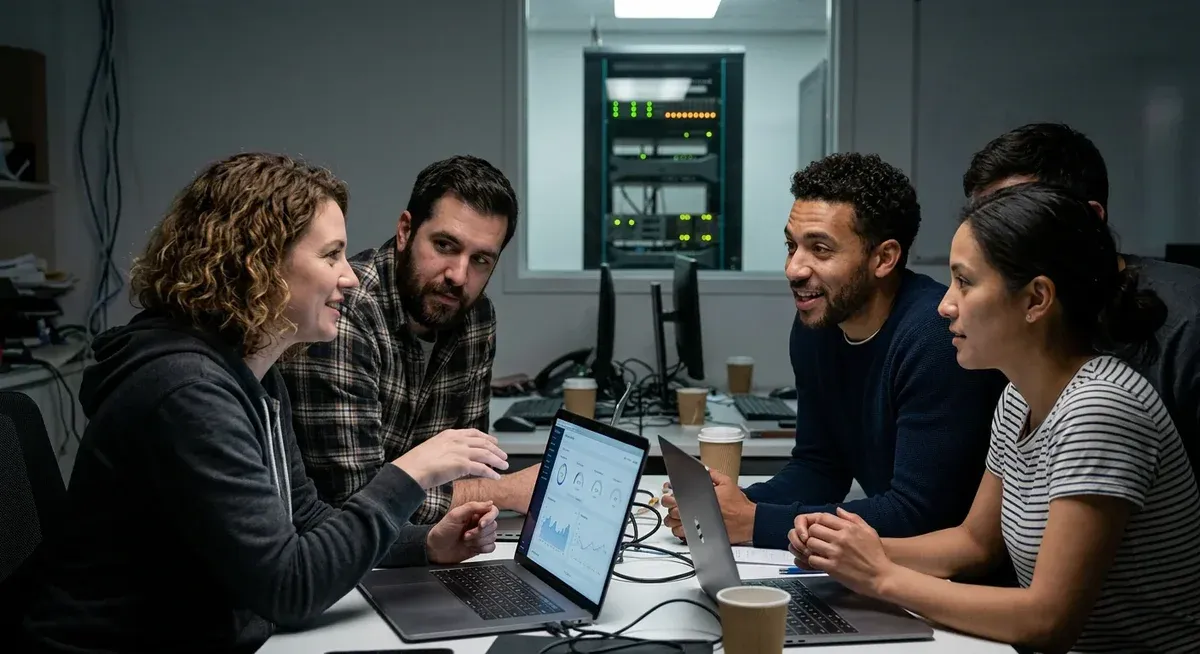
Editorial illustration for OpenClaw 2.0 Aims to Make AI Coding a 'Multiplayer' Experience for Teams
OpenClaw 2.0 Turns AI Coding Into Team Sport
OpenClaw 2.0 Aims to Make AI Coding a 'Multiplayer' Experience for Teams
Peter Steinberger's OpenClaw hasn't dominated group chats the way it did in March 2026, when developers were passing agents to each other over Telegram and WhatsApp like a new toy. That first wave was built around a single user running a single autonomous agent from a phone. Over the weekend, Steinberger and his co-developers pushed out OpenClaw 2.0, tagged officially as v2026.8.1, and the pitch this time is different: not one person and one bot, but teams working alongside shared agents inside the same workspace.
The update touches installation, messaging, memory, skills and model handling, but the headline changes are structural. A rebuilt browser interface now pulls conversations, files, approval requests, configuration settings and live agent activity into one place instead of scattering them across channels. Shared cloud sessions let multiple people work with the same agent at once. New role-based permissions, sandboxing, secrets handling and audit logging aim squarely at the kind of oversight enterprises expect before they let an agent near production systems or company data.
OpenClaw 2.0 seeks to transform what began largely as a personal agent harness into something increasingly designed for teams, shared infrastructure and enterprise workflows.
Why this matters
OpenClaw's first act was a novelty story: a solo dev's harness that turned chat apps into command lines for AI agents. Version 2.0 is a different pitch entirely, aimed at the people who actually sign procurement forms. Multi-user approval flows and remote task handoffs are the basic scaffolding every enterprise security team asks for before they'll let an autonomous agent touch a production repo. Steinberger and his co-developers clearly read the room after March's hype faded.
For engineering leads, the real test isn't the demo, it's whether "a senior engineer approves the operation" actually holds up under audit, or whether it's a permissions checkbox that agents route around in practice. Founders building on open source agent tooling should watch adoption numbers over the next few months, not launch-weekend enthusiasm. And researchers tracking agent autonomy should note the framing shift: this isn't about smarter models anymore, it's about who gets to say yes. That's a governance problem, and governance problems don't get solved by a version bump.
Related Reading
 Business & Startups
 Nordic pilot adds Gemini for Education, NotebookLM to boost AI literacy
 Business & Startups
 Kling launches Video O1, all-in-one model with MVL bridge using transformer
 Business & Startups
 DeepSeek Seeks More Capital Weeks After USD 7B Funding Round
 From Archives
 Music Publishers Cite Anthropic Staff's Piracy Chat in Lawsuit
 From Archives
 OpenAI's ChatGPT Ad Business Hits USD 1 Billion Annual Run Rate
Common Questions Answered
How does OpenClaw 2.0 differ from the original version released in March 2026?
The original OpenClaw was designed for individual developers running single autonomous agents from their phones, often shared casually over messaging apps like Telegram and WhatsApp. OpenClaw 2.0 shifts focus from personal use to team-based workflows, introducing shared agents, multi-user approval flows, and enterprise infrastructure designed for collaborative coding environments.
What enterprise security features does OpenClaw 2.0 include for production repositories?
OpenClaw 2.0 incorporates multi-user approval flows and remote task handoffs as core features to meet enterprise security requirements before autonomous agents can access production repositories. These scaffolding elements address the security concerns that enterprise teams typically require before adopting autonomous coding tools in their workflows.
Why did OpenClaw shift from a personal agent tool to a multiplayer team-focused platform?
After the initial hype from March 2026 faded, OpenClaw's developers recognized that sustainable growth required targeting enterprise buyers who control procurement decisions rather than individual developers. Enterprise adoption demands features like multi-user approvals, shared infrastructure, and security compliance that weren't necessary for the original single-user novelty tool.
What was the primary use case for OpenClaw's original version in March 2026?
The original OpenClaw served as a personal agent harness that allowed solo developers to use chat applications like Telegram and WhatsApp as command-line interfaces for autonomous AI agents. It became a novelty that developers passed around to each other as a new toy before the platform evolved into an enterprise solution.
Further Reading
- OpenClaw creator says 2026 could be the year of general AI agents - TechXplore
- OpenClaw founder Steinberger joins OpenAI, open-source bot becomes foundation - Reuters
- OpenClaw creator Peter Steinberger joins OpenAI - TechCrunch
- OpenAI Hires OpenClaw Creator Peter Steinberger And Sets Up Foundation - Forbes
- Claude Code for Teams: Collaborative AI Coding ... - Agents Room
