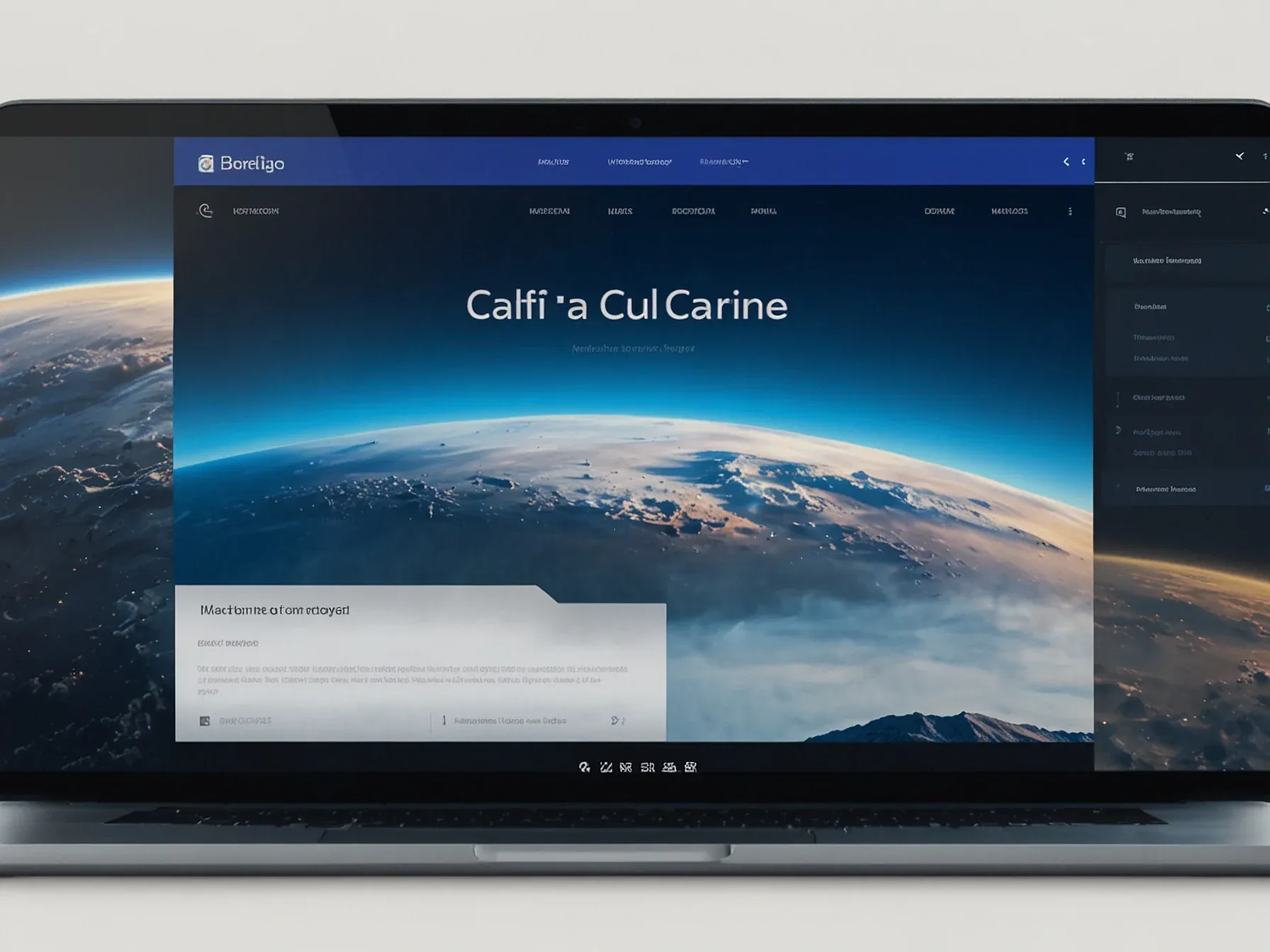
Editorial illustration for OpenAI Debuts ChatGPT Atlas Browser, Draws Comparisons to Chrome and Comet
ChatGPT Atlas: OpenAI Launches Revolutionary AI Web Browser
OpenAI's ChatGPT Atlas Browser Mirrors Chrome, Faces Perplexity Comet
OpenAI now makes a browser. It looks a lot like other browsers.
The company launched ChatGPT Atlas for macOS, a navigation tool that immediately recalls Google Chrome and Perplexity's AI-focused Comet browser. This is not a secret reinvention. It is an obvious, perhaps deliberate, copy of the current market.
The move confirms a simple ambition: OpenAI wants its software on your desktop, not just in a chat window. Silicon Valley is watching, but without much shock. A giant AI lab building a conventional-looking browser is the logical, boring next step.
Atlas is currently a macOS-only download. Its features are a familiar blend. The question is what OpenAI has actually added, or if this is just a vessel for future ChatGPT integration.
The speed of the release is typical for the company. The derivative nature of the product is also becoming typical.
OpenAI is shipping products fast, but is the quality top-notch? They recently launched their own browser, ChatGPT Atlas. By the looks of it, it seems quite similar to Chrome and Perplexity's Comet, probably a blend of both.
I personally love Comet and have been using it for a while now. In this blog, I will first take you through the features of ChatGPT Atlas and then compare it to Comet on the specific tasks that Comet handles super fast. Currently, the browser is only available for macOS users.
Follow these steps to access ChatGPT Atlas: Head to ChatGPT Atlas and download the browser.
So the first public review notes the similarity. This is the pattern now. OpenAI deploys a functional, recognizable product into a crowded space.
The differentiation is promised, not proven. For a company built on foundational model research, its consumer-facing efforts are remarkably unoriginal. Atlas is a box waiting for a unique idea.
Its release is a territorial marker. It says OpenAI intends to own the entire stack of how you interact with a machine. The browser is the last major piece of that stack it did not control.
The quality of the initial offering is almost secondary. The claim has been staked.
The real competition isn't with Chrome's market share today. It's with Perplexity's Comet and the idea of what an AI-native browser should be. OpenAI has the models.
Now it needs a reason for anyone to use its wrapper instead of someone else's. Atlas, for now, does not provide one. It is a mirror.
We are waiting for it to show us something new.
Further Reading
Related Reading
Browse all OpenAI news → LLMs & Generative AI
 ChatGPT's 'Nerdy' tweak rewards goblin metaphors in answers, study finds
 LLMs & Generative AI
 Google to End Free Access to Gemini AI for Non-Subscribers
 LLMs & Generative AI
 AI Engineers Face Rising Costs, Need New Strategies for Efficiency
 Related Topic
 OpenAI's GPT Transcribe Cuts Error Rate to 3.31%, Improving on GPT-4o
Open Source
 Related Topic
 OpenAI Developer: AI Agent "Swarms" Waste Tokens, Create "Coordination Tax
AI Tools & Apps
 From Archives
 MiniMax-M2 leads benchmarks in agentic tool calling and coding workflows
 From Archives
 OpenAI says 0.07% of ChatGPT users show possible mania or psychosis signs weekly
 From Archives
 Sora exposes failures in AI labeling, including OpenAI-overseen C2PA
Policy & Regulation
 From Archives
 OpenAI shares 50 ChatGPT prompts in new ‘Chats for College Students in India’
Common Questions Answered
What unique features does ChatGPT Atlas offer compared to existing browsers?
ChatGPT Atlas appears to blend features from Chrome and Perplexity's Comet, offering a new web navigation approach powered by OpenAI's AI technology. The browser currently targets macOS users and represents OpenAI's strategic expansion beyond conversational AI tools.
Is ChatGPT Atlas available for all operating systems?
Currently, ChatGPT Atlas is exclusively available for macOS users, suggesting a targeted initial rollout strategy by OpenAI. This limited availability indicates the browser is likely in an early development phase and may expand to other platforms in the future.
How does OpenAI's entry into the browser market differ from traditional tech companies?
OpenAI is approaching the browser market by leveraging its AI expertise, drawing comparisons to existing browsers like Chrome and Comet while potentially introducing unique AI-powered navigation capabilities. This move signals the company's growing ambitions to compete beyond conversational AI tools.
Further Reading
- ChatGPT Atlas: An In-Depth Look at OpenAI's AI Browser — Intuition Labs
- I ditched Chrome for ChatGPT Atlas — here’s why I’m going back, even with the smart features Google can’t match — Tom's Guide
- ChatGPT Atlas - Release Notes — OpenAI Help Center
