
Editorial illustration for Hyperscalers Pledge USD 400B for Data Centers, Straining Power Grid Infrastructure
Tech Giants' $400B Data Center Push Strains Power Grids
Aging grid threatens OpenAI, Microsoft as hyperscalers commit USD 400B to centers
The promise is infinite scale. The power to run it is not. America's biggest tech companies—Amazon, Google, Meta, and Microsoft—have committed more than $400 billion to data centers.
For OpenAI, the math is even starker: over $1.4 trillion in infrastructure contracts to lock down 28 gigawatts of electricity within eight years. CEO Sam Altman calls the energy shortage an existential threat. No power means no new models, and no revenue.
Their astronomical bets are now a wager against a failing grid.
So they bypass it. In Memphis, OpenAI’s “Colossus” cluster ran for months on dozens of gas turbines—without the required permits. That’s the new playbook: when the official pipeline is clogged with phantom projects and four-year waits for turbines, you build your own.
Ask for forgiveness later. The brutal truth is that the next decade of tech depends less on algorithms than on permitting and 1960s hardware. A trillion dollars in contracts is meaningless if you can’t plug in the server.
Every gigawatt secured through a loophole or a diesel generator is a stark admission. The bottleneck is here. It’s made of copper, steel, and red tape.
Related Reading
Browse all OpenAI news →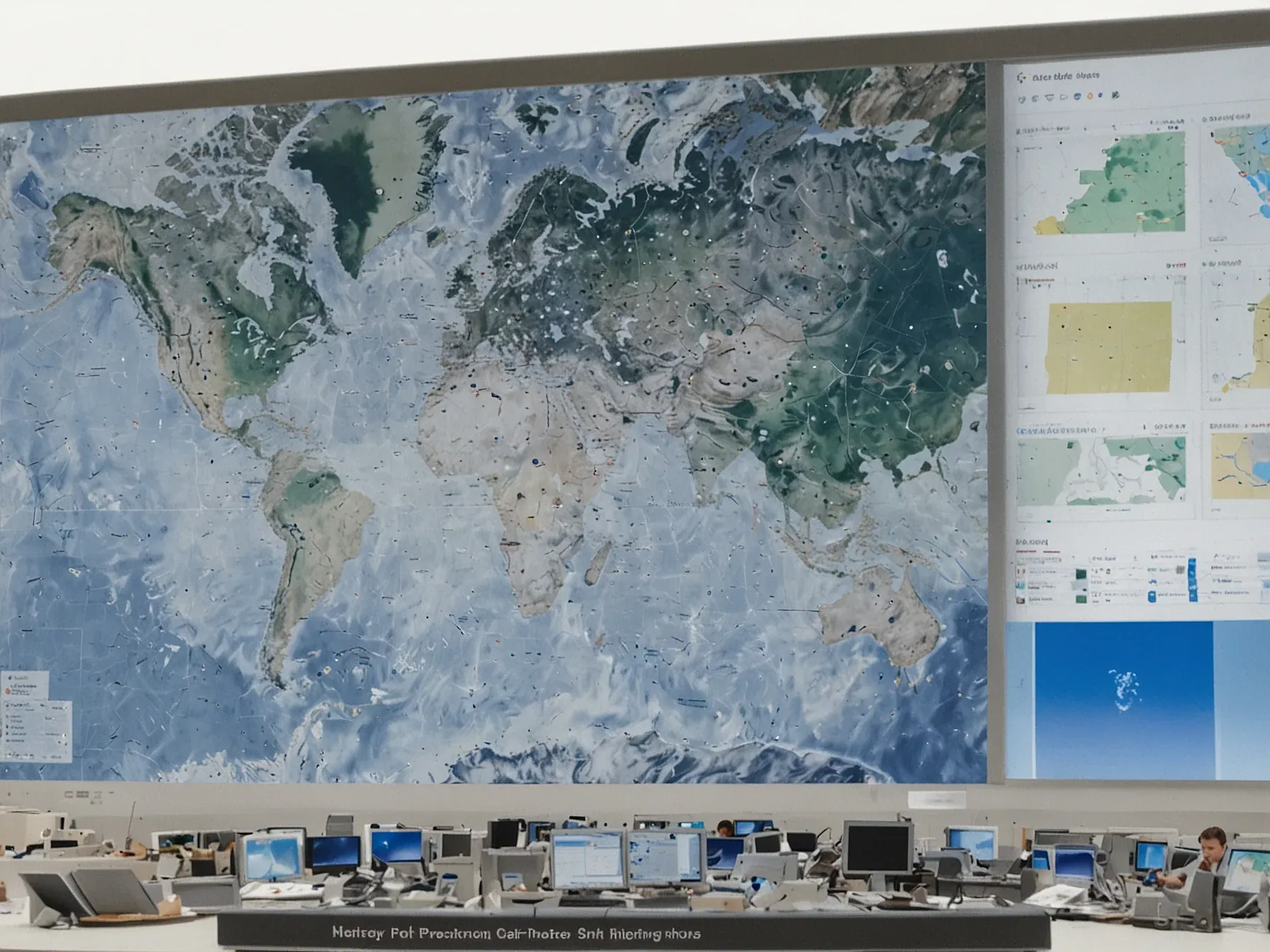 Market Trends
 AI drives three initiatives to accelerate global action for planet protection
 Market Trends
 Akamai data shows AI training bots and content‑fetching bots rise since July
 Market Trends
 NVIDIA and Google Cloud let developers scale AI from prototype to production
 Related Topic
 OpenAI researcher quits, citing distrust over ad‑driven engagement metrics
LLMs & Generative AI
 Related Topic
 OpenAI launches GPT-Image 1.5 with precise editing for enterprise visuals
LLMs & Generative AI
 From Archives
 Carrier Digital Hub India Wins Digital Transformation Award at GCC 2025
 From Archives
 ServiceNow may buy Boomi as Forrester sees AI-driven iPaaS shift in India
 From Archives
 OpenAI disables ad-like app promotions in ChatGPT after test phase
LLMs & Generative AI
 From Archives
 Nagarro partners with OpenAI to apply generative AI to enterprise tasks
Business & Startups
Common Questions Answered
How much are hyperscalers investing in data center infrastructure?
Major tech companies like Amazon, Google, Meta, and Microsoft have outlined investment plans exceeding $400 billion, primarily focused on data center development. OpenAI alone has reportedly signed infrastructure contracts totaling over $1.4 trillion to secure approximately 28 GW of electrical capacity over the next eight years.
Why are power grids struggling with hyperscale computing demands?
The massive computational requirements of AI technologies are pushing electrical infrastructure to its limits, creating unprecedented strain on existing power systems. Tech giants are making unprecedented infrastructure investments that challenge the current electrical grid's capacity to support the exponential growth of data center energy needs.
What did Sam Altman say about the current energy infrastructure challenges?
Sam Altman characterized the energy shortage as an existential threat to AI development, noting that without sufficient compute power, companies like OpenAI cannot generate revenue or build models at the necessary scale. His stark warning suggests that the ability to access and sustain massive electrical capacity is now a critical constraint for technological advancement in artificial intelligence.
Further Reading
- Papers with Code - Latest NLP Research — Papers with Code
- Hugging Face Daily Papers — Hugging Face
- ArXiv CS.CL (Computation and Language) — ArXiv
