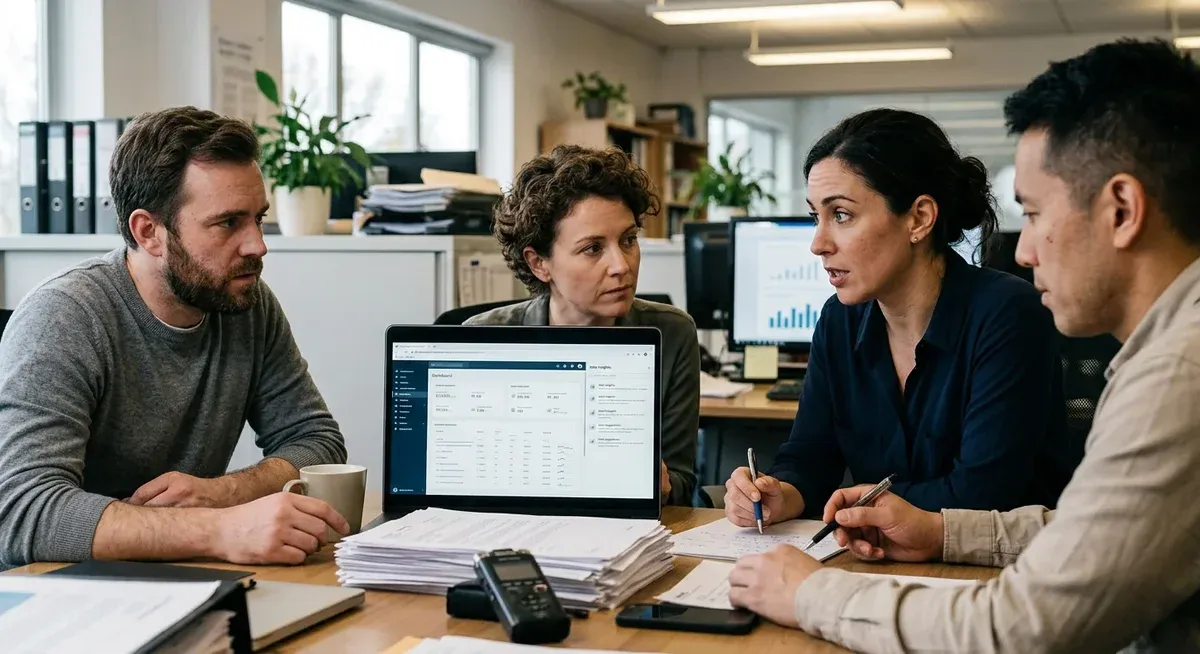
Editorial illustration for OpenAI employee allegedly used chatbot to plant recording device at office
OpenAI Engineer Used ChatGPT to Hide Office Spy Device
OpenAI employee allegedly used chatbot to plant recording device at office
An OpenAI engineer allegedly taped a recording device to the back of a monitor in an executive conference room, using toilet paper to hide it, then asked the company's own chatbot for help pulling it off. That's the account laid out in a criminal complaint unsealed Tuesday against Abdulrahman Alfozan, a 35-year-old Saudi national and US permanent resident who joined OpenAI in July 2025.
Prosecutors say Alfozan spent weeks querying an internal "productivity agent" and a separate AI chatbot, asking about meeting schedules for the targeted room and, through an account tied to his spouse, technical questions about setting up covert audio recording gear. OpenAI's security team later found a second, uninstalled recording device in his bag at the office.
Alfozan was fired last Friday, the same day he was arrested. He appeared in federal court in San Francisco on Tuesday facing a single charge of using an electronic device to intercept oral communications, which carries up to five years in prison if he's convicted. He couldn't be reached for comment, and neither prosecutors nor OpenAI have said what he was after.
An engineer at OpenAI allegedly concealed an audio recording device in a piece of toilet paper and attached it behind a monitor inside an executive conference room at one of the company’s San Francisco offices, according to a criminal complaint unsealed on Tuesday.
Why this matters
This case is a reminder that the tools AI companies build for productivity can double as evidence trails when something goes wrong internally. Alfozan allegedly used a chatbot and productivity agent to help plan the stunt, and those same logs are what let OpenAI and federal investigators tie him to the device. For founders and security teams, that's worth sitting with: employee queries to internal AI tools aren't ephemeral, they're discoverable, and that cuts both ways depending on who's doing the asking.
For researchers thinking about insider threats, the detail that OpenAI gradually disabled Alfozan's access while the investigation was ongoing, rather than cutting him off immediately, shows how companies are trying to balance containment against tipping off a suspect. It also raises a less comfortable question about physical security at AI labs handling sensitive model and safety discussions, given how low-tech the alleged method was, a recording device wrapped in toilet paper behind a monitor. Expect more scrutiny of conference room sweeps and device access logging at frontier labs after this.
Related Reading
Browse all OpenAI news → AI Tools & Apps
 Claude gains shared context in Excel, PowerPoint; Microsoft adds Copilot Cowork
 AI Tools & Apps
 OpenAI Developer: AI Agent "Swarms" Waste Tokens, Create "Coordination Tax
 AI Tools & Apps
 LG's recent webOS update adds Microsoft Copilot app, now removable
 Related Topic
 OpenAI researcher quits, citing distrust over ad‑driven engagement metrics
LLMs & Generative AI
 Related Topic
 OpenAI launches GPT-Image 1.5 with precise editing for enterprise visuals
LLMs & Generative AI
 From Archives
 Niobia, TechCrunch Disrupt 2026 Battlefield finalist, targets tech mistakes
 From Archives
 Xbox embraces AI-powered ports to decouple games from intended hardware
 From Archives
 OpenAI employee arrested for allegedly planting bug in conference room
Research & Benchmarks
 From Archives
 Judge orders OpenAI to turn over hiring records in Apple trade secrets case
Business & Startups
Common Questions Answered
What did Abdulrahman Alfozan allegedly do at OpenAI's San Francisco office?
According to the criminal complaint, Alfozan, a 35-year-old Saudi national and OpenAI engineer, allegedly taped a recording device to the back of a monitor in an executive conference room and concealed it using toilet paper. He then allegedly used OpenAI's internal chatbot and productivity agent to help plan and execute this surveillance operation.
How did OpenAI and federal investigators connect Alfozan to the recording device?
Investigators were able to tie Alfozan to the device through logs of his queries to OpenAI's internal AI tools, including the productivity agent and chatbot that he allegedly used to plan the operation. The digital trail left by his interactions with these internal AI systems became key evidence in the criminal complaint against him.
When did Abdulrahman Alfozan join OpenAI?
Alfozan joined OpenAI in July 2025 as an engineer. He is a 35-year-old Saudi national and US permanent resident who was employed at the company when the alleged incident occurred.
What security implications does this case raise for AI companies?
This case demonstrates that employee queries to internal AI tools and productivity agents are not ephemeral but rather discoverable and can serve as evidence trails during investigations. For founders and security teams, it highlights that internal AI tool usage logs can cut both ways—they can expose misconduct but also raise privacy concerns about employee monitoring and data retention.
Further Reading
- Saudi man charged with planting 'sophisticated' recording device in OpenAI office - BBC
- OpenAI says it found a 'sophisticated recording device' hidden in its offices - Engadget
- OpenAI employee arrested for allegedly hiding a ‘sophisticated recording device' in its office - KMBC
- Saudi National Arrested For Installing Surreptitious Audio Recording Device at OpenAI in San Francisco - U.S. Department of Justice
- Employee arrested after listening device found in OpenAI conference room - Associated Press
