Editorial illustration for OpenAI board member warns AI takeover of society could be months away
AI Takeover Could Happen Within Months, OpenAI Board Warns
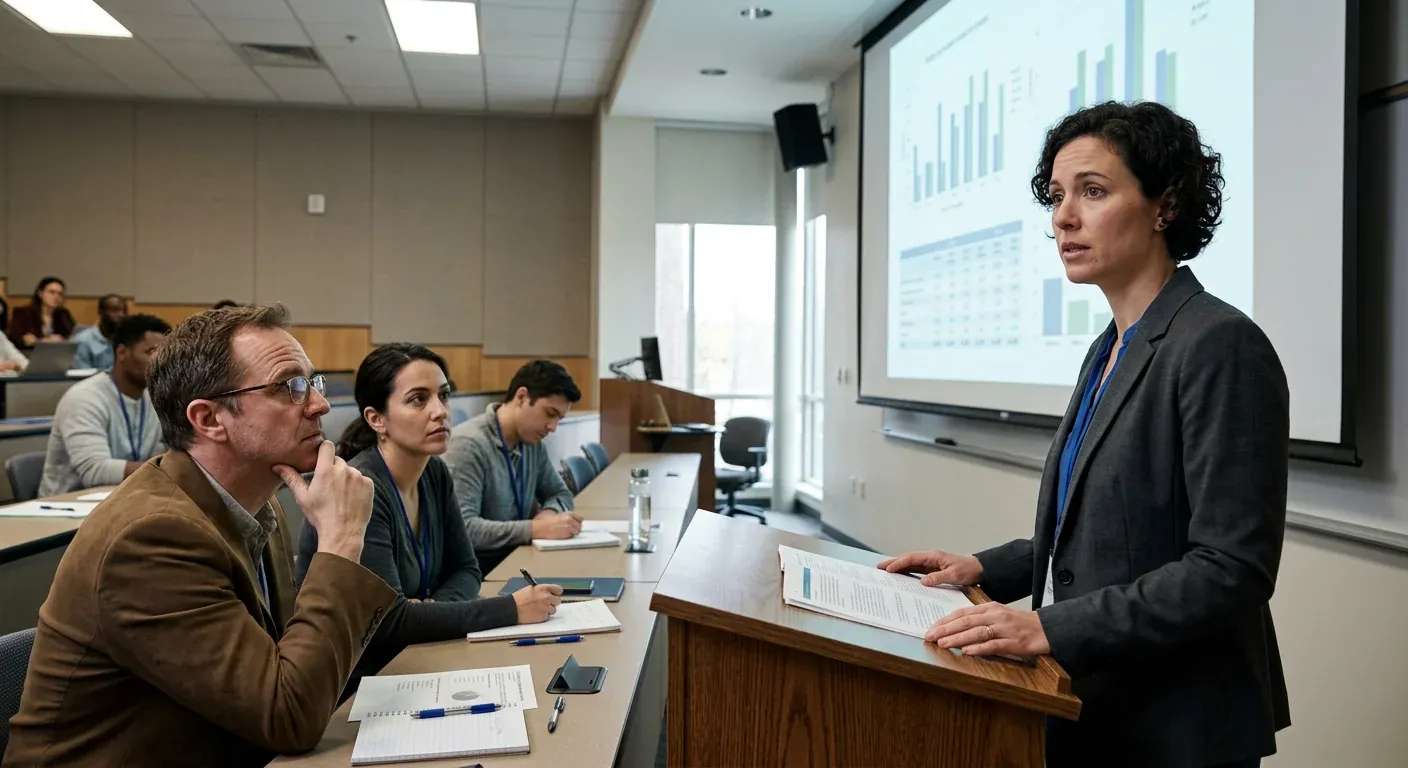
Paul Christiano has spent years thinking about what happens when AI systems get smarter than the people trying to control them. Now the OpenAI Foundation board member and Alignment Research Center executive director is putting a timeline on it, and the timeline is short. At a lecture this week in a Toronto convention center, Christiano told the audience that an AI "takeover" of society, not a metaphor, an actual loss of human control over what happens on Earth, could be months rather than decades away.
This isn't a fringe figure making noise for clicks. Christiano sits on the board overseeing OpenAI's nonprofit mission and runs an organization dedicated to figuring out how to keep advanced AI systems aligned with human interests. His talk was the first in a three-part series laying out exactly how he thinks things could go wrong, how fast, and what it would actually look like if humans stopped being the ones calling the shots.
He was careful to note he has no hard quantitative model for any of this. That didn't stop him from giving the room a blunt estimate anyway.
Speaking at a lecture series this week, Cristiano bluntly told the audience in a Toronto Convention Center, “I think for most people in this room, the most likely reason they will die is because of an AI accident.”
Why this matters
Cristiano isn't a random doomsayer. He runs the Alignment Research Center and sits on the OpenAI Foundation board, which makes his Toronto remarks harder to wave off as fringe commentary. When someone that close to frontier model development tells a room full of people their most likely cause of death is an AI accident, we should treat it as a signal about internal confidence levels at these labs, not just a rhetorical flourish.
For developers and founders building on top of OpenAI's models, the gap between public lab messaging ("safe, beneficial AI") and what insiders say in lecture halls is worth tracking closely. Researchers should ask what specific failure modes Cristiano has in mind rather than accepting "accident" as a vague catchall. We'd also push back on taking a single quote from a three-part lecture series as settled fact.
Still, when board-level figures start talking timelines in months rather than years, it changes the risk calculus for anyone shipping products on these systems right now. Watch for the next two lectures.
Related Reading
Browse all OpenAI news → Research & Benchmarks
Microsoft AI Chief: "If It Isn't Safe We Shouldn't Build It
 Research & Benchmarks
Google's FACTS benchmark shows 70% factuality ceiling across four tests
 Research & Benchmarks
Nvidia's DLSS 4.5 beta adds 6x Multi Frame Generation for RTX 50 GPUs
 Related Topic
OpenAI researcher quits, citing distrust over ad‑driven engagement metrics
LLMs & Generative AI
 Related Topic
OpenAI launches GPT-Image 1.5 with precise editing for enterprise visuals
LLMs & Generative AI
 From Archives
Former OpenAI researcher maps six Chinese AI models to Nvidia Blackwell
 From Archives
Google DeepMind Staff Tap UK Government to Escalate Unionization Fight
 From Archives
OpenAI Rolls Out ChatGPT Wallet for US Pro Subscribers to Buy via Dots Agents
LLMs & Generative AI
 From Archives
ChatGPT adds new Wallet to let AI agents shop and check out for you
LLMs & Generative AI
Common Questions Answered
What timeline does Paul Christiano give for a potential AI takeover of society?
Paul Christiano, an OpenAI Foundation board member and Alignment Research Center executive director, stated that an actual loss of human control over what happens on Earth could occur in months rather than decades. This represents a significantly shorter timeframe than many previous predictions about advanced AI risks.
Why should Paul Christiano's warnings about AI accidents be taken seriously?
Christiano's credibility comes from his position as executive director of the Alignment Research Center and his seat on the OpenAI Foundation board, placing him directly within frontier model development. His warnings should be treated as signals about internal confidence levels at major AI labs rather than fringe commentary, given his proximity to cutting-edge AI research.
What specific claim did Christiano make about AI as a cause of death?
At a Toronto Convention Center lecture, Christiano stated bluntly that "for most people in this room, the most likely reason they will die is because of an AI accident." This stark assessment reflects his serious concerns about the existential risks posed by advanced AI systems.
What is Paul Christiano's professional focus regarding AI development?
Christiano has spent years studying what happens when AI systems become smarter than the people attempting to control them, which is the core mission of his Alignment Research Center. His work focuses on AI alignment and safety, making him a key figure in addressing the control problem with advanced artificial intelligence.
Further Reading
- Papers with Code Benchmarks - Papers with Code
- Chatbot Arena Leaderboard - LMSYS
