
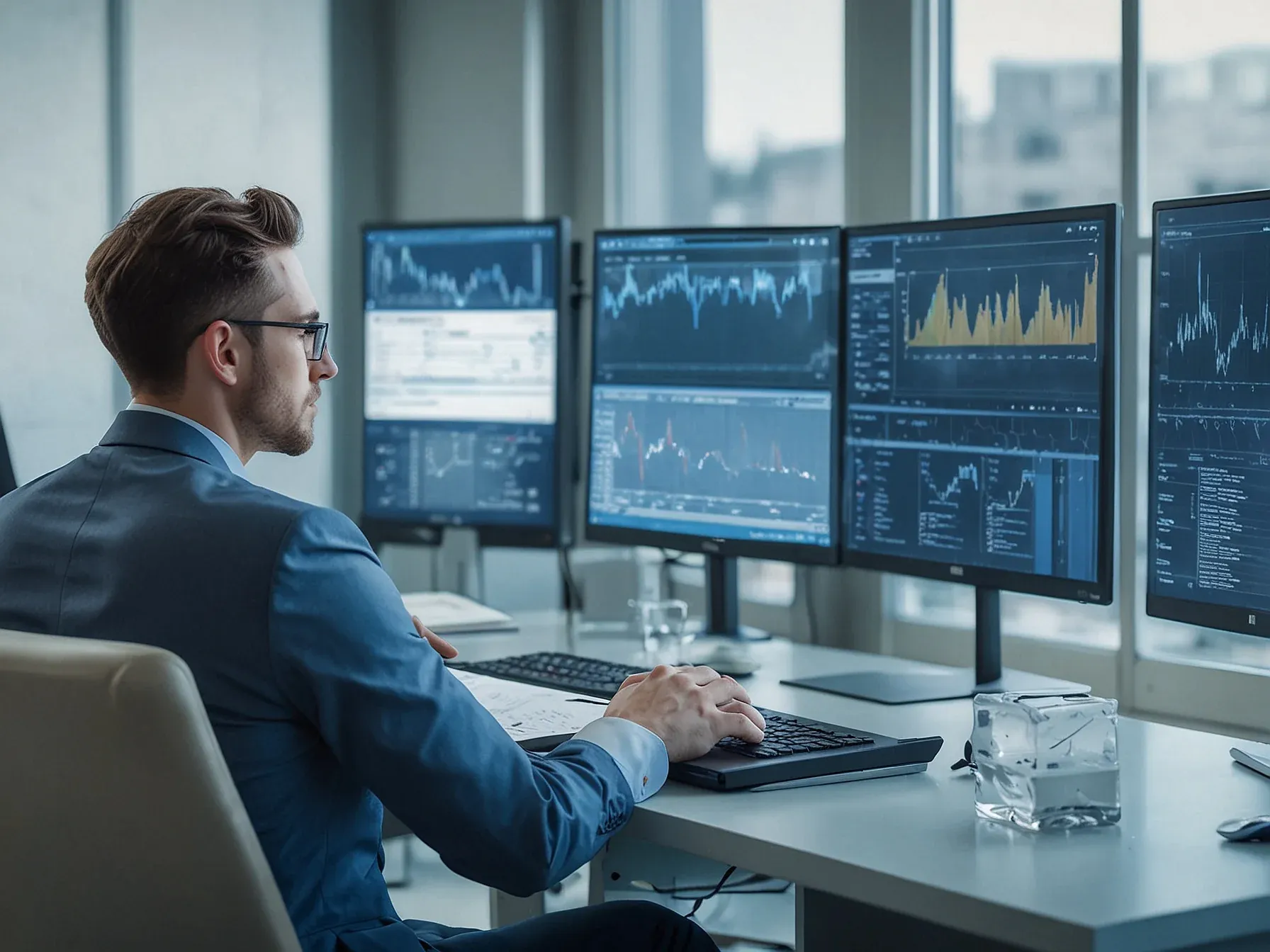
Editorial illustration for NVIDIA's Nemotron Debuts Self-Correcting AI for Streamlined Log Analysis
NVIDIA's Nemotron AI Revolutionizes Enterprise Log Analysis
NVIDIA Nemotron Simplifies Log Analysis with Self-Correcting AI Agents
Every engineer has stared into that abyss. The system crashes, and you’re left with the logs—a sprawling, timestamped mess containing every answer and none of them. NVIDIA’s new Nemotron tool proposes a shift: stop decoding by hand. Let an AI agent read the chaos for you.
That’s where our AI-powered log analysis solution comes in. The log analysis agent, introduced in NVIDIA’s Generative AI reference workflows, combines a retrieval-augmented generation (RAG) pipeline with a graph-based multi-agent workflow to automate log parsing, relevance grading, and self-correcting queries. In this post, we explore the architecture, key components, and implementation details of the solution.
Instead of drowning in log dumps, developers and operators can get straight to the “why” behind failures. Who needs a log analysis agent? - QA and test automation teams: Testing pipelines generate massive logs that are often tricky to parse.
Our AI system supports log summarization, clustering, and root-cause detection, helping QA engineers quickly pinpoint flaky tests, faulty logic, or unexpected behaviors. - Engineering and DevOps teams: Engineers deal with heterogeneous log sources—application, system, service—all in different formats. Our AI agents unify these streams, perform hybrid retrieval (semantic and keyword), and surface the most relevant snippets.
The aim is brutally simple: transform that raw data dump into a clear narrative. For a QA engineer buried in test outputs, it could instantly isolate the one flaky test and its culprit. For a DevOps team juggling five different service formats, it might stitch them into a single, coherent answer—no manual slog required.
This isn’t magic. It’s about erasing a specific, tedious chore that steals hours. If it works?
The logs just get quiet.
Related Reading
 AI Tools & Apps
 Claude gains shared context in Excel, PowerPoint; Microsoft adds Copilot Cowork
 AI Tools & Apps
 OpenAI Developer: AI Agent "Swarms" Waste Tokens, Create "Coordination Tax
 AI Tools & Apps
 LG's recent webOS update adds Microsoft Copilot app, now removable
 Related Topic
 NVIDIA and Google Cloud let developers scale AI from prototype to production
Market Trends
 Related Topic
 NVIDIA NeMo powers telco reasoning model for autonomous network workflows
Industry Applications
 From Archives
 AI spots tiny earthquakes that humans can't feel
 From Archives
 Nvidia's New Training Method Teaches AI Models to "Think" Before They Answer
LLMs & Generative AI
 From Archives
 NVIDIA Blackwell Tops New AI Benchmark for Performance and Efficiency
Research & Benchmarks
Common Questions Answered
How does NVIDIA's Nemotron use AI to transform log analysis?
Nemotron employs a retrieval-augmented generation (RAG) pipeline combined with a graph-based multi-agent workflow to automate log parsing. The system can intelligently grade log relevance and self-correct queries, dramatically reducing the manual effort required to analyze complex system logs.
What specific challenges does Nemotron address in enterprise IT log management?
Nemotron tackles the overwhelming challenge of parsing through massive volumes of system logs that traditionally require superhuman patience and technical expertise. By automating the log analysis process, the AI solution helps technical teams quickly identify critical issues buried in terabytes of cryptic text without manual intervention.
What are the key technological components of NVIDIA's log analysis AI solution?
The solution leverages a retrieval-augmented generation (RAG) pipeline and a graph-based multi-agent workflow to streamline log parsing. These technological components enable automated relevance grading and self-correcting queries, which significantly reduce the time developers spend manually sifting through technical log data.
Further Reading
- Build a Log Analysis Multi-Agent Self-Corrective RAG System with NVIDIA Nemotron - NVIDIA Developer Blog
- NVIDIA Nemotron: A Self-Corrective RAG for Log Analysis - LinkedIn
- Build a Log Analysis Multi-Agent Self-Corrective RAG System with NVIDIA Nemotron - diff.blog
- Build a Log Analysis Multi-Agent Self-Corrective RAG System with NVIDIA Nemotron - daily.dev
- Customizing NVIDIA Nemotron Models for Peak Accuracy and Real SOC Workflows - CrowdStrike Blog
