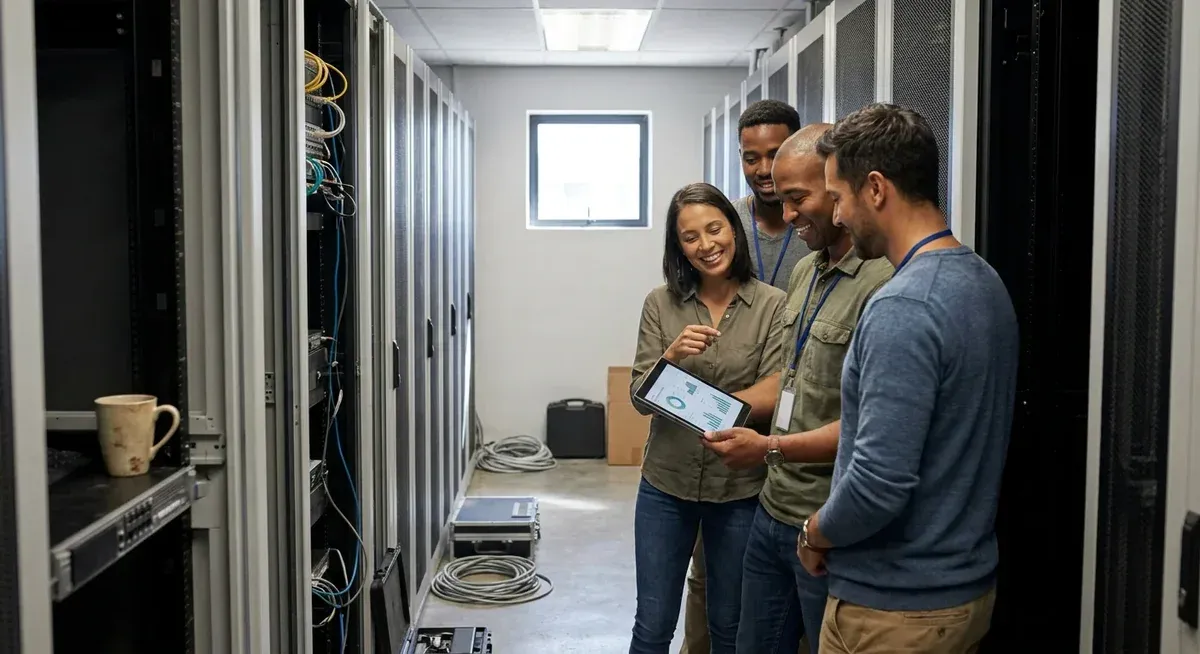
Editorial illustration for New York enacts first US state data center moratorium
New York Freezes Data Centers in Historic US First
New York enacts first US state data center moratorium
Governor Kathy Hochul signed a bill this week making New York the first state in the country to freeze new data center construction, a moratorium aimed at giving regulators time to catch up with an industry that's been expanding faster than the grid can handle. The move lands at a moment when the computing demands behind generative AI are colliding with local power costs, water use, and zoning fights across the country, and other states are watching to see whether New York's approach becomes a template or a cautionary tale.
The timing isn't incidental. Anthropic just published research claiming a new way to observe the "internal thoughts" of its models as they reason, work that MIT Technology Review senior editor Will Douglas Heaven has been picking apart to figure out what it actually proves about how these systems function. Heaven is also set to appear on a LinkedIn Live event with Sam Sinha, a founding AI researcher, to talk about world models and what it would take for machines to grasp the physical world the way they now handle text and code. Below is Will's take on the Anthropic findings.
Today’s AI systems can generate text, images, and code with impressive skill, but they still struggle with the complexities of the physical world. To bridge this gap, many researchers believe you need something called a world model.
Why this matters
New York's moratorium is the first crack in a wall that AI companies have treated as permanent: the assumption that compute capacity can always outrun local politics. For founders and researchers who've built roadmaps around ever-expanding GPU clusters, this is a signal worth taking seriously, not dismissing as one state's quirk. Data centers need land, power, and water, and communities are starting to push back on all three. If New York holds the line, expect other states to test the same move, which means infrastructure planning needs a policy column now, not just a capacity one.
The timing is almost ironic, landing the same week Anthropic published research peering into how its models actually reason. We're getting better at explaining what happens inside AI systems just as the physical plumbing behind them hits a wall made of local zoning boards and grid operators. Interpretability breakthroughs won't matter much if there's nowhere left to build the machines running the models. Watch which states follow New York's lead, and how fast.
Related Reading
 LLMs & Generative AI
 ChatGPT's 'Nerdy' tweak rewards goblin metaphors in answers, study finds
 LLMs & Generative AI
 Google to End Free Access to Gemini AI for Non-Subscribers
 LLMs & Generative AI
 AI Engineers Face Rising Costs, Need New Strategies for Efficiency
 From Archives
 Anthropic Study Shows Claude's Values Shift by Language
 From Archives
 ELIZA's Historical Algorithms Foreshadow Why People Confide in AI
Common Questions Answered
Why did Governor Kathy Hochul sign a data center moratorium in New York?
Governor Hochul signed the moratorium to give regulators time to catch up with the rapidly expanding data center industry, which has been growing faster than the electrical grid can handle. The freeze is aimed at addressing concerns about local power costs, water use, and zoning conflicts that have emerged as generative AI computing demands have increased across the country.
What makes New York's data center moratorium historically significant?
New York became the first state in the United States to enact a freeze on new data center construction, marking a significant shift in how states are responding to AI infrastructure expansion. This move signals that communities are beginning to push back against the assumption that compute capacity can always outrun local politics and environmental concerns.
How does the data center moratorium affect AI companies' expansion plans?
The moratorium challenges AI companies and founders who have built roadmaps around ever-expanding GPU clusters and unlimited compute capacity growth. Companies can no longer assume that data centers can be built without restriction, as they now face constraints related to land availability, power supply, and water resources, along with community opposition in multiple states.
What are the main resource constraints driving New York's data center freeze?
Data centers require three critical resources that are becoming increasingly contested: land for physical infrastructure, electrical power to operate the servers, and water for cooling systems. Communities across the country are starting to push back on all three of these demands, which prompted New York to implement the moratorium as other states watch to see if this approach becomes a trend.
Further Reading
- New York State Legislature passes first-in-the-nation data center moratorium - DLA Piper
- 'We should not have to sacrifice': New York could become first state to temporarily ban large datacenters - The Guardian
- N.Y. Lawmakers Move to Pause Data Centers and Curb Surveillance Pricing - The New York Times
- One-year data center moratorium approved in N.Y. - Spectrum Local News
- America needs more data centers. New York wants fewer. - The Washington Post
