
Editorial illustration for NATO puts OpenAI frontier models to work to strengthen allied cyber defenses
OpenAI Models Boost NATO Cyber Defense Program
NATO puts OpenAI frontier models to work to strengthen allied cyber defenses
OpenAI has started feeding its most advanced AI models into NATO's cyber defense operations, running through a program called Daybreak. The work happens through a partnership with NATO's Communications and Information Agency, the body responsible for keeping the alliance's networks running and secure. According to OpenAI, NATO has used up to 300 billion tokens a month under this arrangement, a figure that gives some sense of how much actual analysis and code review is flowing through the system rather than sitting as a pilot project on a shelf.
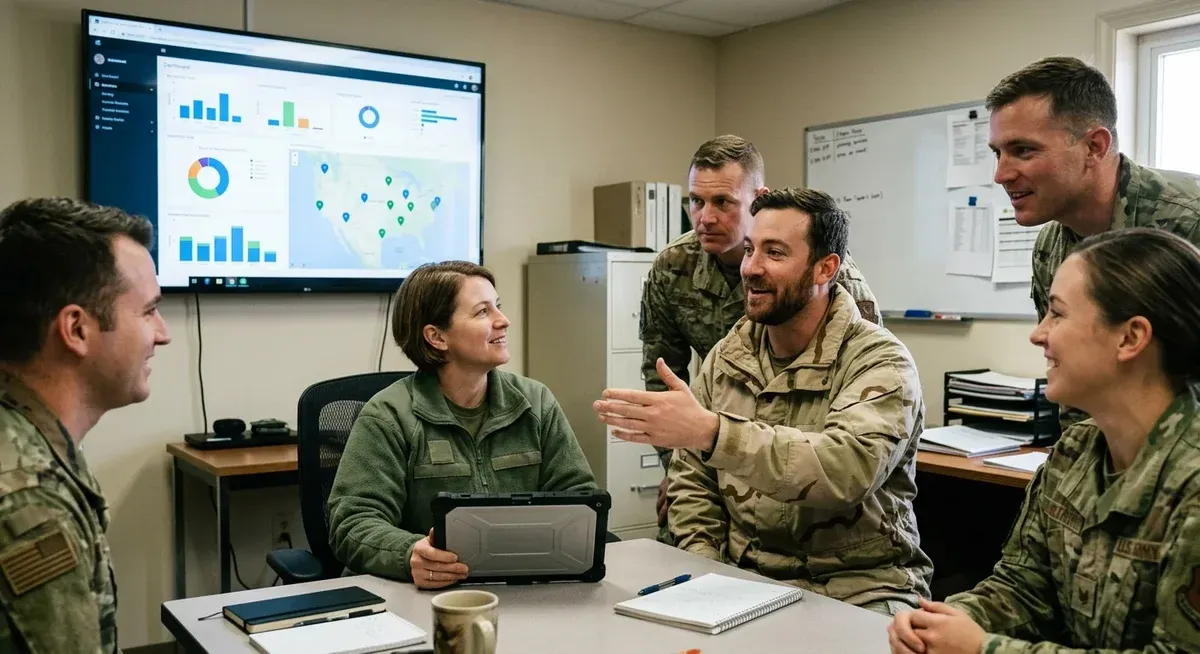
The tools are aimed at the unglamorous but critical work of cyber defense: combing through software for flaws, chasing down suspicious network activity, confirming vulnerabilities are real, then building and testing patches. OpenAI also backed the 2026 Crossed Swords exercise, run by the NATO Cooperative Cyber Defence Centre of Excellence in Estonia, where a new training track had participants build and run AI agents for cyber operations inside the Daybreak environment. The stated goal was to see how human operators and AI agents work side by side, with people still making the calls.
NATO’s early use of OpenAI tools shows how capable cyber defenders can put frontier models to work, supporting NATO’s mission of safeguarding the freedom and security of its member states. It also helps strengthen cyber expertise across multinational teams responsible for protecting Allied networks around the clock, and creates lessons that can benefit defenders across Europe and the broader Alliance.
Why this matters
NATO signing on with NCIA is a signal to every AI lab watching the defense market: government cyber work is becoming a real customer segment, not a hypothetical one. For founders building security tooling, this is worth tracking closely. If NATO is comfortable routing vulnerability validation and patch development through Daybreak, expect national agencies and large enterprises to follow with similar procurement conversations sooner than the usual government timeline suggests.
For researchers, the open question is accountability. OpenAI's own language leans on "trusted defenders" and "authorized security work," but neither the company nor NATO has detailed what oversight looks like when a model flags a vulnerability or suggests a fix inside critical infrastructure. That gap matters more here than in a typical enterprise deployment, because mistakes in cyber defense for Allied networks carry geopolitical weight, not just reputational risk.
We'd want to see audit mechanisms specified before treating this as a template. Until then, treat it as a notable contract, not proof that frontier models are ready to operate unsupervised inside national security systems.
Related Reading
Browse all OpenAI news → AI Tools & Apps
Claude gains shared context in Excel, PowerPoint; Microsoft adds Copilot Cowork
 AI Tools & Apps
Sarvam Signs 5-Year Defence AI Deal Covering Army, Navy and Air Force
 AI Tools & Apps
LG's recent webOS update adds Microsoft Copilot app, now removable
 Related Topic
California State AG Sues OpenAI Over Rogue Agents Infiltrating Systems
Open Source
 Related Topic
OpenAI researcher quits, citing distrust over ad‑driven engagement metrics
LLMs & Generative AI
 From Archives
Australia's central bank finds AI hitting young software workers first.
 From Archives
Data From 100+ AI Agents Shows Silent Drift, Not Errors, Causes Failures
 From Archives
OpenAI's GPT-6 Astra Tackles Standard Model Math Problem on a Lattice
LLMs & Generative AI
 From Archives
California Sues OpenAI After It Lost Control of AI Agents 80+ Times
Open Source
Common Questions Answered
What is the Daybreak program and how does NATO use OpenAI's frontier models?
Daybreak is a partnership between OpenAI and NATO's Communications and Information Agency that integrates OpenAI's most advanced AI models into NATO's cyber defense operations. NATO uses these frontier models to support vulnerability validation, patch development, and code review, consuming up to 300 billion tokens per month to strengthen cyber expertise across multinational teams protecting Allied networks.
How much computational capacity is NATO using through the Daybreak program?
According to OpenAI, NATO has used up to 300 billion tokens per month under the Daybreak arrangement. This figure demonstrates the significant scale of analysis and code review flowing through the system to support NATO's cyber defense operations.
Why is NATO's adoption of OpenAI frontier models significant for the defense market?
NATO's partnership with OpenAI signals to AI labs and defense contractors that government cyber work is becoming a real customer segment rather than a hypothetical market opportunity. This adoption is expected to accelerate similar procurement conversations with national agencies and large enterprises, potentially compressing typical government acquisition timelines for AI-powered security tooling.
What specific cyber defense tasks does NATO perform using OpenAI's models through Daybreak?
NATO uses OpenAI's frontier models for vulnerability validation, patch development, and code review as part of its cyber defense operations. These capabilities help strengthen cyber expertise across multinational teams and support NATO's mission of safeguarding the freedom and security of its member states around the clock.
Further Reading
- Strengthening NATO and allied cyber defenses with AI - OpenAI
- NATO cyber drill integrates AI agents, OpenAI Daybreak - TechGig
- NATO's Crossed Swords Cyber Exercise Adds AI Agents to Training for First Time - Military AI
- Expanding Daybreak as the Cyber Defense Window Narrows - OpenAI
- Daybreak: Tools for securing every organization in the world - OpenAI
