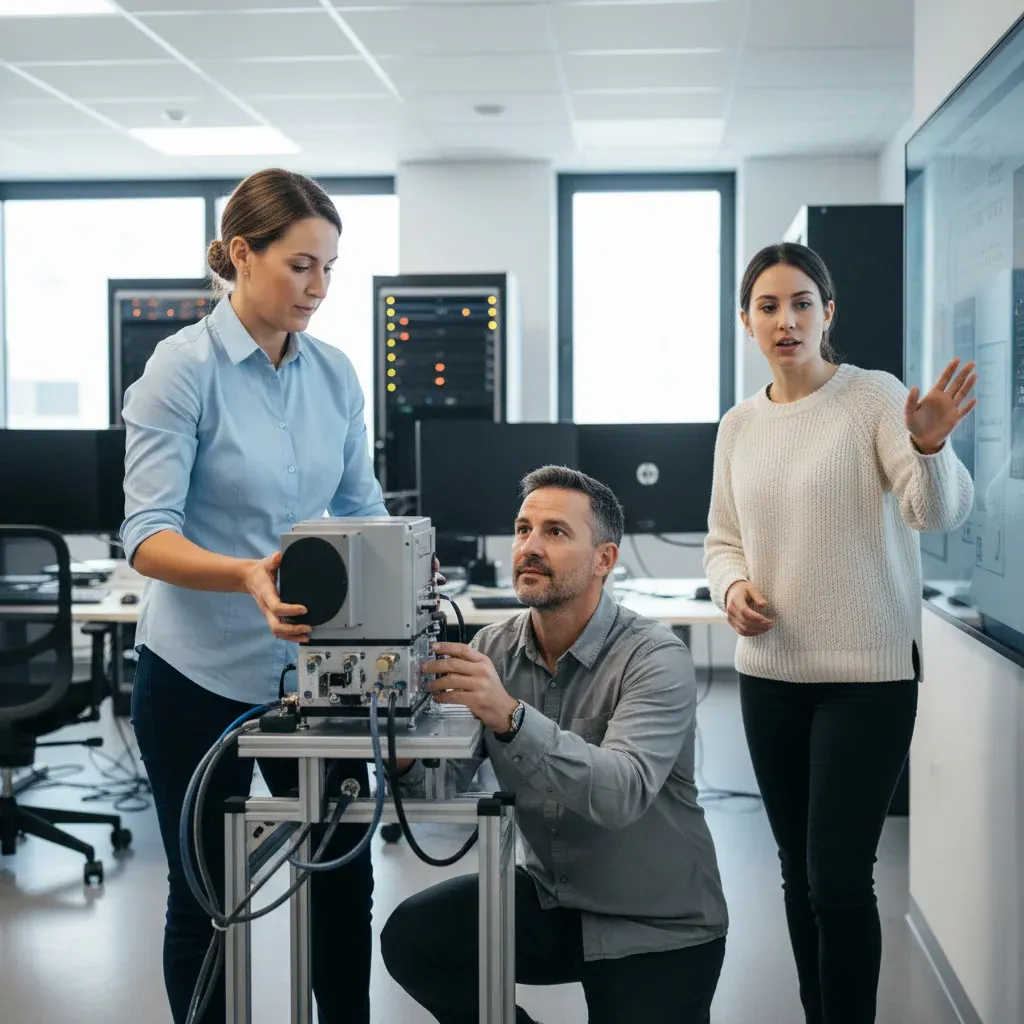
AI news illustration: Mistral Wins Rs 100 Cr Radar Subsystem Order for Low-Altitude UAV Surveillance
Mistral Wins Rs 100 Cr UAV Radar Surveillance Contract
A ₹100 crore order doesn’t just land on a desk. It gets earned through years of proving you can handle the toughest conditions. Mistral, the AXISCADES subsidiary, has done exactly that.
The company will supply liquid-cooled processing units for the Ashwini radar programme, systems designed to track low-altitude threats like UAVs, helicopters, and fighter aircraft. That’s a demanding job. Heat, dust, constant operation.
Mistral’s gear has to survive it all. C Manikandan, the CEO, made it clear: this win reflects a deep commitment to India’s defence indigenisation push. For a company that has quietly built its reputation across radar, avionics, and electronic warfare, this isn’t just another contract.
It’s a signal that critical technologies for next-generation military systems are being developed right here at home.
The systems will support low-altitude surveillance against UAVs, helicopters and fighter aircraft under the Ashwini radar programme. Mistral will deliver liquid-cooled processing units designed for radar operations under demanding field conditions. The company said the order provides revenue visibility over the delivery period and strengthens its position in defence electronics programmes led by DRDO and BEL. Commenting on the order, C Manikandan, CEO of Mistral, said, "LLTR Ashwini programme win reflects Mistral's continued commitment to supporting India's defence indigenisation initiatives and contributing critical technologies to next-generation military systems." AXISCADES said the win builds on its long-standing work with defence forces, laboratories and public sector units across radar, avionics and electronic warfare domains.
This order is not merely a contract. It is a quiet declaration that India’s defence ecosystem is maturing, shifting from dependency on foreign systems to homegrown, battle-ready technology. Mistral, through its liquid-cooled processing units, is embedding itself into the beating heart of the Ashwini programme.
The revenue visibility is welcome. What matters more is the signal: that a subsidiary of AXISCADES can now stand shoulder to shoulder with DRDO and BEL in delivering mission-critical radar subsystems. Each such win chips away at the old narrative of import reliance.
The CEO’s words are measured, but the implication is clear, this is a blueprint for future programs. For low-altitude surveillance, for countering UAV swarms and agile threats, Mistral is no longer a vendor. It is a partner in India’s defence architecture.
That distinction is everything.
Related Reading
 Open Source
 D&B rebuilds 642 million‑business database after AI agents hit limits
 Open Source
 Box CEO Aaron Levie Says AI Will Drive "Biggest Cybersecurity Upgrade
 Open Source
 Study: 6.7% of Deepfake Requests on Hugging Face Targeted Children
 Related Topic
 Black Forest Labs releases Flux 2 with Mistral-3 24B vision-language model
Business & Startups
 Related Topic
 OpenAI's 'Code Red' scramble amid DeepSeek V3.2, Mistral 3, Amazon Nova releases
LLMs & Generative AI
 From Archives
 Apple's iPhone 17 Defies Odds Despite AI Setbacks, IDC Report Shows
 From Archives
 X's Grok AI Fails to Block Inappropriate Image Edits, Tests Reveal
 From Archives
 Mistral releases OCR 3 with 74% success rate, USD 2 per 1,000 pages
Business & Startups
 From Archives
 Mistral AI launches DevStral 2 (123B), DevStral Small 2 (24B) and Vibe CLI
Common Questions Answered
What is the value and purpose of the contract Mistral secured under the Ashwini radar programme?
The contract is worth ₹100 crore and mandates Mistral to supply a radar subsystem that will monitor low‑altitude air traffic, specifically targeting UAVs, helicopters and fighter aircraft as part of India’s Ashwini radar programme. This deal reflects India’s push for indigenous counter‑UAV solutions and provides a significant revenue stream for Mistral over the delivery period.
Which specific hardware component is Mistral delivering for the low‑altitude surveillance system, and why is it significant?
Mistral will deliver liquid‑cooled processing units designed for radar operations in demanding field conditions. The advanced cooling ensures reliable signal and data processing even in high‑temperature environments, which is critical for sustained low‑altitude surveillance missions.
How does the ₹100 crore order enhance Mistral’s position with Indian defence agencies such as DRDO and BEL?
The ₹100 crore order gives Mistral predictable revenue and showcases its ability to meet stringent defence‑electronics specifications, thereby bolstering its reputation with the Defence Research and Development Organisation (DRDO) and Bharat Electronics Limited (BEL). Strengthening these relationships positions Mistral for future collaborations on Indian defence programmes.
Over what timeframe will Mistral deliver the radar subsystem and associated spares, and what capability is the Ashwini radar expected to achieve?
Mistral is slated to deliver the signal and data processing units, together with spares, over the next two years. The Ashwini radar system aims to track UAVs, helicopters and fighter aircraft operating at low altitude, significantly enhancing India’s counter‑UAV surveillance capability.
Further Reading
- Defence Company Secures Rs 100 Crore Defence Radar Subsystem Contract from Bharat Electronics — DSIJ Insights
- AXISCADES Technologies Share Price in Focus; Secures ₹100 Crore Defence Radar Subsystem Order — Angel One
- AXISCADES secures ₹100 Cr Defence Radar Subsystem Contract, Bolstering High-Margin Embedded Systems Growth — CXO Today
- India Expands Aerial Surveillance with Ashwini Radars to Counter China's Growing Threat — Army Recognition
