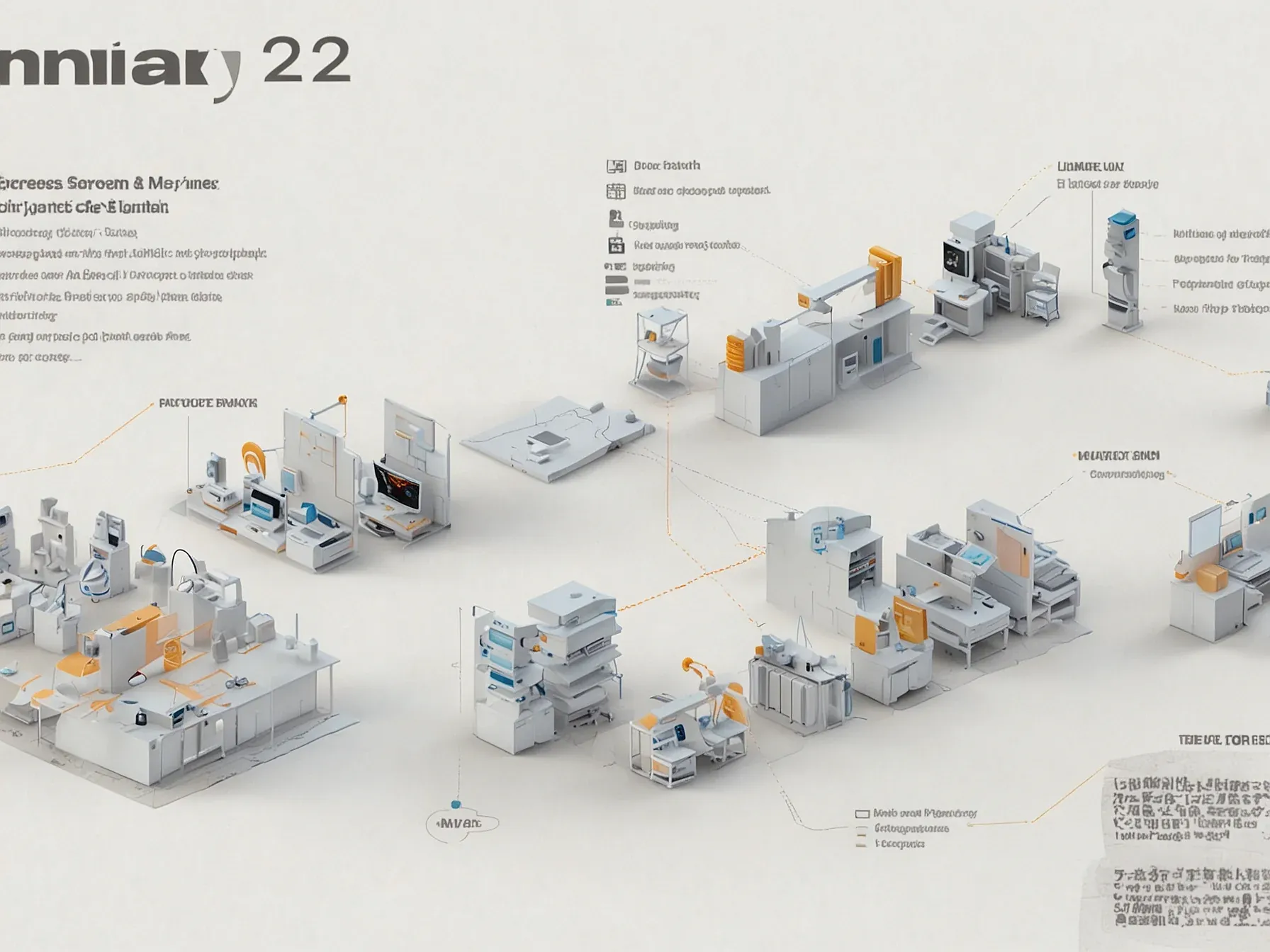
Editorial illustration for MiniMax-M2 Outperforms GLM with Advanced Multi-Step Reasoning Capabilities
MiniMax-M2 Shatters Reasoning Limits in Compact AI Models
MiniMax-M2 Beats GLM 4.6, Offers Compact, High-Efficiency Multi-Step Reasoning
Most open-source AI models are either huge and capable, or small and weak. The new MiniMax-M2 is an attempt to break that trade-off. It's compact, but it claims to beat the larger GLM 4.6 model on a specific and difficult task: thinking through a problem over multiple steps.
This isn't about answering a single question. It's about keeping a train of thought. The model can be asked to research a topic, analyze what it finds, and then draft a solution without forgetting the original goal halfway through. If that works, it's less like a search engine and more like a junior analyst that doesn't need hand-holding.
M2's real edge shows up in multi-step reasoning. Most models can execute one instruction well but stumble when they must plan, research, and adapt over multiple steps. Ask M2 to research a concept, synthesize findings, and produce a technical solution, and it doesn't lose the thread.
It plans, executes, and corrects itself, handling what AI researchers call agentic workflows. All the theory in the world means nothing if a model can't keep up with real users. M2 is fast, not "fast for a large model," but genuinely responsive.
Because it activates fewer parameters per request, its inference times are short enough for interactive use. That makes it viable for applications like live coding assistants or workflow automation tools where responsiveness is key.
The promise is real-world utility. A model that is both quick and capable of sustained reasoning could be wired into actual tools, like a coding assistant that follows a debugging thread or an automation bot that handles a multi-stage customer service ticket. Speed here isn't a bonus, it's a requirement. Nobody will use an AI assistant that takes ten seconds to ponder its next move.
We should be skeptical. Benchmarks can be gamed, and "multi-step reasoning" is a broad claim. But if M2's performance holds, it points to a different path.
Instead of just making models bigger, the focus might shift to making them smarter about how they use the capacity they already have. The goal is a useful machine, not just an impressive one.
Further Reading
- MiniMax-M2's Lightweight Footprint and Low Costs Belie Its Top Performance - DeepLearning.AI The Batch
- GLM-4.6, MiniMax-M2, and Ministral-3 Now Available on FriendliAI - FriendliAI
- MiniMax M2 vs GLM 4.6 vs Kimi-K2-Thinking - LightNode
- Compare GLM-4.6 vs. MiniMax M2 in 2026 - Slashdot - Slashdot
Related Reading
 Open Source
 D&B rebuilds 642 million‑business database after AI agents hit limits
 Open Source
 Box CEO Aaron Levie Says AI Will Drive "Biggest Cybersecurity Upgrade
 Open Source
 Study: 6.7% of Deepfake Requests on Hugging Face Targeted Children
 From Archives
 New studies quantify sycophancy in frontier LLMs amid anecdotal reports
 From Archives
 NVIDIA launches Physical AI Open Datasets: 7M trajectories, 1K assets
Common Questions Answered
How does the MiniMax-M2 differ from traditional AI models in multi-step reasoning?
Unlike most AI models that struggle with complex, multi-step challenges, the MiniMax-M2 demonstrates an exceptional ability to maintain coherence and strategic thinking across intricate tasks. The model can plan, execute, and self-correct during agentic workflows, effectively handling nuanced instructions that typically cause other AI systems to falter.
What makes the MiniMax-M2's performance against GLM significant?
The MiniMax-M2's performance against GLM represents a meaningful leap in machine learning, particularly in how AI systems handle complex, non-linear processing tasks. By showcasing superior multi-step reasoning capabilities, the M2 challenges existing expectations about compact AI systems' potential for sophisticated problem-solving.
What are the key strengths of the MiniMax-M2 in AI reasoning?
The MiniMax-M2's primary strength lies in its ability to maintain context and adaptability across complex tasks, going beyond raw computational power. It can effectively research a concept, synthesize findings, and produce technical solutions while consistently planning, executing, and correcting itself throughout the process.
Further Reading
- MiniMax-M2 vs GLM-4.6 (Reasoning): Model Comparison — Artificial Analysis
- I am switching to this. Better than Claude & GLM-4.6 on ... — AICodeKing (YouTube)
- MiniMax-M2, a Mini model built for Max coding & agentic workflows. — GitHub
