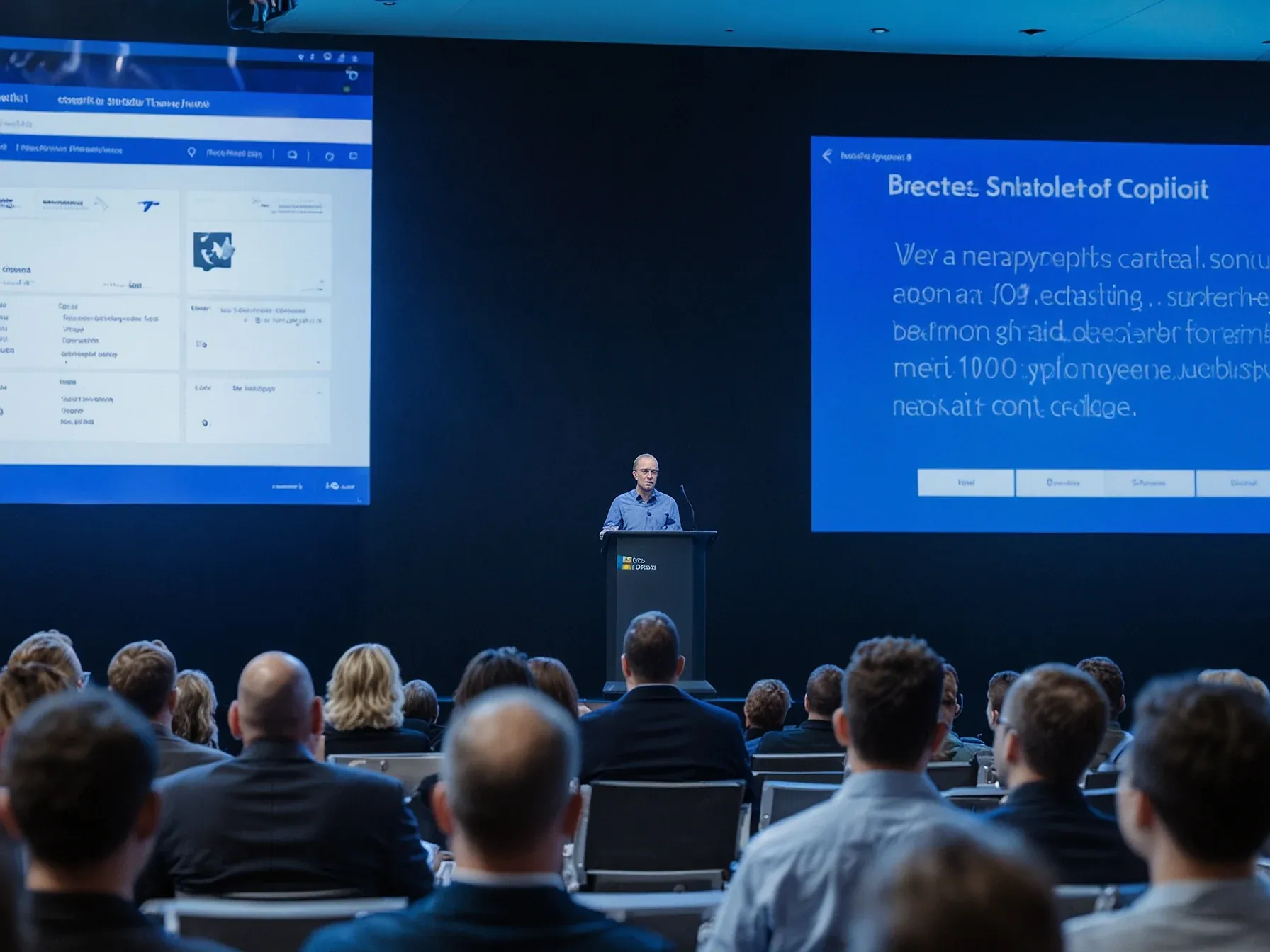
Editorial illustration for Microsoft Unveils Low-Code App Builder in Copilot, Completing Nine-Year Development Goal
Microsoft Copilot Launches Revolutionary Low-Code Builder
Microsoft's Copilot adds low-code app builder, fulfilling nine-year effort
Microsoft has spent nine years trying to get office workers to build software. That bet just landed inside Copilot.
A new low-code app builder now sits directly in the AI assistant. The idea is straightforward. Anyone using Copilot to summarize emails or draft documents could also, with a few conversational prompts, build a custom app.
No separate website. No coding bootcamp. The company is betting that 56 million monthly Power Platform users, a figure from recent earnings, are just the start.
This shifts the goal from selling tools to wiring creation into the daily workflow. It makes app building another task, like scheduling a meeting.
The new features transform Copilot from a conversational assistant into what Microsoft envisions as a comprehensive development environment accessible to non-technical workers. Users can now describe an application they need — such as a project tracker with dashboards and task assignments — and Copilot will generate a working app complete with a database backend, user interface, and security controls.
Charles Lamanna, who has run the Power Platform push from the beginning, frames it as an obvious next step. If Copilot knows your calendar and your files, why shouldn't it build an app that uses them.
The real test is whether people want to. Handing app development to every employee sounds liberating. It also sounds chaotic.
The technical barrier wasn't just a gate to keep people out. It was a filter.
Microsoft's vision has finally crystallized. After nearly a decade, low-code is no longer a side project. It is the assumed next layer of work, baked directly into the tools millions use every day.
The company has executed a long, quiet plan. Now it waits to see if the workplace will execute along with it.
Further Reading
- Microsoft Copilot Studio vs. Microsoft Foundry: Building AI Agents and Apps - Microsoft Tech Community
- What's New in Copilot Studio: November 2025 Updates - Microsoft Copilot Blog
- What's New in Microsoft 365 Copilot | November & December 2025 - Microsoft Tech Community
Related Reading
Browse all Microsoft news → AI Tools & Apps
 Claude gains shared context in Excel, PowerPoint; Microsoft adds Copilot Cowork
 AI Tools & Apps
 OpenAI Developer: AI Agent "Swarms" Waste Tokens, Create "Coordination Tax
 AI Tools & Apps
 LG's recent webOS update adds Microsoft Copilot app, now removable
 Related Topic
 Microsoft adds ’vibe working’ to Word and Excel; Copilot Agent Mode now default
Business & Startups
 Related Topic
 Nadella: AI success needs intense usage, Cloud hits USD 54.5B, Azure up 40%
Business & Startups
 From Archives
 Adobe launches Project Moonlight, AI assistant for social media admin
 From Archives
 Opera AI Browser: Mature Mainstream Choice, Needs Recent Updates
 From Archives
 Microsoft retains 32.5% stake in OpenAI as partnership agreement continues
Business & Startups
 From Archives
 Anthropic embeds Claude AI in Excel, eyes finance market against Copilot
Common Questions Answered
How long has Microsoft been working on its low-code development strategy?
Microsoft has been developing its low-code strategy for nine years through the Power Platform initiative. The platform has grown significantly, reaching 56 million monthly active users and culminating in the new low-code app builder integrated into Copilot.
What makes Microsoft's new Copilot low-code app builder significant for businesses?
The new low-code app builder aims to democratize software development by making app creation accessible to non-technical employees. By integrating these tools directly into the AI-powered Copilot platform, Microsoft is transforming how businesses approach software development and reducing barriers to technology creation.
What is the primary goal of Microsoft's Power Platform?
Microsoft's Power Platform seeks to democratize software development by providing low-code and no-code development tools for users without traditional programming skills. The platform has successfully grown to 56 million monthly active users, demonstrating its effectiveness in making technology creation more accessible to a broader range of professionals.
Further Reading
- Microsoft 365 Copilot now enables you to build apps and workflows — Microsoft 365 Blog
- Microsoft 365 Copilot Adds No Code App Builder and Workflows — Windows Forum
- What's new in Copilot Studio: September 2025 — Microsoft Copilot Blog
- Overview of Microsoft Copilot Studio 2025 release wave 1 — Microsoft Learn
- Copilot Studio at Microsoft Build: Everything You Need to Know — YouTube
