
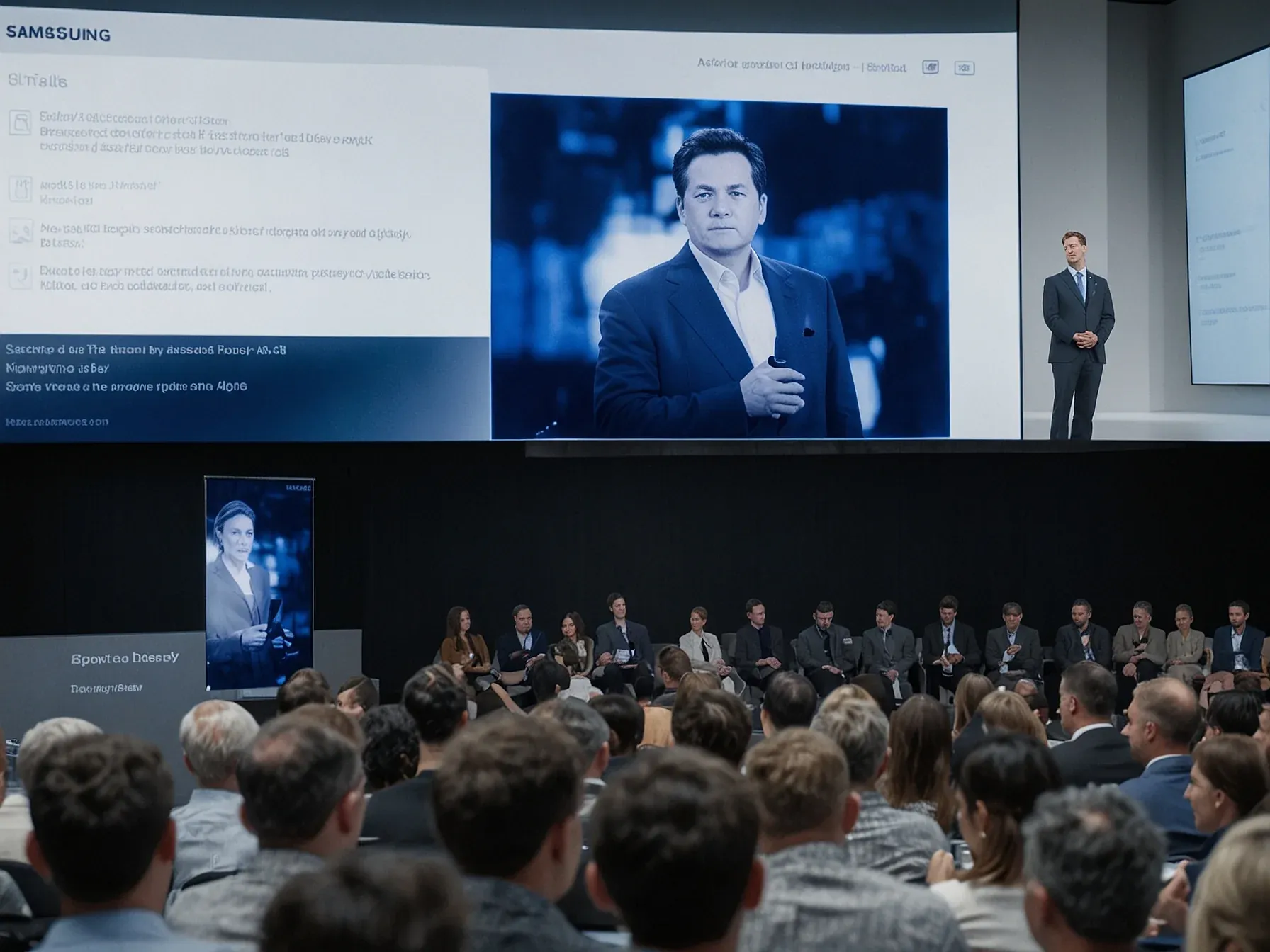
Editorial illustration for Samsung Exec Dismisses 'Real' Moon Photo Debate, Argues No Pure Image Exists
Samsung Defends AI Moon Photos: No Pure Image Exists
Instagram says eyes mislead; Samsung exec says no real picture Moon photo feud
Instagram’s Adam Mosseri says authenticity can be copied without end. Samsung’s Patrick Chomet argued the same point more directly last year, declaring there is no “real picture” after criticism of how its phones photograph the Moon. Apple software chief Craig Federighi separately told the Wall Street Journal he is “concerned” about AI editing.
Samsung exec Patrick Chomet took the approach that "actually, there is no such thing as a real picture," after controversies last year over the Galaxy phones' approach to Moon photography, and Apple's Craig Federighi told the WSJ he's "concerned" about the impact of AI editing. But hey, maybe we're just another Instagram slideshow or two away from figuring all of this out. Adam Mosseri: The key risk Instagram faces is that, as the world changes more quickly, the platform fails to keep up. Looking forward to 2026, one major shift: authenticity is becoming infinitely reproducible.
The executives, whose companies built the tools for creating and sharing images, now disagree on what their products mean. Federighi voiced a specific worry. Chomet dismissed the premise of the debate.
For his part, Mosseri frames the problem as one of execution. His stated risk for Instagram is a platform that falls behind, even as the material it hosts becomes harder to verify. The argument has moved past whether a picture is real.
It’s about what to do when the distinction no longer works.
Related Reading
 Open Source
 D&B rebuilds 642 million‑business database after AI agents hit limits
 Open Source
 Box CEO Aaron Levie Says AI Will Drive "Biggest Cybersecurity Upgrade
 Open Source
 Study: 6.7% of Deepfake Requests on Hugging Face Targeted Children
 Related Topic
 Google, Samsung unveil Gemini task automation for food delivery and rideshare
AI Tools & Apps
 Related Topic
 ByteDance taps Samsung for custom AI chips and scarce memory supply
Business & Startups
 From Archives
 Fal releases open-weight Flux 2 Turbo, 10× cheaper, 6× more efficient
 From Archives
 Nano Banana 2025 trend: moonlit photo edits and lifelike dog figurines
 From Archives
 Samsung adds Vision AI Companion, an AI Bixby, to TVs for real-time queries
LLMs & Generative AI
 From Archives
 Samsung and SoftBank sign MoU to explore AI-driven 6G radio access networks
AI Tools & Apps
Common Questions Answered
How does Samsung defend its approach to Moon photography using AI?
Samsung executive Patrick Chomet argues that 'there is no such thing as a real picture,' challenging traditional notions of photographic authenticity. His stance suggests that computational imaging techniques are a legitimate way of capturing lunar landscapes, blurring the line between enhancement and original image capture.
What philosophical perspective does Samsung take on digital imaging and AI photography?
Samsung believes that pure photographic reality is a myth, with executives like Patrick Chomet suggesting that all images are fundamentally processed and interpreted. This perspective challenges traditional understanding of photography by positioning AI enhancement as an integral part of image creation rather than a distortion of reality.
What concerns have been raised by tech leaders about AI-enhanced smartphone photography?
Apple's Craig Federighi has expressed concern about the potential impact of AI editing on digital imagery, highlighting the growing tension in the tech industry around computational photography. The debate around Moon photography specifically illustrates the complex ethical and technical questions surrounding AI's role in image generation and manipulation.
Further Reading
- Samsung exec stirs up controversy on AI photos, says there's no real ... — SamMobile
- When Samsung's Moon Algorithm Goes Full Comedy Mode — Gadget Hacks
- Yes, Mr. Samsung Exec, There is Such a Thing as a 'Real' Photo — PetaPixel
- Is Your Samsung Still Faking Moon Photos? - YouTube — YouTube (Shayne Mostyn)
