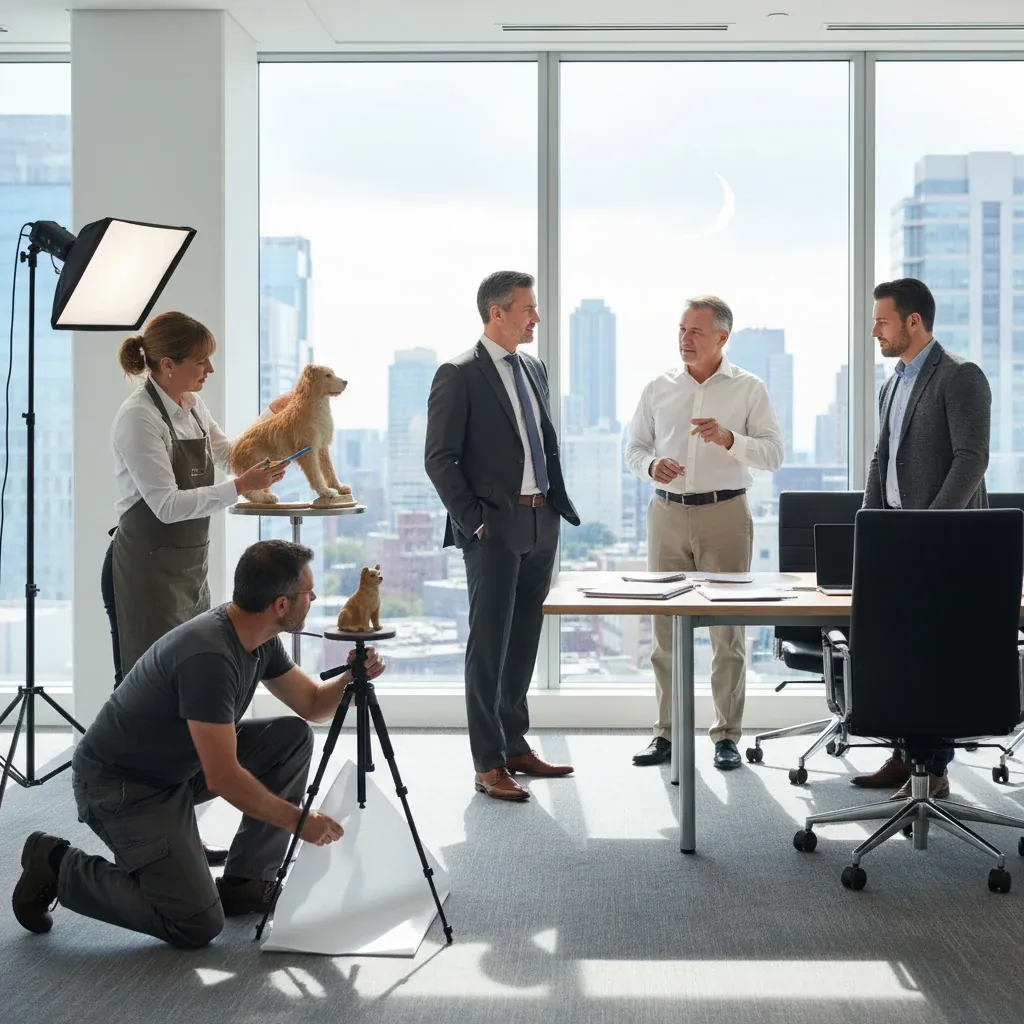
Editorial illustration for Nano Banana 2025: Moonlit Edits and Hyper-Realistic Dog Figurines Spark Creative Trend
Nano Banana 2025: AI Art Redefines Digital Creativity
Nano Banana 2025 trend: moonlit photo edits and lifelike dog figurines
The moon doesn’t just rise; it rewrites the sky. In 2025, the Nano Banana trend has turned that celestial power into a tool for visual storytelling, prompting AI to flood a daytime snapshot with cobalt shadows, silver light, and the kind of dramatic noir that feels stolen from a midnight film. Then there’s the dog.
Not a real dog, but a figurine so lifelike you almost expect it to wag its tail. A simple prompt yields a miniature sculpture, perched on a desk beside torn birthday wrapping, as if the gift itself just breathed. And perhaps the most unsettling magic of all: a Polaroid frame that lets you hug your younger self.
No time machine, just a photograph of a photograph, conjuring an embrace across decades. These are the best Nano Banana trends of 2025, and they’re not just edits. They’re quiet rebellions against the ordinary.
It’s been a huge year for our image generation and editing model Nano Banana, starting with its debut in August as the top-rated image editing model in the world.
These trends aren’t just clever tricks with pixels. They reveal a deeper hunger: to bend time, to hold memory in our hands, to stage intimacy with a moonbeam and a figurine. The dog model on a birthday desk isn’t a toy, it’s a souvenir of a moment that never happened.
The Polaroid of your younger self being hugged by today’s you? That’s not nostalgia. That’s rewriting the past so it feels seen.
Nano Banana gave us the tools; we gave them longing. In 2025, the most powerful edits don’t just change a photo, they change what we believe was possible.
Related Reading
 Open Source
 D&B rebuilds 642 million‑business database after AI agents hit limits
 Open Source
 Box CEO Aaron Levie Says AI Will Drive "Biggest Cybersecurity Upgrade
 Open Source
 Study: 6.7% of Deepfake Requests on Hugging Face Targeted Children
 From Archives
 Tool Extracts Detailed Claude Code Transcripts via Reverse-Engineered API
 From Archives
 Open source OCR model scores 82.4 on olmOCR-bench, handles equations, tables
Common Questions Answered
How are AI tools transforming digital photography in the Nano Banana 2025 trend?
AI-powered transformations are enabling photographers to dramatically reimagine scenes, such as converting standard images into moonlit landscapes with dramatic shadows and moody lighting. These edits go beyond simple filters, representing profound visual reinventions that push the boundaries of digital artistry.
What makes the hyper-realistic dog figurines in Nano Banana 2025 unique?
The 3D dog figurines are being created with astonishing precision, using AI tools that can generate lifelike digital models that appear almost indistinguishable from physical objects. These models are often presented in creative scenarios, such as being positioned on a desk next to birthday packaging to simulate the experience of unwrapping a gift.
How do AI transformations contribute to personal storytelling in digital art?
AI tools are enabling artists to create deeply personal visual narratives, such as generating Polaroid-style images that juxtapose different stages of life or reimagine personal memories with enhanced emotional depth. These transformations allow individuals to explore and represent their personal histories through innovative digital mediums.
Further Reading
- Google Nano Banana Review (2025): Local AI Photo Edits — Skywork.ai
- 5 Google Nano Banana Pro Photo Editing Prompts To Change Your Daytime Pictures Into Nighttime Shots — NDTV Profit
- 200+ Gemini Nano Banana Prompts for Perfect AI Image — Chat Smith
- Google Nano Banana: Complete Guide + 50 Prompts + ... — Superprompt
