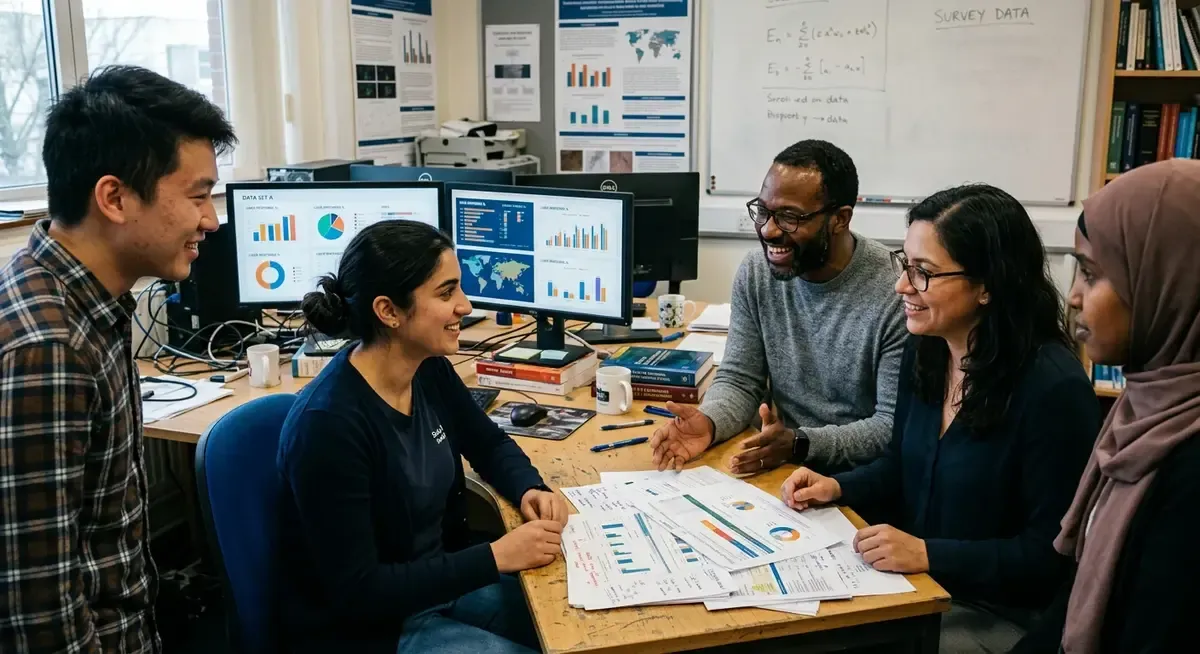
Editorial illustration for Harvard: men more optimistic and confident about AI than women
Harvard: Men More Confident in AI Than Women
Susan Milner and Craig Dalton do not exist. Harvard researchers made them up for a survey, and more than half of the men who took it claimed to know who they were anyway.
The survey, published Wednesday by Harvard Kennedy School's Shorenstein Center, polled over 5,400 Americans on how much they actually know about artificial intelligence, versus how much they think they know. Seventy-three percent of male respondents correctly identified OpenAI CEO Sam Altman. A little over half, 53 percent, also said they recognized Milner and Dalton, two names the researchers invented for the study. For comparison, 40 percent of women claimed to know the fictional pair, and 38 percent said they recognized Mira Murati, OpenAI's former CTO and now CEO of Thinking Machine Labs, who is very real.
Shorenstein Center executive director Laura Manley told WIRED that the pattern fits a broader trend in the data: men report using AI more often and score better on factual questions about it, but the two groups get questions wrong at roughly the same rate. The gap, she says, comes down to something else entirely.
Compared to women, “we're seeing that men are more optimistic and more confident” across the board when it comes to AI, Harvard Kennedy School’s Shorenstein Center executive director Laura Manley tells WIRED. Sometimes, that veers into overconfidence—like claiming to recognize fictional AI executives.
Why this matters
The made-up names are the real finding here. Susan Milner and Craig Dalton don't exist, and more than half of the men Harvard surveyed claimed to recognize them anyway. That's not a knowledge gap, that's a confidence problem, and it's the kind of confidence that shapes who gets listened to in product meetings, investment pitches, and hiring panels across our industry.
Laura Manley's point about men being "more optimistic and more confident" tracks with what a lot of us have seen on AI teams: the loudest voice in the room often isn't the most informed one, and nobody checks credentials in real time. For founders building AI products and researchers citing "well-known" figures in the field, this is a reminder to verify before repeating. For anyone managing a team, it's worth asking who actually knows the material versus who's just comfortable sounding like they do.
Mira Murati is a real name worth knowing. Half the men in this survey apparently couldn't tell the difference between her and someone invented for a survey question.
Related Reading
 Research & Benchmarks
 Microsoft AI Chief: "If It Isn't Safe We Shouldn't Build It
 Research & Benchmarks
 Google's FACTS benchmark shows 70% factuality ceiling across four tests
 Research & Benchmarks
 Nvidia's DLSS 4.5 beta adds 6x Multi Frame Generation for RTX 50 GPUs
 From Archives
 Gemini 4 Argon review: GraphWalks F1, DeepSWE, Vibe Code Bench
 From Archives
 406 scientists demand AI models cut off from internet over unpredictability
Common Questions Answered
What did the Harvard Kennedy School's Shorenstein Center discover about gender differences in AI knowledge confidence?
The survey of over 5,400 Americans found that men are more optimistic and confident about artificial intelligence compared to women, sometimes veering into overconfidence. This confidence gap extends across all aspects of AI knowledge, with men claiming familiarity with AI topics and figures at higher rates than their actual knowledge would support.
How did the fictional names Susan Milner and Craig Dalton reveal overconfidence in the Harvard survey?
Harvard researchers included these completely made-up AI executives in their survey to test respondents' actual knowledge versus perceived knowledge. More than half of the male respondents claimed to recognize these fictional names, demonstrating that their confidence in AI knowledge exceeded their actual understanding.
What percentage of male respondents correctly identified OpenAI CEO Sam Altman in the Harvard survey?
Seventy-three percent of male respondents correctly identified Sam Altman as the CEO of OpenAI. This higher accuracy rate contrasts sharply with the over 50 percent of men who falsely claimed to recognize the fictional AI executives, highlighting the inconsistency in their knowledge claims.
Why does the confidence gap between men and women on AI knowledge matter according to the Harvard research?
The research suggests this confidence problem has real-world implications for who gets listened to in product meetings, investment pitches, and hiring panels across the tech industry. Men's overconfidence about AI knowledge could influence decision-making processes and opportunities in professional settings, even when their actual understanding doesn't warrant such confidence.
Further Reading
- Men Can’t Stop Faking How Much They Know About AI - WIRED
- The Gender Gap in AI - Pew Research Center
- Hope and Generational AI - IEEE Computer Society
- Demographic Differences in How Teens Use and View AI - Pew Research Center
- What Will AI Do for Us? Young Adults in Lower-Income Countries Feel More Positive About Its Potential, New Survey Finds - The Conversation
