
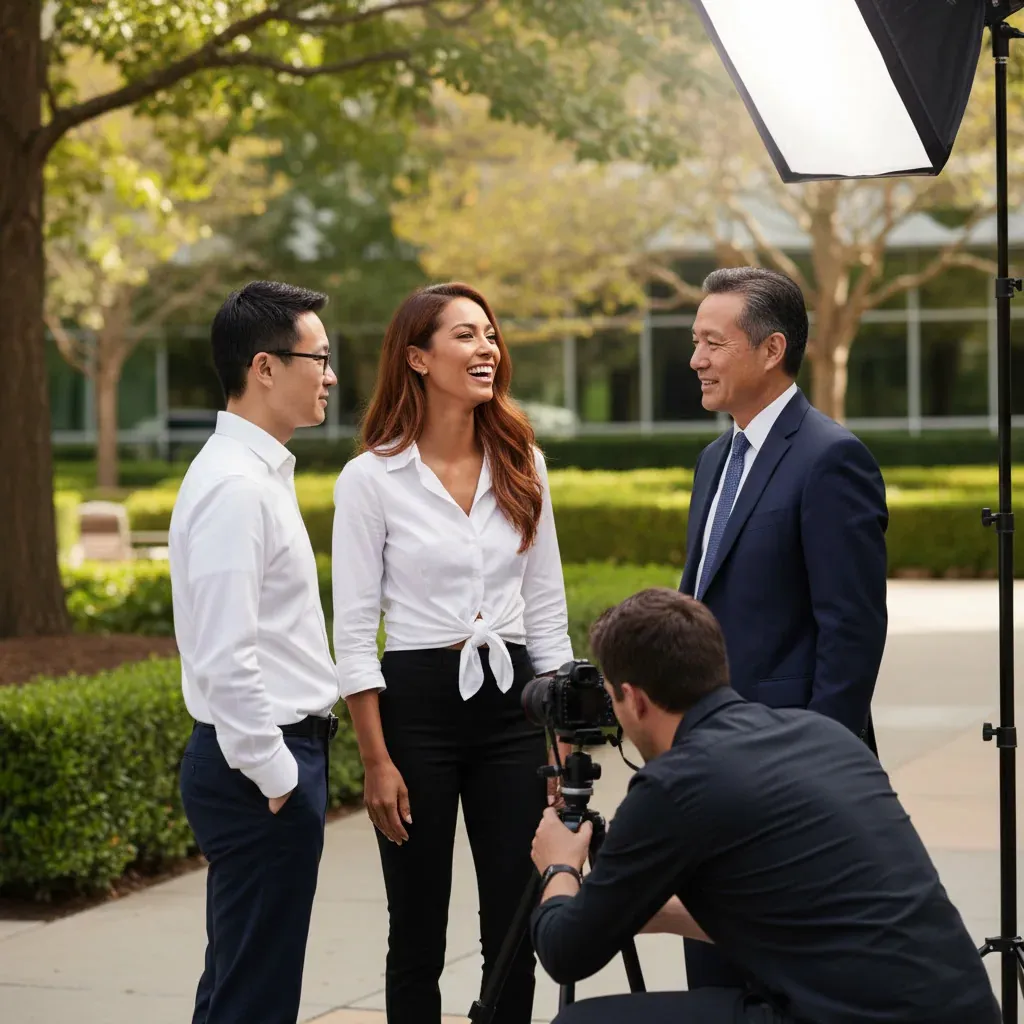
Editorial illustration for Google Boosts Flow AI Video Tool with Enhanced Realism and Editing
Google Flow AI Video Tool Reaches New Realism Milestone
Google enhances Flow AI video generator with better editing, audio, realism
Google's Veo 3.1 update landed Wednesday. It wasn't about flashy new models. Instead, the company trained its focus on the mundane mechanics of fakery: shadows and lighting.
The goal, plainly stated, is to make AI videos harder to spot. This is the race now. Not for the longest clip, but for the most convincing one.
Google is making videos created with the AI filmmaking tool Flow even more realistic — and harder to identify as AI-generated at first glance. The company announced Wednesday that users can add in and change the shadows and lighting of their AI videos. The expanded editing features in Flow are tied to the Veo 3.1 update, also announced on Wednesday, which Google says does a better job of making a video based on the images submitted as a prompt.
Google’s AI video generator is getting better editing and more audio You can fix lighting and add shadows in AI-generated videos made with Flow. You can fix lighting and add shadows in AI-generated videos made with Flow. Flow users will also be able to generate videos with audio using several of the tool’s new features.
Users can make a video with audio based on three reference images that the company calls “Ingredients to Video.” Another feature, called “Frames to Video,” creates a video that bridges a starting image with an ending image, with accompanying audio.
Our brains are wired to spot inconsistencies in light. They're a primary tell. So Google's new controls for shadows aren't just another feature.
They're a targeted strike on verisimilitude. The "Ingredients to Video" audio tool solves a practical problem, turning a handful of images into a coherent scene. It's all deeply pragmatic.
This is incremental work. Google is sanding down edges, not breaking new ground. The immediate ethical headache is obvious: better fakes.
But watch the creative industries. The real shift comes when these clips are good enough for a first draft, a placeholder, a cheap social post. That absorption will happen slowly.
Then all at once. For now, it's just a spec sheet. The story is the quiet, relentless push to make the artificial feel utterly ordinary.
Related Reading
Browse all Google news → AI Tools & Apps
 Claude gains shared context in Excel, PowerPoint; Microsoft adds Copilot Cowork
 AI Tools & Apps
 OpenAI Developer: AI Agent "Swarms" Waste Tokens, Create "Coordination Tax
 AI Tools & Apps
 LG's recent webOS update adds Microsoft Copilot app, now removable
 Related Topic
 Google to End Free Access to Gemini AI for Non-Subscribers
LLMs & Generative AI
 Related Topic
 NVIDIA and Google Cloud let developers scale AI from prototype to production
Market Trends
 From Archives
 Adobe launches LLM Optimizer to enhance brand visibility in AI chat services
 From Archives
 Dfinity's Caffeine AI Builds Apps Through Conversation
 From Archives
 Google cuts AI Pro plan from ₹1,950 to ₹11/month for three months
LLMs & Generative AI
 From Archives
 Google One's $10 Premium Plan Offers 2TB Storage, Photo Editing Tools
LLMs & Generative AI
Common Questions Answered
How does Google's Flow AI video tool enhance video realism with the Veo 3.1 update?
The Veo 3.1 update allows users to add and modify shadows and lighting in AI-generated videos, creating more nuanced and realistic visual effects. These expanded editing features give creators unprecedented control over synthetic video details, making AI-generated content increasingly difficult to distinguish from human-shot footage.
What specific improvements does the Veo 3.1 update bring to AI video generation?
Google's Veo 3.1 update improves the video generation process by enhancing the ability to create videos based on submitted image prompts. The update focuses on more precise visual details, particularly in manipulating shadows and lighting, which helps create more convincing and authentic-looking synthetic videos.
Why is Google investing in making AI-generated videos look more realistic?
Google is strategically working to push the boundaries of synthetic media generation by creating AI videos that are increasingly indistinguishable from human-created content. By providing more granular editing capabilities and improving visual realism, the company aims to advance the technology of AI video generation and provide creators with more powerful tools.
Further Reading
- Introducing Veo 3.1 and advanced capabilities in Flow - Google Blog - Google Blog
- Google Veo 3 vs Veo 3.1: What's New and Should You Upgrade? - MindStudio
- Veo 3.1 Is More Powerful Than You Realize! - YouTube
- The Veo 3.1 Update You Need to Know About - Reddit
- Veo 3.1 - Google DeepMind - Google DeepMind
