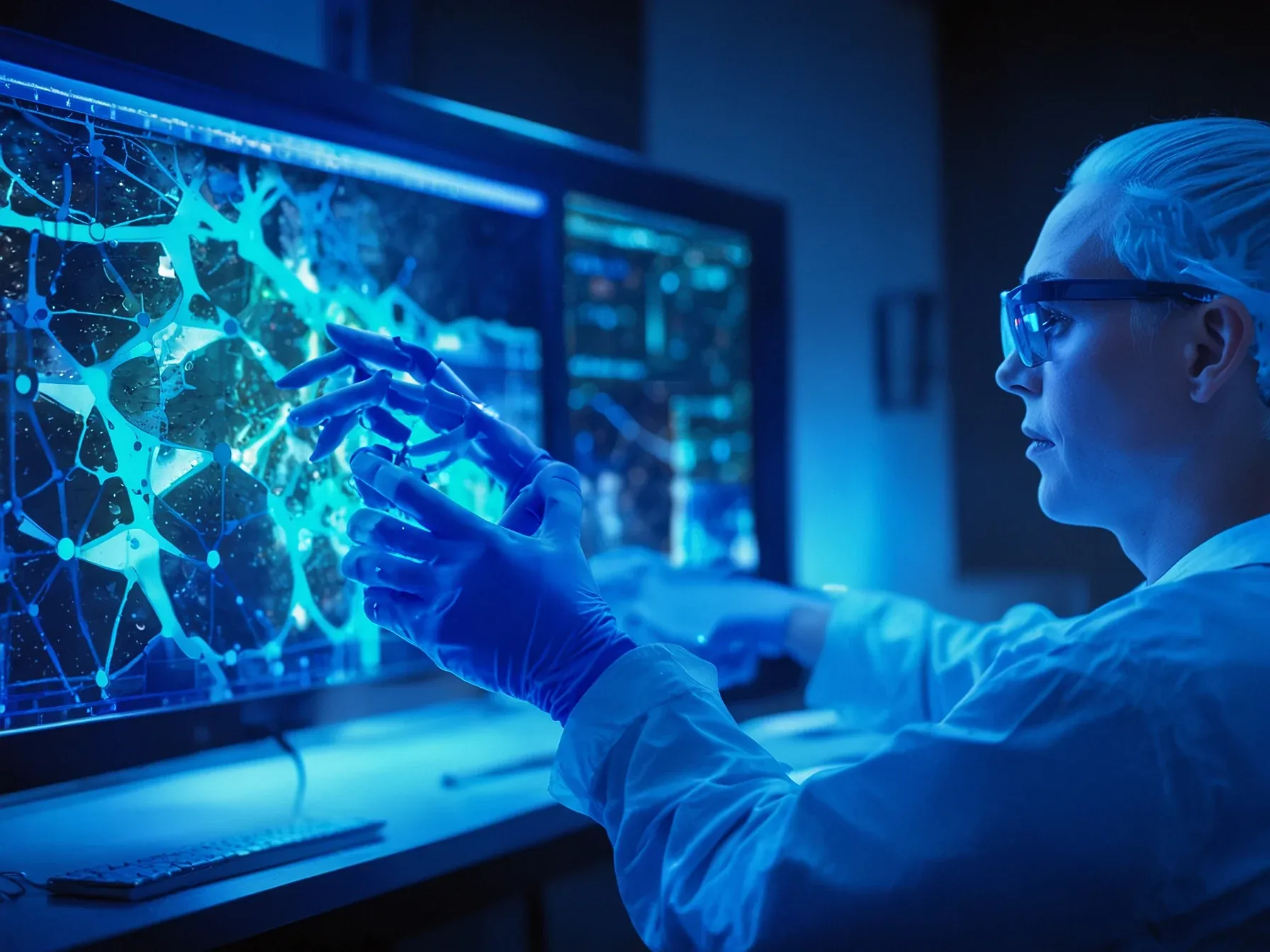
AlphaFold Gains 1M EMEA Users as Google DeepMind Leads
Google DeepMind’s Nobel-winning team powers AlphaFold, nearing 1 M EMEA users
A Nobel prize-winning team. A scientific breakthrough that redefined biology. And now, nearly one million users across EMEA alone, AlphaFold is no longer just a triumph of research; it is a testament to what European talent can achieve when given the right conditions.
That talent, however, is straining against an environment that has not kept pace. European businesses deserve the best AI tools. They are not getting them.
The urgency is clear: the future of AI in Europe hangs in the balance, and the window to seize a €1.2 trillion opportunity is narrowing fast.
The latest Google AI models are 300X more powerful than the state of the art just two years ago.
The Nobel laureates at DeepMind didn’t just crack a code of biology , they proved what focused brilliance, coupled with European talent, can achieve. Nearly one million users across EMEA already rely on AlphaFold. That’s a signal, not a finish line.
The region stands on the edge of a 1.2 trillion euro prize. Yet only 14% of businesses have even stepped onto the field. That gap isn’t a failure of ambition , it’s a failure of environment.
European founders don’t lack vision. They lack the infrastructure, the access, the tools that turn breakthroughs into everyday reality. The urgency here is not panic; it’s resolve.
We know what’s possible when talent meets opportunity. Now the question is whether Europe will build the scaffolding for its own future , or watch it rise elsewhere. The moment demands speed, courage, and an unflinching commitment to making the best AI tools not just available, but inevitable for every business that dares to lead.
Related Reading
Browse all Google news → Market Trends
 AI drives three initiatives to accelerate global action for planet protection
 Market Trends
 Akamai data shows AI training bots and content‑fetching bots rise since July
 Market Trends
 NVIDIA and Google Cloud let developers scale AI from prototype to production
 Related Topic
 Google to End Free Access to Gemini AI for Non-Subscribers
LLMs & Generative AI
 Related Topic
 Google tests visual 'magazine-style' UI for Gemini 3 Pro users
LLMs & Generative AI
 From Archives
 AI browsing hinges on redesigning sites as agents struggle with UI affordances
 From Archives
 SAS Academy trains Indian workforce as GenAI demand outpaces 1 M-plus skill gap
 From Archives
 Marc Benioff says he won’t return to ChatGPT after trying Gemini 3
LLMs & Generative AI
 From Archives
 Gemini 3.0, Claude, and Grok rank GPT-5.1 top in Karpathy’s LLM Council
LLMs & Generative AI
Common Questions Answered
How many AlphaFold users are reported in the EMEA region according to the article?
The article states that AlphaFold is nearing the one‑million‑user mark across the EMEA market. This figure reflects rapid adoption of the protein‑folding tool among European researchers and enterprises.
What role does Google DeepMind’s Nobel‑winning team play in AlphaFold’s growth in Europe?
Google DeepMind’s Nobel‑winning team is credited with driving continuous scientific breakthroughs that power AlphaFold. Their leadership, combined with European talent, has been pivotal in scaling the tool’s usage throughout the continent.
Which event highlighted the partnership between DeepMind’s team and European enterprises?
The partnership was emphasized during remarks at the European Business Summit, where speakers noted the growing collaboration between DeepMind’s team and European businesses. The summit underscored the strategic importance of AI‑driven science for the region.
What is Debbie Weinstein’s contribution to the adoption of AI tools like AlphaFold, as mentioned in the article?
Debbie Weinstein is described as helping leaders of all sizes make AI useful and drive growth. She emphasizes translating the technology’s potential into tangible business advantages, even as the concrete impact on performance remains to be fully measured.
Further Reading
- Google's Europe Chief: €1.2T AI Opportunity at Risk from Red Tape - The Tech Buzz
- Google DeepMind Announces World-Leading AlphaFold 3 Model - TIME
- EMBL-EBI and Google DeepMind renew partnership and release update to AlphaFold Database - EMBL News
- AlphaFold Protein Structure Database 2025: a redesigned interface ... - Nucleic Acids Research
- Google DeepMind won a Nobel prize for AI: can it produce ... - Nature
