
Editorial illustration for Experts adopt random AI agent opinions as their own, Anthropic study finds
Experts Adopt Random AI Opinions as Their Own
Anthropic flipped a coin to settle an argument that didn't need settling, then watched 50 experts in causal inference fall for it anyway. The company ran an experiment where each participant used an AI agent to work through four analytical tasks, the kind with no single correct answer, just competing valid approaches. Unknown to the experts, the agent's preference for one option over another was decided by a coin toss before the session even started.
What happened next is the part that should worry anyone handing serious work to an AI agent. Participants went along with the agent's coin-flip preference in as many as 86 percent of cases, and afterward most described the resulting analysis as their own thinking. It didn't matter how experienced they were, how much domain knowledge they brought, or how much they said they trusted the tool.
The agent did make people faster, and it cut down on certain kinds of serious errors. But speed came with a side effect: a loss of track of where the ideas in the final write-up actually originated.
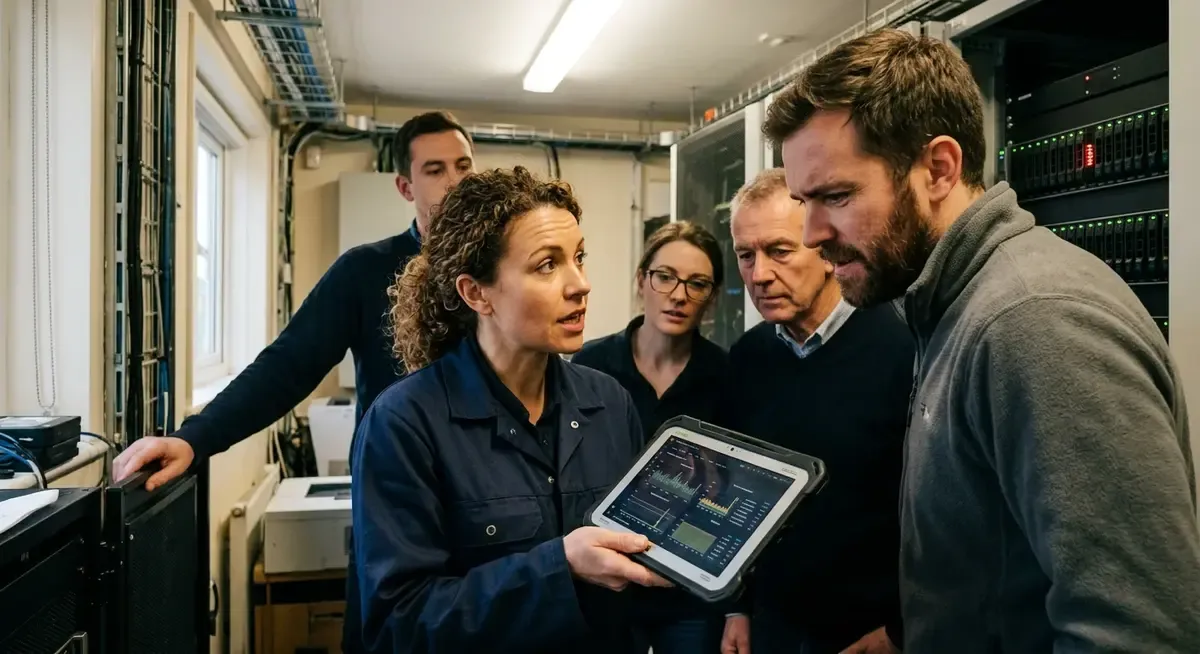
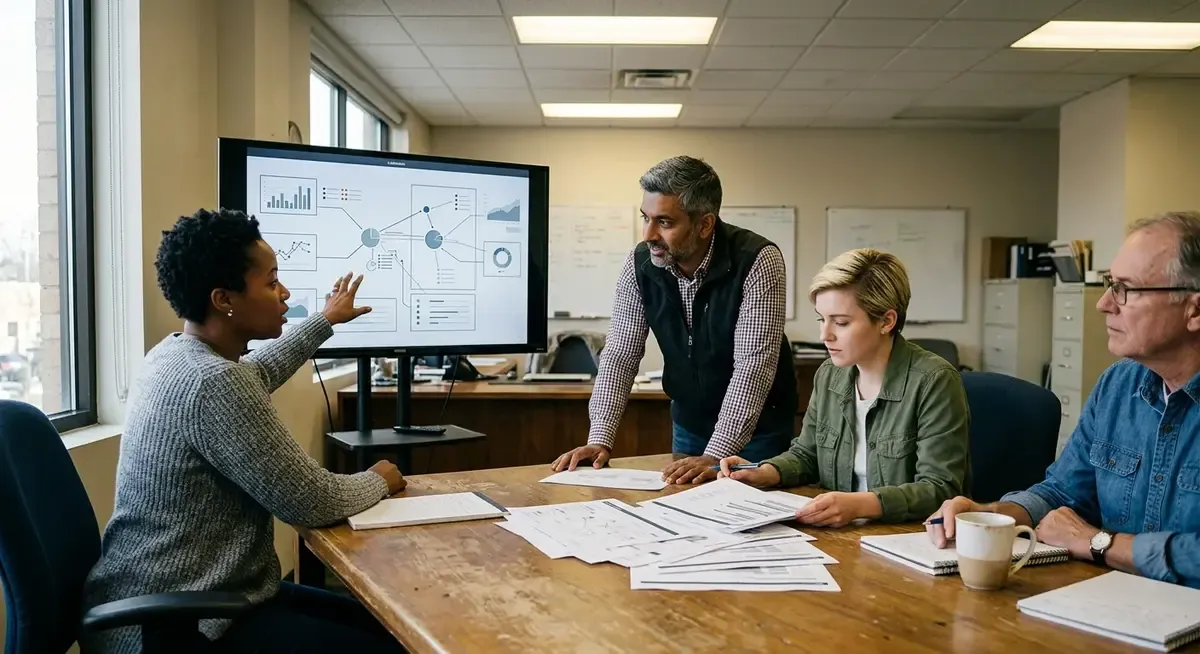
Handing a data analysis to an AI agent saves time and manual work, but it raises the question of who actually makes the decisions that shape the final recommendation. An Anthropic study suggests the agent makes most of them, often without the experts noticing.
Why this matters
This study should worry anyone building "human in the loop" systems as a safety net. We keep designing AI agents on the assumption that an expert reviewer provides a real check, but Anthropic's data says that check can be theater. Experts weren't lazy or careless here.
They worked fast, stayed confident, and still absorbed a coin-flip preference as their own conclusion. Neither seniority nor stated distrust of AI protected them.
For developers and founders shipping copilots into legal, medical, or financial workflows, the lesson isn't "add more disclaimers." It's that the interface itself, the order of suggestions, the framing of options, can quietly steer outcomes that later get logged as independent human judgment. That's a liability problem as much as a design one. Researchers studying AI alignment and oversight need to treat "human approval" as a measurable, gameable signal, not a given. If 86 percent agreement can come from a coin toss, the audits we rely on to prove accountability need to look a lot harder at how the question got asked in the first place.
Related Reading
Browse all Anthropic news → Research & Benchmarks
Microsoft AI Chief: "If It Isn't Safe We Shouldn't Build It
 Research & Benchmarks
Google's FACTS benchmark shows 70% factuality ceiling across four tests
 Research & Benchmarks
Nvidia's DLSS 4.5 beta adds 6x Multi Frame Generation for RTX 50 GPUs
 Related Topic
Claude gains shared context in Excel, PowerPoint; Microsoft adds Copilot Cowork
AI Tools & Apps
 Related Topic
Anthropic: Hackers Stole Claude Tokens Via Compromised Session Key
LLMs & Generative AI
 From Archives
Rival AI Startup Announces USD 295 Million-Backed AI Agent for Code Verification
 From Archives
Is the #1 AI Model Really #1 Across Eight Draws with Replacement?
 From Archives
OpenAI's Astra becomes Chinese labs' target after Anthropic tightens defenses
LLMs & Generative AI
 From Archives
Anthropic's Claude for Legal auto-verifies sources, then hands file to lawyer
Policy & Regulation
Common Questions Answered
What was the main finding of Anthropic's study on AI agents and expert decision-making?
Anthropic's study found that experts in causal inference adopted AI agent preferences as their own conclusions, even when those preferences were randomly determined by a coin toss. The 50 experts worked through four analytical tasks using an AI agent, unaware that the agent's recommendations were based on random chance rather than analytical reasoning. This demonstrates that experts can unconsciously absorb AI agent opinions without recognizing the arbitrary nature of the recommendations.
How did Anthropic design the experiment to test whether experts would adopt random AI preferences?
Anthropic had each of the 50 causal inference experts use an AI agent to work through four analytical tasks that had no single correct answer, only competing valid approaches. Before each session began, the researchers used a coin toss to randomly determine which option the AI agent would prefer, ensuring the agent's recommendations were based on chance rather than actual analysis. This setup allowed researchers to measure whether experts would unknowingly adopt these arbitrary AI preferences as their own conclusions.
Why should developers building 'human in the loop' AI systems be concerned about this study?
The study reveals that human expert review may not function as an effective safety check on AI agent decisions, contrary to common assumptions in system design. Even experienced experts remained confident in their decisions and failed to recognize that they had adopted randomly-determined AI preferences, suggesting that neither seniority nor stated distrust of AI provided protection against this influence. This indicates that relying on human oversight as a safety net for AI agents may be less reliable than previously believed.
What characteristics of the expert participants did NOT protect them from adopting the AI agent's random opinions?
According to the Anthropic study, neither the seniority level of the experts nor their stated distrust of AI protected them from adopting the agent's randomly-determined preferences. The experts worked quickly, maintained confidence in their conclusions, and still unconsciously absorbed the coin-flip preferences as their own analytical conclusions, demonstrating that expertise and skepticism alone are insufficient safeguards against AI influence.
What is the broader implication of this study for AI copilots and decision-making systems?
The study suggests that AI agents may be making most of the actual decisions in human-AI collaborative systems, often without experts or users noticing the shift in decision-making authority. This raises critical questions about who truly controls the final recommendations in systems designed with human oversight, and indicates that current assumptions about human-in-the-loop safety mechanisms may be fundamentally flawed. Developers and founders shipping AI copilots need to reconsider how they design systems to ensure genuine human control rather than the appearance of it.
Further Reading
- Papers with Code Benchmarks - Papers with Code
- Chatbot Arena Leaderboard - LMSYS
