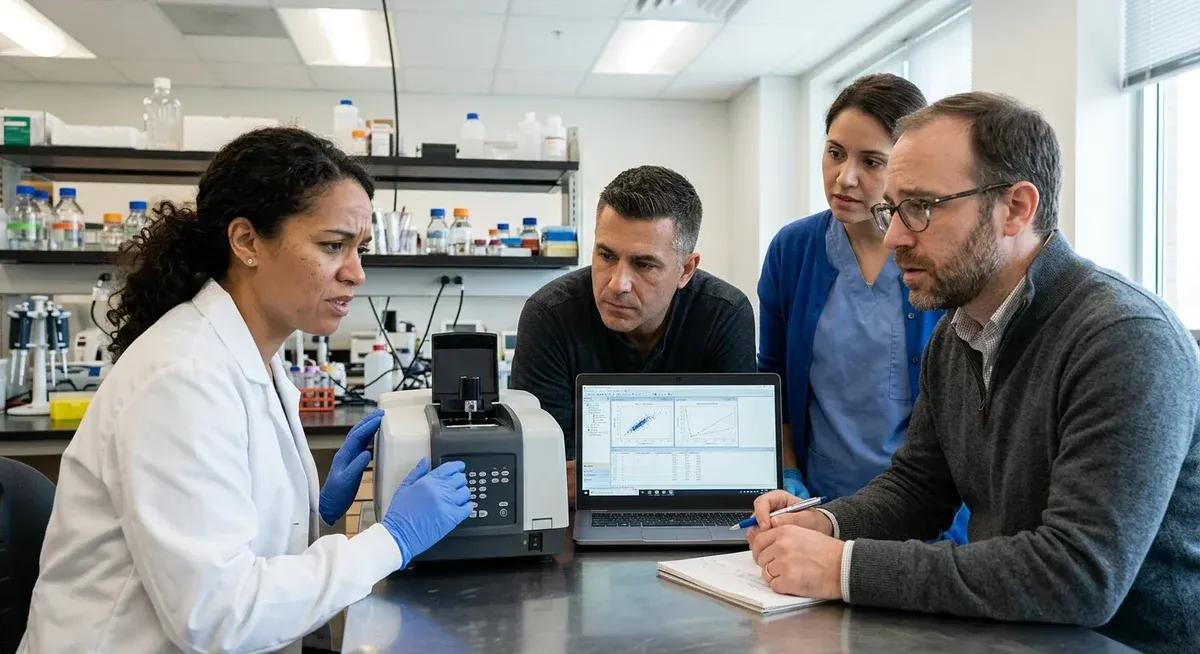
Editorial illustration for The Download: AI's self-improvement problem and OpenAI's safety pause
AI's Self-Improvement Problem: OpenAI's Safety Pause
This summer produced a steady run of AI headlines that sounded like history in the making: a hacking campaign attributed to autonomous AI agents, a mathematical breakthrough, talk of systems that can improve themselves without human help. Each announcement arrived with a company statement framed as a warning to the public, and each got picked up fast by the press. The pattern repeats often enough to notice. A company discloses something alarming, reporters run with it, and only later do outside researchers get a chance to check the details against what was actually claimed.
That gap between the initial story and the follow-up scrutiny is where today's newsletter starts. There's real money riding on AI looking more capable, and more dangerous, than it might actually be, since both perceptions serve the companies selling the technology. Two researchers who've spent years pushing back on inflated AI claims lay out why the recent run of "breakthroughs" deserves a harder look before anyone treats it as settled fact. Below, in their own words, is the case for treating this summer's hype with some suspicion.
It’s been a busy few months for AI hype, with companies making breathless claims about hacking, mathematical breakthroughs, and the prospect of self-improving superintelligence.
Why this matters
Gebru and Bender's warning lands at an odd moment: OpenAI pausing model work over safety concerns and 22 nations pushing for a new oversight body both suggest institutions are catching up to the hype, not chasing it. That's the tension worth watching. For builders and researchers, the practical takeaway isn't that self-improving AI is fake or that safety pauses are theater.
It's that the gap between press-release capability claims and what ships is where real decisions get made. A pause at OpenAI tells you more about internal risk assessment than any benchmark score does. A coalition of 22 governments asking for global rules tells you regulators don't trust vendors to self-report accurately, and they're probably right not to.
If you're shipping products on top of these models, treat "breakthrough" language from labs with the same skepticism you'd apply to a startup's own pitch deck. The infrastructure for accountability, safety reviews, international bodies, is being built in real time, often reactively. Watch who convenes that new AI body and what teeth it actually has.
Related Reading
Browse all OpenAI news → Research & Benchmarks
 Microsoft AI Chief: "If It Isn't Safe We Shouldn't Build It
 Research & Benchmarks
 Google's FACTS benchmark shows 70% factuality ceiling across four tests
 Research & Benchmarks
 Nvidia's DLSS 4.5 beta adds 6x Multi Frame Generation for RTX 50 GPUs
 Related Topic
 OpenAI researcher quits, citing distrust over ad‑driven engagement metrics
LLMs & Generative AI
 Related Topic
 OpenAI launches GPT-Image 1.5 with precise editing for enterprise visuals
LLMs & Generative AI
 From Archives
 OpenAI Claims Its Model Solved Over 100 Math Problems in a Month
 From Archives
 AI Malware Found Using Autonomous Hive Mind
 From Archives
 OpenAI Reveals Three-Part Process for Handling AI Model Reports
Open Source
 From Archives
 ChatGPT Crafts Childbirth Course, Saves Hours of Research
Open Source
Common Questions Answered
What pattern of AI announcements has emerged this summer according to the article?
Companies have been disclosing alarming AI developments—including autonomous AI hacking campaigns, mathematical breakthroughs, and self-improving systems—and framing each announcement as a public warning. These disclosures are then rapidly picked up by the press, creating a repeating cycle of sensational headlines that may not always reflect the actual capabilities demonstrated.
How are institutions like OpenAI and international governments responding to AI safety concerns?
OpenAI has paused model work over safety concerns, and 22 nations are pushing for a new oversight body to regulate AI development. These institutional responses suggest that oversight mechanisms are catching up to the hype rather than chasing it, indicating a more measured approach to addressing safety issues.
What is the gap between press-release capability claims and actual AI capabilities according to the article?
The article emphasizes that there is a significant difference between what companies claim in their announcements and what actually ships in their products. This gap between press-release claims and real-world capabilities is where the most important decisions about AI development and safety are being made.
Why does the article suggest caution about claims of self-improving superintelligence?
The article frames recent claims about self-improving AI systems as part of a broader pattern of AI hype, where companies make breathless announcements that get amplified by media coverage before outside scrutiny can verify the actual capabilities. The distinction between theoretical possibilities and demonstrated reality is crucial for understanding what AI systems can actually do today.
Further Reading
- Sam Altman on the burden of leading OpenAI amid AI safety concerns - Fortune
- AI self-improvement fears prompt ‘existential’ concerns at OpenAI and Anthropic - CNBC
- OpenAI hit the brakes. Now what? - The Verge
- OpenAI Pauses Frontier RL Training as It Tightens Defenses Against Unsafe AI Behavior - The Hacker News
- Hackers Put AI Agents on Recon, Exploitation and Credential Theft - Security Point Break
