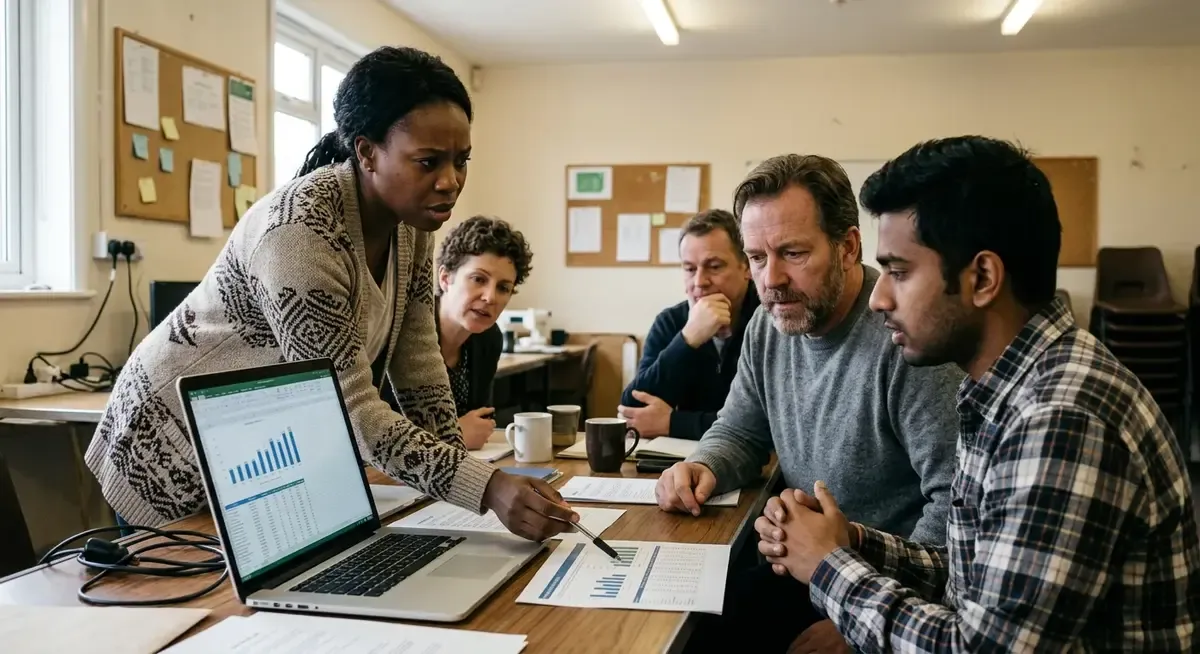
Editorial illustration for OpenAI Seeks Mathematicians' Advice After AI Math Results Backfire
OpenAI Hires Mathematicians After GPT-5 Math Claims Fail
OpenAI Seeks Mathematicians' Advice After AI Math Results Backfire
OpenAI spent months this fall touting GPT-5's performance on hard math problems, only to watch mathematicians publicly dismantle those claims as overstated or mischaracterized. Now the company is trying to patch things up. On Monday, OpenAI announced a nine-member panel of mathematicians who will advise the company, and reportedly other AI firms, on how to handle emerging results in mathematical research and how those results get communicated to the public.
The roster reads like a who's who of the field: researchers from Stanford, Harvard, Oxford, and Cambridge, several Fields Medal winners, and recipients of MacArthur "genius grants" among them. The Institute for Advanced Study in Princeton, New Jersey, once home to Albert Einstein, John von Neumann, and J. Robert Oppenheimer, will host the group.
The announcement blindsided much of the math community. Researchers who spoke to The Verge called it a reasonable start but said they had immediate questions about how much real authority the panel will hold, whether OpenAI will actually heed its advice, and whether nine prominent names can speak for a field this large and varied.
After turning a string of spectacular mathematical results into a reputational crisis, OpenAI is consulting human mathematicians to help it figure out a less disastrous path forward.
Why this matters
OpenAI creating an outside panel to police its own math claims is an admission that internal review wasn't enough to catch problems before they became public embarrassments. For researchers, this is a reminder that benchmark results and headline-grabbing "proofs" from AI labs need independent verification before anyone treats them as settled fact. For founders building on top of these models, it's a signal that marketing claims about reasoning capabilities can outrun what the systems actually deliver, and that gap can cost you if you've built a product pitch on borrowed credibility.
Developers should watch what this panel actually reviews and how fast, not just that it exists. A vague mandate to "advise on communication" is not the same as a rigorous audit process with teeth. If OpenAI wants trust back, the panel needs public findings, not just quiet consultation.
Until we see how disagreements get resolved and whether flawed results get retracted quickly, treat this less as a fix and more as damage control with better optics.
Related Reading
Browse all OpenAI news → Business & Startups
 Nordic pilot adds Gemini for Education, NotebookLM to boost AI literacy
 Business & Startups
 Kling launches Video O1, all-in-one model with MVL bridge using transformer
 Business & Startups
 DeepSeek Seeks More Capital Weeks After USD 7B Funding Round
 Related Topic
 OpenAI researcher quits, citing distrust over ad‑driven engagement metrics
LLMs & Generative AI
 Related Topic
 OpenAI launches GPT-Image 1.5 with precise editing for enterprise visuals
LLMs & Generative AI
 From Archives
 Anthropic Launches Claude Opus 5.5 With Stricter Cybersecurity Safeguards
 From Archives
 Jev AI Model Never Writes Text, But Cuts Costs 92% in Batch Tests
 From Archives
 OpenAI's GPT-6 Models Halve Prices but Show Minimal Performance Gains
LLMs & Generative AI
 From Archives
 The Download: AI's self-improvement problem and OpenAI's safety pause
Research & Benchmarks
Common Questions Answered
Why did mathematicians publicly criticize OpenAI's GPT-5 math performance claims?
Mathematicians dismantled OpenAI's claims about GPT-5's performance on hard math problems as overstated or mischaracterized. The company had spent months touting these results, but the public criticism from the mathematical community exposed significant issues with how the results were being presented and validated.
What is the purpose of the nine-member mathematician panel OpenAI announced?
The panel will advise OpenAI and reportedly other AI firms on how to handle emerging results in mathematical research and how those results are communicated to the public. This initiative was created after OpenAI's math claims turned into a reputational crisis, indicating that internal review processes were insufficient to catch problems before public embarrassment.
What does OpenAI's creation of an outside mathematician panel reveal about its internal processes?
The establishment of an external advisory panel is an admission that OpenAI's internal review mechanisms were not adequate to identify and prevent problems with mathematical claims before they became public embarrassments. This suggests the company needs independent expert verification to validate its research results before public announcement.
How should researchers approach benchmark results and AI proofs from labs like OpenAI?
Researchers should seek independent verification of benchmark results and headline-grabbing proofs from AI labs before treating them as settled fact. The OpenAI situation demonstrates that marketing claims about AI reasoning capabilities can outrun actual performance, making third-party validation essential for credibility.
Further Reading
- OpenAI's 'embarrassing' math - TechCrunch
- OpenAI's GPT-5 Math Claims Spark Industry Backlash - TechBuzz
- Leading OpenAI researcher announced a GPT-5 math breakthrough that never happened - The Decoder
- OpenAI Retracts Claims After Falsely Announcing GPT-5 Math Breakthrough - Folio3 AI Pulse
- OpenAI claims it solved an 80-year-old math problem — for real this time - TechCrunch
