
Editorial illustration for Capcom's upcoming title delves into AI horror, drawing on early generative video lore
Capcom's AI Horror Game Explores Unsettling Machine Lore
Capcom's upcoming title delves into AI horror, drawing on early generative video lore
Capcom's next horror game is about a broken AI. To build it, they're not using AI at all. They're copying its earliest, creepiest mistakes.
Every company wants you to think they're using generative models. Capcom is doing the opposite. For *Pragmata*, artists are manually recreating the visual glitches from the first wave of AI video generators.
The melting faces. The hands with seven fingers. They are human artists meticulously painting inhuman errors.
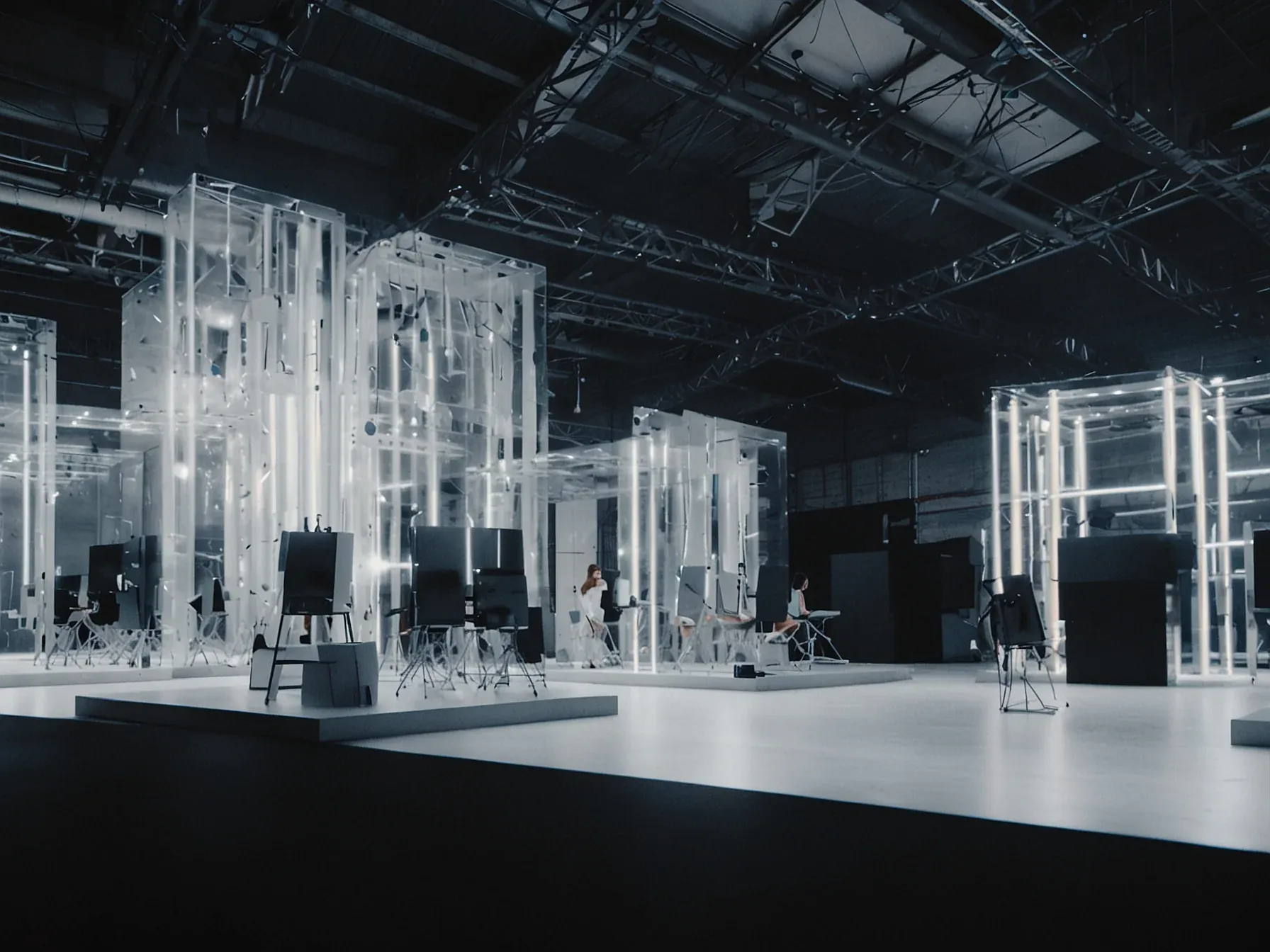
In the lore of the game, an AI supposedly created the space, and the Pragmata team looked at early generative AI videos, where things didn't quite match up, as a reference. "All of that is made by humans to look like an AI has 3D printed something wrong," producer Naoto Oyama says. "But it's all human-made errors to make it look like AI." (No generative AI was used in the creation of Pragmata, according to Cho and Oyama.) The Pragmata development team also has a lot of experience working on Resident Evil and other Capcom series like Devil May Cry, and they've drawn on that experience while creating the game, Cho says.
This approach is smarter than it sounds. The horror isn't just the glitch. It's the intent behind it.
A team that knows how to build the oppressive hallways of *Resident Evil* or the distorted realms of *Devil May Cry* is now constructing a place that feels computationally wrong. The anxiety shifts. You stop fearing the machine's mind and start questioning the human hands that so perfectly simulate its madness.
Related Reading
 Business & Startups
 Nordic pilot adds Gemini for Education, NotebookLM to boost AI literacy
 Business & Startups
 Kling launches Video O1, all-in-one model with MVL bridge using transformer
 Business & Startups
 DeepSeek Seeks More Capital Weeks After USD 7B Funding Round
 From Archives
 You.com AI grounding guide, three-part method beating RAG, noted at Nvidia GTC
 From Archives
 Tennessee teens sue xAI, alleging Grok chatbot generated sexualized images
Common Questions Answered
How did Capcom's Pragmata development team use early generative AI videos as inspiration?
The Pragmata team studied early generative video experiments, focusing on subtle glitches and imperfections that didn't align with authentic AI behavior. Producer Naoto Oyama explained that these were actually human-made errors designed to simulate how an AI might incorrectly generate a 3D space.
What unique narrative approach does Pragmata take with artificial intelligence?
Pragmata frames its game world as supposedly created by an AI, using deliberately introduced imperfections to explore the uncanny nature of machine-generated environments. The developers intentionally incorporated glitches and errors to highlight the distinction between human and artificial creation.
Did Capcom use generative AI in the development of Pragmata?
According to the developers Cho and Oyama, no generative AI was used in the creation of Pragmata. Instead, the team manually studied and recreated AI-like glitches and imperfections found in early generative video experiments.
Further Reading
- Capcom Spotlight March 2026 recap: Pragmata launches April 17, Alex joins Street Fighter 6 and more — PlayStation Blog
- Capcom announces a showcase featuring Resident Evil Requiem gameplay — DLCompare Gaming News
- Capcom delivered a marketing masterclass — The Game Business
