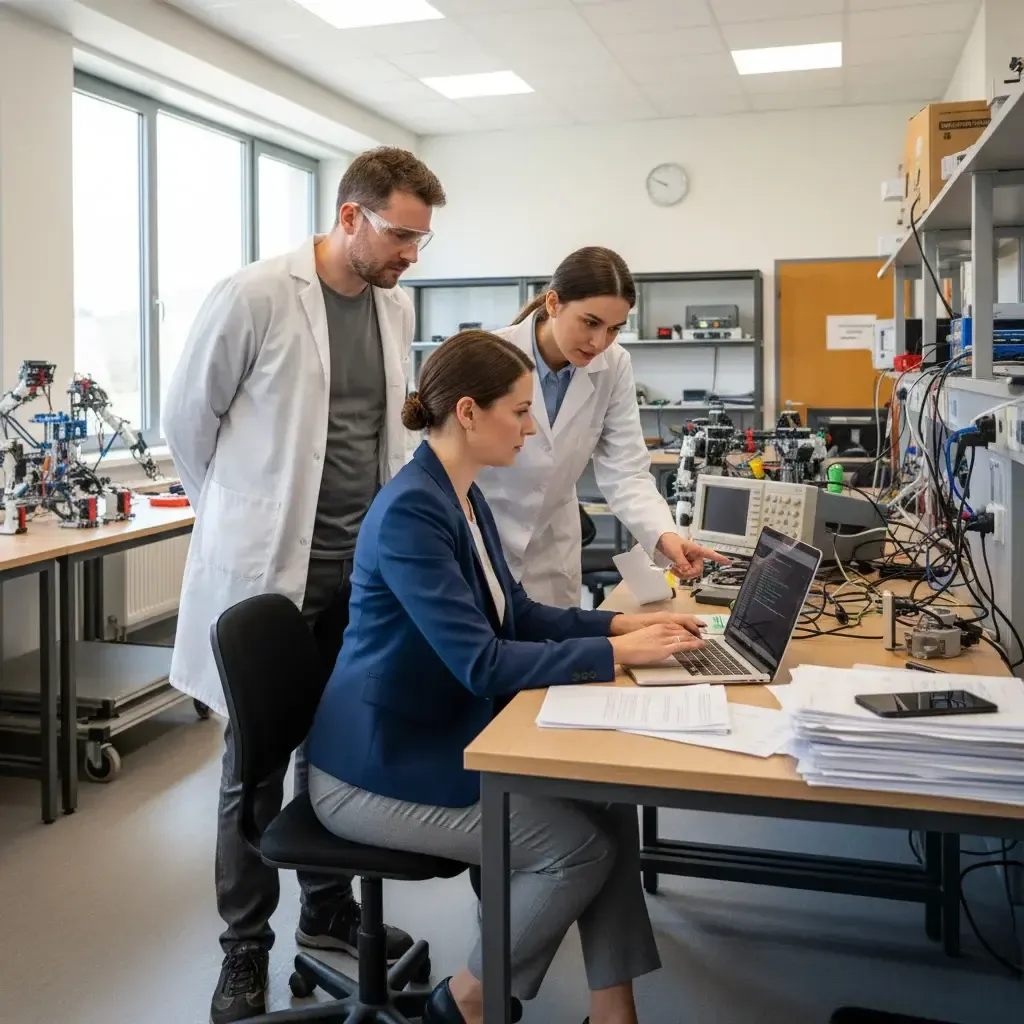
Editorial illustration for SMG releases smg-grpc-proto on PyPI; vLLM integrates via PR #36169
SMG releases smg-grpc-proto on PyPI; vLLM integrates via...
Multimodal AI is slow for a boring reason. Python is in the way. Before any image reaches the brains of a model like Llama 4 Vision, it gets chewed up by a Python script doing resizes and normalizations.
This creates a predictable, painful bottleneck. SMG decided to remove the bottleneck by removing Python.
They took Hugging Face's core image processor and rewrote it in Rust. The tensors it produces now travel directly to the GPU via gRPC, skipping the Python interpreter entirely. The result is called smg-grpc-proto, and it's on PyPI right now.
It works with Llama 4 Vision, Qwen VL, and other major models. Backends like SGLang, vLLM, and TensorRT-LLM get optimized support. vLLM has already accepted the code in pull request #36169.
Multimodal processing was the most ambitious piece. We rewrote major components of Hugging Face’s transformers image processor from Python to Rust — reimplementing vision preprocessing pipelines, tensor operations, and model-specific transformations in a completely different language and runtime. The result: SMG communicates preprocessed tensors directly to engines via gRPC with zero Python overhead.
Support for Llama 4 Vision, Qwen VL, and all major vision-language models, with backend-specific optimizations for SGLang, vLLM, and TensorRT-LLM. This is, to our knowledge, an industry first.
The significance here is structural, not incremental. Every vision model has been paying a silent performance tax for the privilege of using Python's friendly but slow preprocessing tools. That tax is now zero.
Data moves from its raw state to the compute engine without translation layers or interpreter lag. It just goes.
vLLM's integration is the signal. When a project built on relentless speed adopts your protocol, it stops being a clever trick and starts being the new floor. The path from an image to a GPU prediction is now as direct as the hardware allows.
The bottleneck for these models has officially moved. It's no longer in the preprocessing step. That problem is solved.
Related Reading
 LLMs & Generative AI
 ChatGPT's 'Nerdy' tweak rewards goblin metaphors in answers, study finds
 LLMs & Generative AI
 Google tests visual 'magazine-style' UI for Gemini 3 Pro users
 LLMs & Generative AI
 AI Engineers Face Rising Costs, Need New Strategies for Efficiency
 From Archives
 Google TV adds Gemini tools, including Nano Banana voice‑prompt image editor
 From Archives
 Google launches Gemini memory in Europe, default on, pulls personal data
Common Questions Answered
Why did SMG rewrite Hugging Face's image processor in Rust instead of keeping it in Python?
Python was creating a predictable bottleneck in multimodal AI processing because image data had to be resized and normalized through Python scripts before reaching the model's GPU. By rewriting the core image processor in Rust, SMG eliminated the Python interpreter lag and enabled tensors to travel directly to the GPU via gRPC, removing the performance tax that every vision model had been paying.
How does smg-grpc-proto improve data flow compared to traditional Python preprocessing?
With smg-grpc-proto, data moves from its raw state directly to the compute engine without translation layers or interpreter lag. The gRPC protocol allows tensors to bypass the Python interpreter entirely, creating a direct path from raw input to GPU processing, which was previously blocked by Python's preprocessing tools.
What does vLLM's integration via PR #36169 signify about smg-grpc-proto's adoption?
vLLM's integration of smg-grpc-proto signals that the technology has moved beyond being a clever optimization trick and has become the new standard floor for performance. When a project built on relentless speed like vLLM adopts the protocol, it indicates the solution has proven its structural significance and reliability in production environments.
What specific performance bottleneck does smg-grpc-proto address in vision models like Llama 4 Vision?
Before images reach multimodal models, they must be processed through Python scripts that perform resizes and normalizations, which creates a significant performance bottleneck. smg-grpc-proto eliminates this bottleneck by handling these preprocessing tasks in Rust and using gRPC to send the processed tensors directly to the GPU, removing the silent performance tax that all vision models previously incurred.
Further Reading
- Papers with Code - Latest NLP Research — Papers with Code
- Hugging Face Daily Papers — Hugging Face
- ArXiv CS.CL (Computation and Language) — ArXiv
