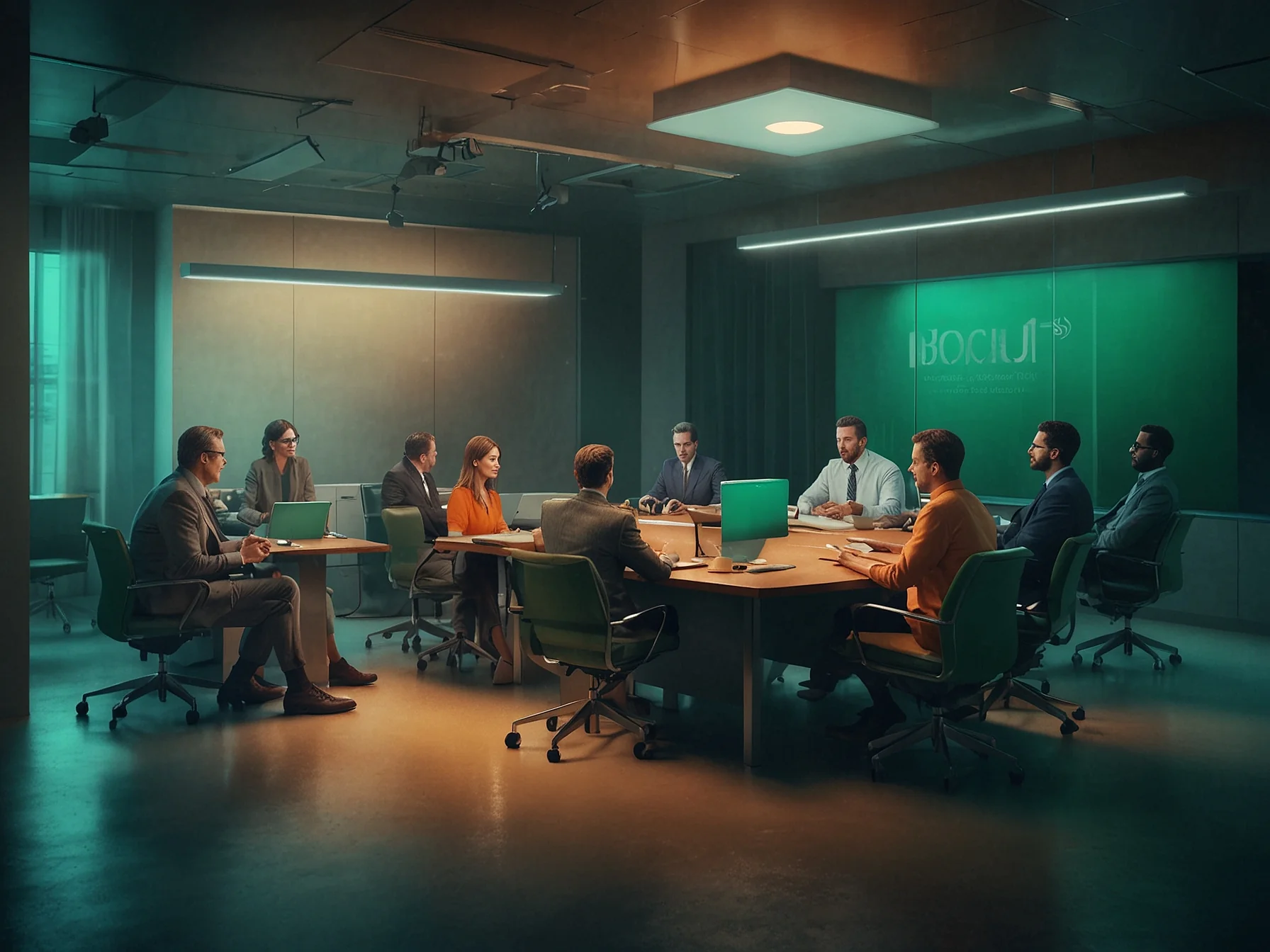
Editorial illustration for Cranston and SAG-AFTRA Engage OpenAI on Sora 2 Deepfake Concerns
Bryan Cranston Confronts OpenAI Over Sora 2 Deepfake Risks
Bryan Cranston, SAG-AFTRA say OpenAI is taking Sora 2 deepfake issues seriously
Bryan Cranston's face appeared on OpenAI's Sora without his permission. It was him, but not him, a digital twin taking a selfie with Michael Jackson in a clip he never agreed to make. This is the new, mundane horror for actors.
Now Cranston and the Screen Actors Guild are forcing a conversation with the company. Their goal is simple: to stop this from happening again before the entire industry is overrun by unauthorized copies.
The technology in question, Sora 2, generates video from text prompts. Its realism has Hollywood unsettled. The core question is no longer speculative.
It is practical. What happens when an actor's career, built on a unique face and voice, can be cloned for any project by anyone?
Actors, studios, agents, and the actors union SAG-AFTRA have all expressed their concerns about appearing in Sora 2’s AI-generated videos ever since the deepfake machine was released last month. Now a joint statement from actor Bryan Cranston, OpenAI, the union, and others says that after videos of him appeared on Sora — one even showed him taking a selfie with Michael Jackson — the company has “strengthened guardrails” around its opt-in policy for likeness and voice. Bryan Cranston and SAG-AFTRA say OpenAI is taking their deepfake concerns seriously The Breaking Bad actor never opted in to appear on OpenAI’s video sharing app Sora, yet videos of him definitely showed up.
The Breaking Bad actor never opted in to appear on OpenAI’s video sharing app Sora, yet videos of him definitely showed up. The joint statement said that OpenAI “expressed regret for these unintentional generations.” It also carried cosigns from talent agencies United Talent Agency, the Association of Talent Agents, and the Creative Artists Agency, which had criticized the company’s lack of protections for artists in the past.
OpenAI's regret and new guardrails are an admission. The initial safeguards were insufficient. A star of Cranston's stature getting faked is a high-profile failure that demands a public response.
This joint statement is less a solution and more a temporary ceasefire. It proves that pressure works. Major agencies cosigned it, which means the business side of Hollywood is unified on this front.
But an opt-in policy is just a starting point. The real test is enforcement. How do you stop a user in another country from typing "Bryan Cranston as Hamlet"? The technology will only get cheaper and easier.
Cranston's case sets a precedent. It shows that even the biggest tech firms can be called to account when their creations erase personal consent. The fight isn't about stopping AI. It's about who controls the reflection in the mirror.
Related Reading
Browse all OpenAI news → Open Source
 D&B rebuilds 642 million‑business database after AI agents hit limits
 Open Source
 Box CEO Aaron Levie Says AI Will Drive "Biggest Cybersecurity Upgrade
 Open Source
 Study: 6.7% of Deepfake Requests on Hugging Face Targeted Children
 Related Topic
 OpenAI researcher quits, citing distrust over ad‑driven engagement metrics
LLMs & Generative AI
 Related Topic
 OpenAI launches GPT-Image 1.5 with precise editing for enterprise visuals
LLMs & Generative AI
 From Archives
 NVIDIA backs PyTorch with open-source contributions, leadership, event support
 From Archives
 Open Source AI Week launches Monday with hackathons, workshops, meetups
 From Archives
 Nonprofits lobbying OpenAI regulation later received company subpoenas
Business & Startups
 From Archives
 OpenAI unveils AgentKit, Apps SDK, and new ChatGPT at DevDay 2025
Business & Startups
Common Questions Answered
How did Bryan Cranston become involved in the Sora 2 deepfake controversy?
Bryan Cranston discovered AI-generated videos of himself on OpenAI's Sora 2 platform, including a deepfake showing him taking a selfie with Michael Jackson. He collaborated with SAG-AFTRA to pressure OpenAI into strengthening their guardrails around performer likeness and consent.
What specific actions has OpenAI taken to address performer concerns about Sora 2?
OpenAI has reportedly strengthened its opt-in policy for performer likeness and voice usage in response to concerns raised by Cranston and SAG-AFTRA. The company is working to create more robust ethical guidelines to protect actors' rights in AI-generated video content.
Why are actors and Hollywood studios concerned about AI video generation technologies like Sora 2?
Actors are worried about the potential unauthorized replication of their likeness without consent or compensation in AI-generated videos. The technology raises significant ethical questions about performer rights and the potential misuse of an individual's image and performance characteristics.
Further Reading
- OpenAI limits deepfakes after Bryan Cranston, SAG-AFTRA pressure - CNBC
- OpenAI cracks down on Sora 2 deepfakes after Bryan Cranston, actors' union complain - New York Post
- OpenAI bows to Hollywood pressure with Sora deepfake crackdown - TechBuzz AI
- OpenAI strengthens Sora 2 guardrails after actor Bryan Cranston outcry - NBC News
- OpenAI partners with actor unions to combat deepfakes on Sora - LinkedIn (CNBC)
