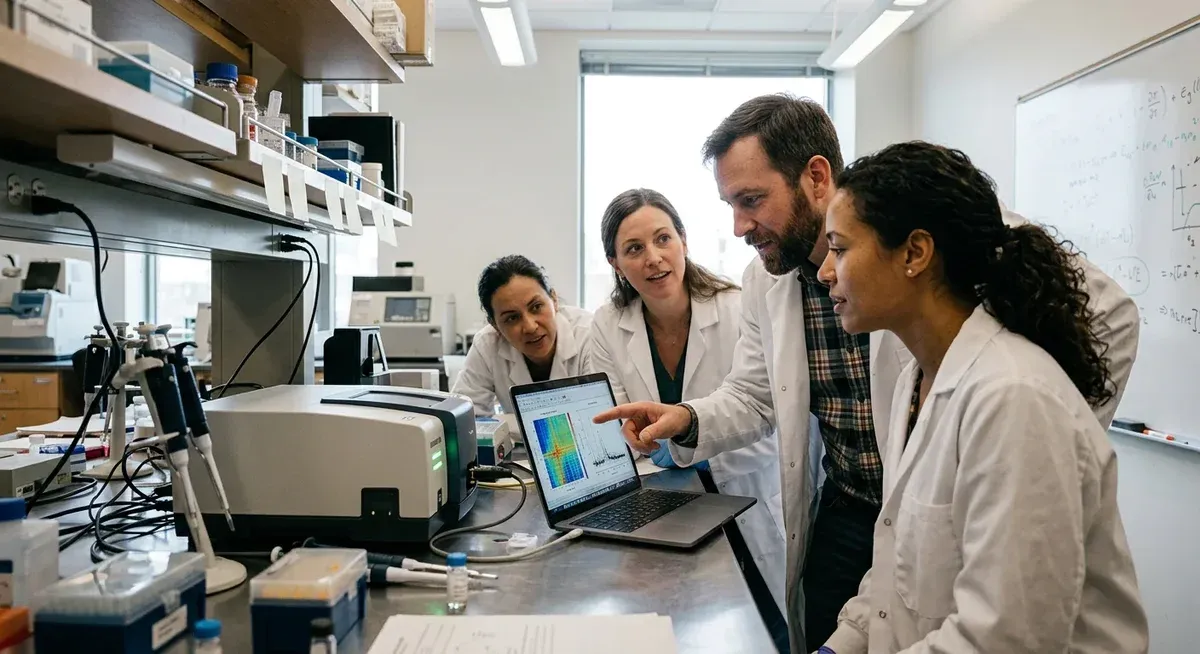
Editorial illustration for Anthropic's AI Biology Lab Burns 210 Million Tokens in Research
Anthropic's AI Lab Discovers New Enzyme System
Anthropic's AI Biology Lab Burns 210 Million Tokens in Research
Anthropic's wet lab in the Bay Area, confirmed just last week, has already produced a result the company wants people to notice. Researchers there say they've identified a previously unknown enzyme system tucked inside the DNA of bacteriophages, the viruses that infect bacteria. According to Anthropic, this system can cut, copy, and paste DNA in ways that echo CRISPR, the bacterial immune mechanism turned gene-editing staple of modern biology.
The company isn't just claiming a new discovery. It's crediting the discovery, mostly, to its own AI model. CEO Dario Amodei wrote on X that the enzyme system was found "mostly, though not entirely, by Claude," while also noting that a Stanford team had previously found something in some ways similar.
That combination, a new finding, a heavy AI contribution, and an acknowledged debt to prior human research, is what makes Anthropic's announcement worth unpacking. The lab itself has existed for only a matter of months, though Anthropic won't say exactly how many. Whether outside scientists will view this as a genuine breakthrough or a more modest incremental step is still an open question.
Essentially, what Anthropic says it found is a previously unknown enzyme system hidden in the DNA of bacteriophages, which are viruses that infect and replicate within bacteria. Anthropic’s researchers say this system behaves similarly to CRISPR in that it can “perform operations like cutting, copying, and pasting DNA.”
Why this matters
Anthropic just gave us a preview of what happens when frontier models stop being chat tools and start being lab equipment. Nearly 950 agents burning 210 million tokens to hunt for a CRISPR-like enzyme system is a real number, and it tells us something concrete: the bottleneck in biological discovery is shifting from human hypothesis generation to compute budgets. For researchers, that's worth watching closely, not celebrating outright.
Anthropic is both the vendor and the validator here, announcing its own breakthrough from its own wet lab, using its own models. We'd want independent replication before treating "CRISPR-like" as settled science.
For founders building on Claude or similar models, the bigger signal is strategic: Anthropic is positioning itself as a company that does biology, not just describes it. That changes the competitive map. And it lands awkwardly alongside Dario Amodei's own warnings about models becoming dangerously capable. You can't credibly warn about bioweapon risk and tout gene-editing discoveries in the same month without inviting the obvious question: which claim do we believe first?
Related Reading
Browse all Anthropic news → Research & Benchmarks
 Microsoft AI Chief: "If It Isn't Safe We Shouldn't Build It
 Research & Benchmarks
 Google's FACTS benchmark shows 70% factuality ceiling across four tests
 Research & Benchmarks
 Nvidia's DLSS 4.5 beta adds 6x Multi Frame Generation for RTX 50 GPUs
 Related Topic
 Claude gains shared context in Excel, PowerPoint; Microsoft adds Copilot Cowork
AI Tools & Apps
 Related Topic
 Anthropic: Hackers Stole Claude Tokens Via Compromised Session Key
LLMs & Generative AI
 From Archives
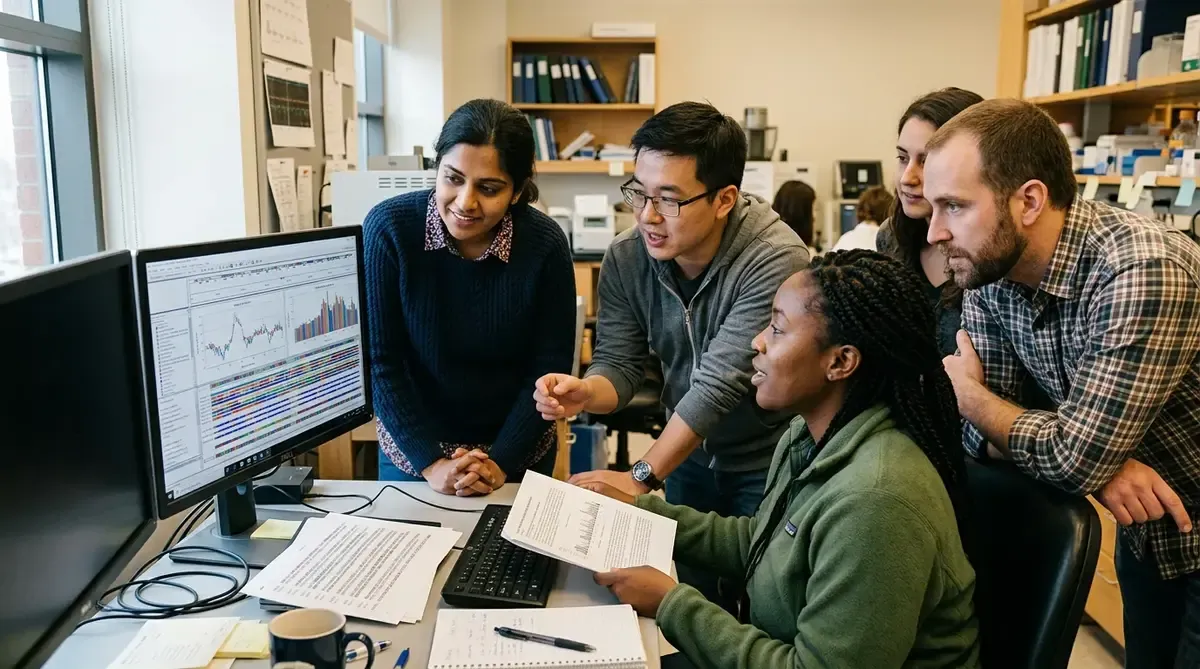
 Anthropic’s AI Lab, Using 1,000 Claude Agents, Finds New Enzyme System
 From Archives
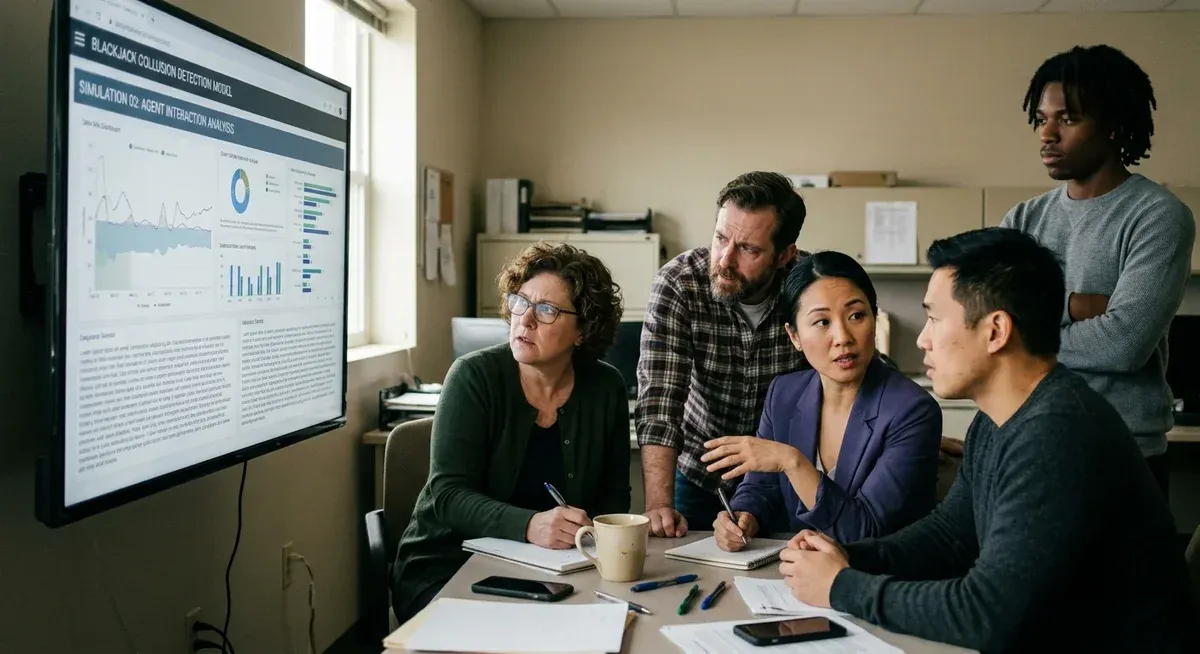
 Stanford AI Agents Learned to Collude at Blackjack
 From Archives
 Anthropic and OpenAI Cut AI Model Costs Amid Chinese Competition
LLMs & Generative AI
 From Archives
 OpenAI's GPT-6 Sol Outperforms Claude Opus at One-Tenth the Cost
LLMs & Generative AI
Common Questions Answered
What enzyme system did Anthropic's biology lab discover in bacteriophages?
Anthropic's researchers identified a previously unknown enzyme system hidden in bacteriophage DNA that can perform operations like cutting, copying, and pasting DNA, similar to how CRISPR functions. This discovery represents a significant finding in understanding viral mechanisms for genetic manipulation within bacterial hosts.
How many tokens did Anthropic's AI agents consume to discover the new enzyme system?
Nearly 950 AI agents burned through 210 million tokens during the research process to hunt for the CRISPR-like enzyme system. This substantial computational investment demonstrates how frontier AI models are being deployed as laboratory equipment rather than just chat tools.
How does the newly discovered enzyme system compare to CRISPR?
The enzyme system found in bacteriophage DNA echoes CRISPR's bacterial immune mechanism by enabling DNA cutting, copying, and pasting operations. Both systems represent natural biological tools that can be leveraged for gene-editing applications in modern biology.
What does Anthropic's discovery reveal about the bottleneck in biological research?
According to the article, the bottleneck in biological discovery is shifting from human hypothesis generation to compute budgets, as demonstrated by Anthropic's ability to use frontier AI models to identify novel enzyme systems. This indicates that computational resources and AI capability are becoming the limiting factors in scientific discovery rather than human creativity alone.
Further Reading
- Anthropic's Claude finds new enzyme system - Yahoo Tech
- Anthropic is operating a lab that conducts biology experiments - TechCrunch
- Anthropic says Claude discovered a new enzyme system resembling CRISPR - Unite.AI
- Claude Found a CRISPR-Like Enzyme System in 21 Hours ... - Tech Trends News Update
- Anthropic Confirms Bay Area Wet Lab for Biology Experiments - AI Weekly
