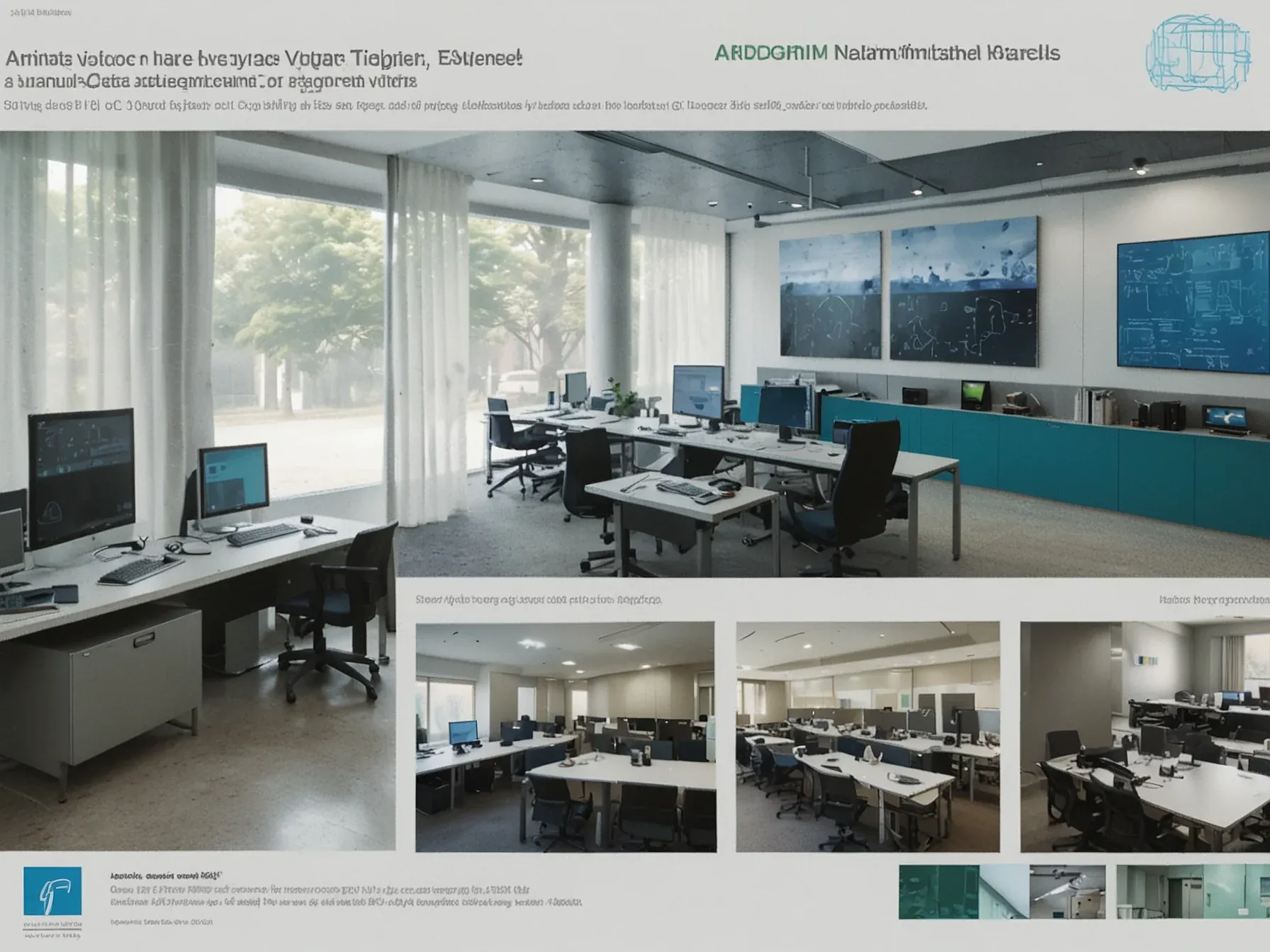
Editorial illustration for Amrita Vishwa Vidyapeetham Unveils Hybrid BTech in AI, Data Science, and Quantum Tech
Hybrid BTech Merges AI, Data Science, and Quantum Tech
Amrita Vishwa Vidyapeetham launches hybrid BTech in AI, Data Science, Quantum
Universities are piling new labels on old degrees and calling it innovation. Amrita Vishwa Vidyapeetham is trying something harder. Its new hybrid BTech program isn't just a rebrand.
It is a single degree that forces artificial intelligence, data science, and quantum technologies to share a classroom. The goal is to stop teaching these fields like they live in separate buildings.
The market for this is obvious. Companies need people who can see where one complex tool ends and another begins. The curriculum's promised focus on drug discovery and financial modeling isn't academic garnish.
It's the whole point. This is job training for problems that don't have departmental labels yet.
Southern India's campuses are the testing ground. The hybrid model suggests the university knows its students aren't all in one place. Or headed for one kind of job.
The curriculum explores quantum algorithms, quantum information theory, and advanced machine learning, equipping students to develop hybrid AI-quantum solutions. NCU offers hands-on training with industry-standard tools, including Qiskit and TensorFlow Quantum, as well as access to platforms like IBM Q Experience. Graduates are prepared for roles as quantum software developers or quantum machine learning specialists.
That blockquote also mentions a separate MTech from VTU in Bengaluru. It's a useful contrast. That program is a pure, industry-led quantum computing dive.
Amrita's bet is different. It's a foundational degree that assumes quantum will become just another component, like statistics or linear algebra, for a certain tier of engineer.
The risk is breadth over depth. A graduate who knows the buzzwords from three fields but can't execute in one is useless. The promise is creating translators. People who can sit between a quantum physicist, a data scientist, and a pharma project manager and understand the gaps in their conversation.
We'll know it worked if, in five years, its graduates aren't called "AI engineers" or "quantum analysts." They'll just be engineers. The ones you call when the obvious tools have already failed.
Related Reading
 Market Trends
 AI drives three initiatives to accelerate global action for planet protection
 Market Trends
 Akamai data shows AI training bots and content‑fetching bots rise since July
 Market Trends
 NVIDIA and Google Cloud let developers scale AI from prototype to production
 From Archives
 Tim Berners-Lee says AI won’t destroy the web, despite Pichai’s comment
 From Archives
 AI Master's Programs Jump 167% to 310 Across 304 U.S. Colleges
Common Questions Answered
How does Amrita Vishwa Vidyapeetham's hybrid BTech program integrate AI, data science, and quantum technologies?
The program offers an interdisciplinary curriculum that combines artificial intelligence, data science, and quantum technologies into a single degree pathway. Students will benefit from a dedicated course on quantum computing and algorithms, with practical applications spanning fields like drug discovery and financial modeling.
What unique learning approach does the BTech program offer students interested in emerging technologies?
The hybrid BTech program provides an innovative interdisciplinary learning model that connects theoretical knowledge with practical real-world applications. By merging multiple technological domains, students can gain comprehensive insights into cutting-edge fields like AI, data science, and quantum technologies.
Where are the campuses located for Amrita Vishwa Vidyapeetham's new BTech program?
The BTech program is offered across multiple campuses in Southern India, providing students with a wide range of access points to this innovative technological education. The university's strong research base supports the program's comprehensive approach to emerging technological disciplines.
Further Reading
- Amrita Vishwa Vidyapeetham launches B.Tech in Artificial Intelligence and Data Science with Quantum Technologies — Amrita Vishwa Vidyapeetham
- Quantum Information and Intelligence Systems: Research at the Intersection of Quantum and AI — Amrita Vishwa Vidyapeetham
- Quantum Artificial Intelligence: Integrating Quantum Algorithms with AI — Amrita Vishwa Vidyapeetham
