
AI news illustration: AI Transforms Retail: Smart Counting and Customer Flow Analysis Take Center Stage
AI Retail Revolution: Smart Customer Flow Analytics
AI Transforms Retail: Smart Counting and Customer Flow Analysis Take Center Stage
The future of retail is a ghost in the machine, a faint signal in the noise of a thousand camera feeds and transaction logs. It's in the count of warm bodies drifting past a display, in the slight hesitation at a shelf. That's the unglamorous data now being fed into the corporate brain.
Other exhibitors touted "smart people counting" and "AI customer flow analysis." We come to this place not for magic, but for "merchandizing execution with AI." Much of this is likely word salad to the average consumer -- but if you shop online, the AI creep has become inescapable. Retail and tech companies have crammed AI into just about every step of the purchasing process, from designing products, to discovery and comparison, to calling brick and mortar stores, to trying on clothing, and finally checking out. At NRF's trade show, Google announced an open-source standard called the Universal Commerce Protocol (UCP) that allows retailers and AI agents to communicate and integrate, so shoppers can buy products from Target within Google's AI Mode, for example, without going to Target's website. As tech companies build more direct buying features into chatbots, some are hoping coupons and deals can entice purchases: Google also announced that retailers will be able to set up discounts for shoppers browsing in AI Mode.
The chatter about protocols and AI modes is loud. The quiet reality is physical. It's about the store that knows which size is missing from the rack before the customer does.
Or the website that learns which discount actually stops a shopper from closing the tab. The new tools promise to translate the chaos of a Saturday afternoon into a clean spreadsheet. The winners will be the ones who can read that spreadsheet and still understand the chaos.
They'll know the difference between a data point and a person, a purchase and a relationship. The counting has begun. The meaning is harder to find.
Related Reading
 Industry Applications
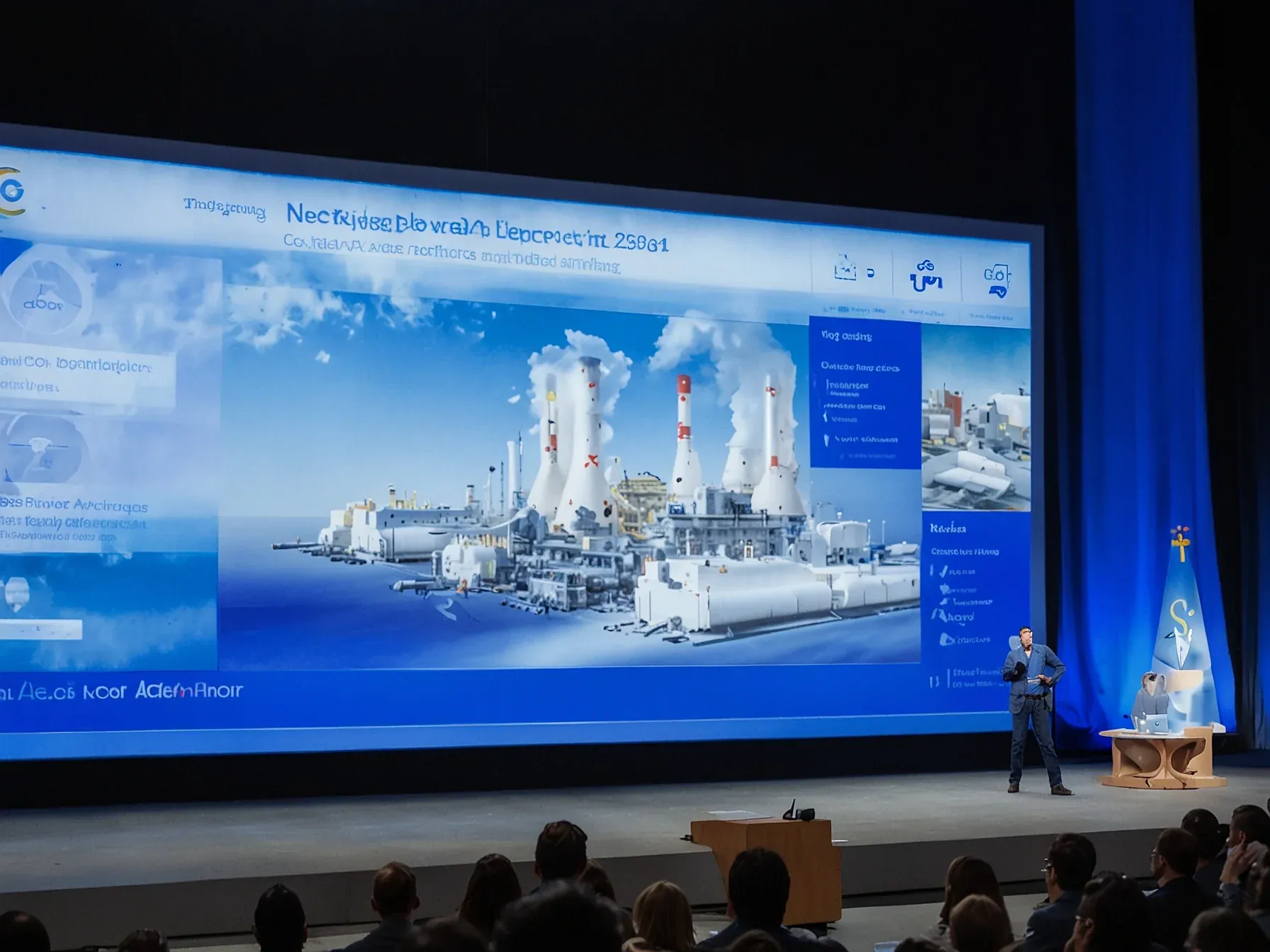
 Westinghouse teams with Google Cloud to build AI platform for nuclear power
 Industry Applications
 NVIDIA NeMo powers telco reasoning model for autonomous network workflows
 Industry Applications
 Month-1 Agent Adds Holistic Observability with Trace IDs and Token Tracking
 From Archives
 India Plans to Build NVIDIA’s DGX Spark, a 1-Petaflop, 128 GB AI Supercomputer
 From Archives
 NXP and GE HealthCare unveil edge AI for acute care at CES 2026
Common Questions Answered
How are AI technologies transforming customer tracking in retail stores?
AI is enabling sophisticated 'smart people counting' and customer flow analysis technologies that can track and decode every customer movement within a retail space. These intelligent systems provide retailers with unprecedented insights into shopper behavior, allowing for more strategic store layouts and enhanced customer engagement strategies.
What specific capabilities do AI-driven retail technologies currently offer?
AI technologies in retail can now analyze customer movements, track purchasing patterns, and provide detailed insights into how shoppers interact with store environments. These tools help retailers optimize merchandising strategies, improve store layouts, and potentially enhance the overall shopping experience through data-driven decision making.
How are AI technologies impacting the online and offline shopping experience?
AI has been integrated into virtually every step of the purchasing process, from product design and discovery to comparison shopping and customer interactions. These technologies are creating a more personalized and data-driven approach to retail, blending digital insights with physical shopping experiences to provide more targeted and efficient consumer interactions.
Further Reading
- Microsoft propels retail forward with agentic AI capabilities that power intelligent automation for every retail function — Microsoft News
- NRF 2026: AI-powered retail and agentic commerce insights — Mastercard
- Retail leaders see AI-powered recommendations redefining shopping 2026 — eMarketer
- 10 trends and predictions for retail in 2026 — NRF
- The AI platform shift and the opportunity ahead for retail — Google Blog
