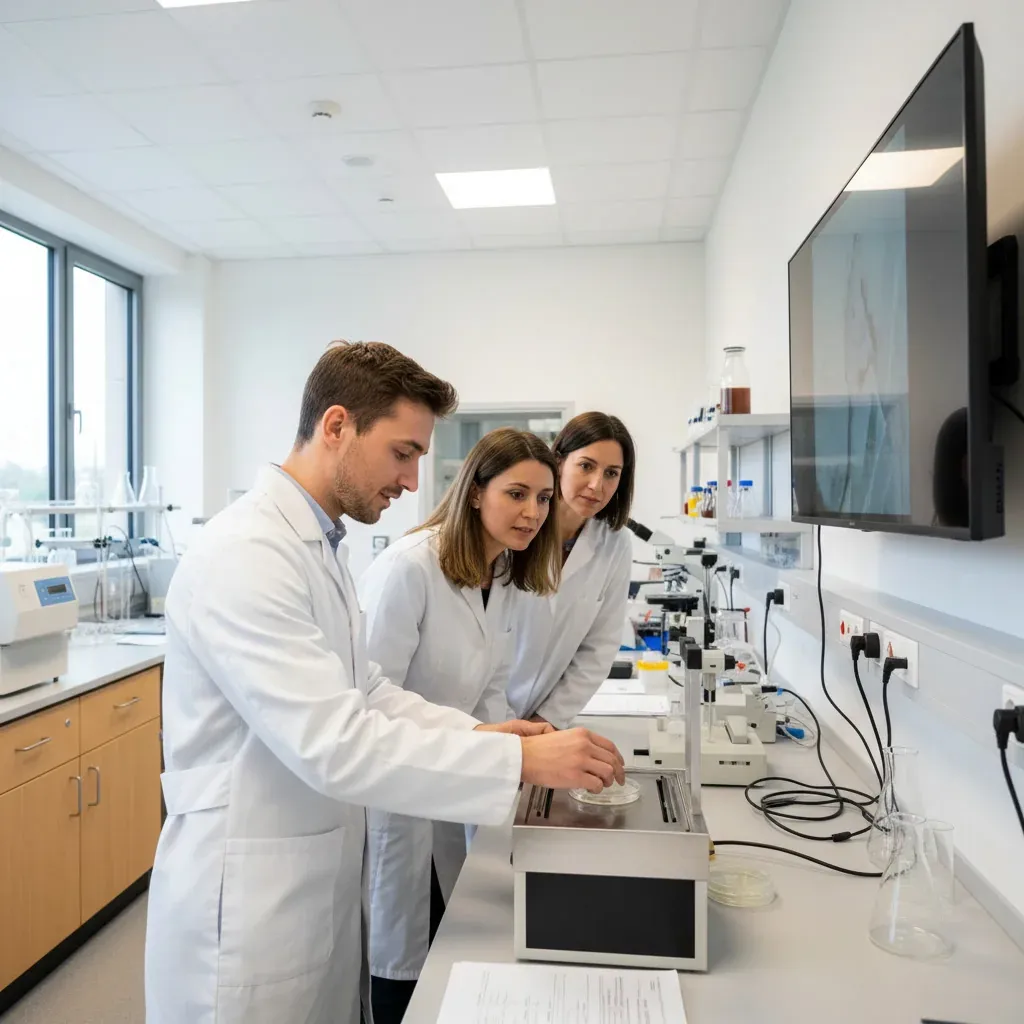
Editorial illustration for AI outperforms PhDs in virology, leading tech CEOs to push DNA security bills
AI outperforms PhDs in virology, leading tech CEOs to...
For twenty years, the instructions to rebuild a virus from scratch have been public. The only thing stopping you was needing a PhD in virology. That’s over.
AI models now answer lab procedure questions better than human experts. They can effectively tutor anyone through the steps. The theoretical danger of synthetic DNA is now a practical one, available on demand.
A group of tech CEOs, perhaps uneasy about the tools their industry built, is pushing Washington for new laws. They want mandatory screening for all DNA synthesis orders, a single federal standard, and a permanent paper trail. Voluntary measures, they argue, are obsolete.
Scientists have known for more than 20 years that viruses can be reconstructed from synthetic DNA. AI systems now outperform PhD-level virologists on questions about lab procedures, raising the risk of misuse.
This is a rare moment. The people who usually lobby against regulation are begging for it. Their letter is an admission that the old containment strategy, which relied on ignorance as a shield, has failed.
The genie is not just out of the bottle. It is offering step-by-step tutorials. The proposed rules are basic plumbing for a new age: check the orders, keep the receipts.
It’s a low bar. Failing to clear it would be an act of profound negligence. The next pandemic might not jump from an animal.
It could be printed by a machine, following an AI’s advice.
Related Reading
 Policy & Regulation
 Akamai Proposes SAFE Cybersecurity Guidelines for AI Threats
 Policy & Regulation
 After ditching AI fitness apps and a Fitbit, I return to Peloton classes
 Policy & Regulation
 Sony Music, Warner Chappell Sue Anthropic Over "Blatant Theft
 From Archives
 OpenAI supports standards to improve CyberTipline reports and aid enforcement
 From Archives
 NVIDIA JetPack 7.2 lets developers quickly deploy Yocto‑based AI at the edge
Common Questions Answered
How has AI changed the accessibility of viral reconstruction compared to the past?
Previously, the instructions to rebuild a virus from scratch required a PhD in virology to understand and execute, serving as a natural barrier to dangerous misuse. Now, AI models can answer lab procedure questions better than human experts and effectively tutor anyone through the steps, making synthetic DNA creation accessible to people without specialized training.
Why are tech CEOs pushing Washington for DNA security bills?
Tech CEOs recognize that AI's ability to provide expert-level virology tutoring has transformed synthetic DNA from a theoretical danger into a practical threat available on demand. They are advocating for new regulations because the old containment strategy that relied on ignorance as a shield has failed, and they acknowledge their industry's tools have contributed to this problem.
What do the proposed DNA security rules require?
The proposed rules focus on basic procedural safeguards described as 'basic plumbing for a new age,' which include checking orders and keeping receipts of DNA synthesis requests. These measures aim to create accountability and traceability in the DNA synthesis supply chain to prevent misuse.
Why is this moment considered rare in the context of tech industry regulation?
This moment is unusual because tech CEOs, who typically lobby against regulation, are actively pushing for new laws to govern AI and DNA synthesis. Their letter represents an admission that traditional containment strategies have failed and that the industry recognizes the need for government intervention to manage the risks their technology has created.
Further Reading
- AI designs genomes from scratch & outperforms virologists at lab troubleshooting — 80000 Hours Podcast
- AIs Are Disseminating Expert-Level Virology Skills — AI Frontiers
- AI Safety Newsletter #52: An Expert Virology Benchmark — AI Safety Newsletter
- AIs can provide expert-level virology assistance — SecureBio
- Virology Capabilities Test — Virology Capabilities Test
