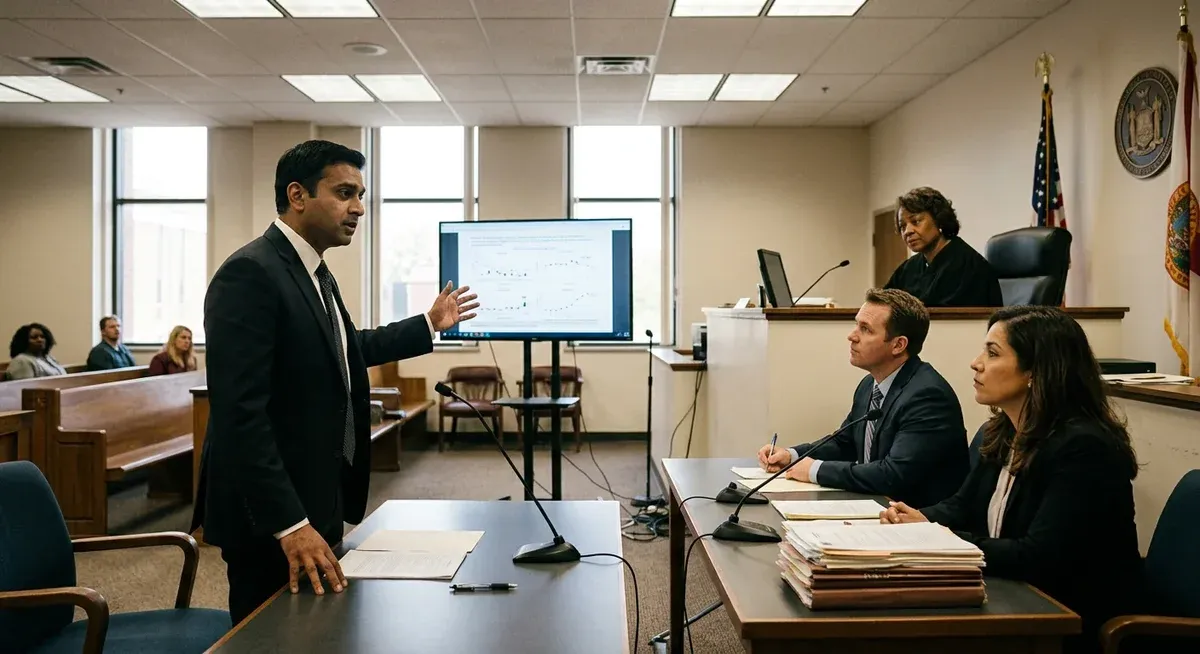
Editorial illustration for AI Lawsuits Swamp UK Courts, Backlog Hits 64,000
AI-Generated Claims Overwhelm UK Employment Tribunals
AI Lawsuits Swamp UK Courts, Backlog Hits 64,000
Britain's employment tribunals are drowning in paperwork nobody with a law degree wrote. Interim relief applications have jumped a hundredfold, according to a memo from tribunal presidents Barry Clarke and Susan Walker, and the cause isn't a sudden surge in workplace disputes. It's ChatGPT and Grok. Workers priced out of legal representation are turning to chatbots to draft claims for free, and the results are landing on judges' desks by the hundreds of pages, stuffed with citations to laws that don't exist.
The numbers back up the memo's bleak tone. Claims rose 39 percent in the year through March 2026. The backlog of unresolved cases climbed 55 percent, hitting 64,000. That's not a paperwork blip, it's a system straining under filings that look legitimate on the surface but fall apart under scrutiny, forcing overworked staff to sort real grievances from AI-fabricated noise.
And the timing couldn't be worse. Labour's Employment Rights Act is about to add roughly 25 new grounds for claims and scrap compensation caps altogether, opening the door to even more volume just as the courts are already buckling.
Why this matters
Clarke and Walker's memo is a preview of what happens when free legal-drafting tools meet a system built on the assumption that filing a claim costs time, money, or both. Strip out that friction and volume becomes the whole story: a 39 percent rise in claims, a backlog at 64,000, and tribunals now wading through AI-written submissions citing laws that don't exist. For anyone building generative tools aimed at "access to justice," this is the uncomfortable flip side of that pitch.
Making legal language easy to produce doesn't make legal systems easy to process it, and Britain's courts are the first big example of that gap breaking in public. The Employment Rights Act's roughly 25 new claim grounds will only widen the entry point. Watch what the Ministry of Justice does next, whether that's fees, filing caps, or some kind of AI-detection triage, because it'll be a real-world test case for regulating model output at the point of use rather than the point of training.
Related Reading
 Policy & Regulation
 Akamai Proposes SAFE Cybersecurity Guidelines for AI Threats
 Policy & Regulation
 After ditching AI fitness apps and a Fitbit, I return to Peloton classes
 Policy & Regulation
 Sony Music, Warner Chappell Sue Anthropic Over "Blatant Theft
 From Archives
 Anthropic's Fable 5 Expands Biology Use, Keeps Virology Limits
 From Archives
 OpenAI Calls Apple's Lawsuit 'Rotten to Its Core' in Rebuttal
Common Questions Answered
Why have interim relief applications surged a hundredfold in UK employment tribunals?
According to tribunal presidents Barry Clarke and Susan Walker, the surge is primarily caused by workers using AI chatbots like ChatGPT and Grok to draft legal claims for free instead of hiring lawyers. This has removed the traditional friction of time and cost barriers that previously limited claim filings, resulting in a dramatic increase in submissions to the courts.
What problems are AI-generated legal submissions creating for UK judges?
Judges are receiving hundreds of pages of AI-written claims that contain citations to laws that don't exist and other factual inaccuracies. The volume and quality issues of these submissions are contributing to a backlog of 64,000 cases and forcing tribunals to wade through unreliable legal arguments.
How has the overall volume of employment claims changed according to the article?
Employment claims have risen by 39 percent, with the backlog now reaching 64,000 cases. This dramatic increase is directly attributed to the removal of financial and procedural friction that previously prevented workers from filing claims without professional legal assistance.
What is the ironic consequence of using free AI tools for legal access to justice?
While AI chatbots were intended to improve access to justice by providing free legal drafting tools, they have instead created an unintended consequence of flooding courts with high-volume, low-quality submissions. This has actually made the system less efficient and created massive backlogs rather than improving justice accessibility.
Further Reading
- UK Tribunal Backlog Hits 531,000 as AI-Drafted Claims Pile Up - AI Weekly
- Britain's employment courts are clogged with AI cases - Financial Times (YouTube excerpt)
- One hallucination, a thousand claims: why viral AI litigation is the new startup risk - Startups Magazine
- Plan for AI legal assistants in England and Wales ‘cannot replace funding and staff', lawyers say - The Guardian
- High court tells UK lawyers to urgently stop misuse of AI in legal work - The Guardian
