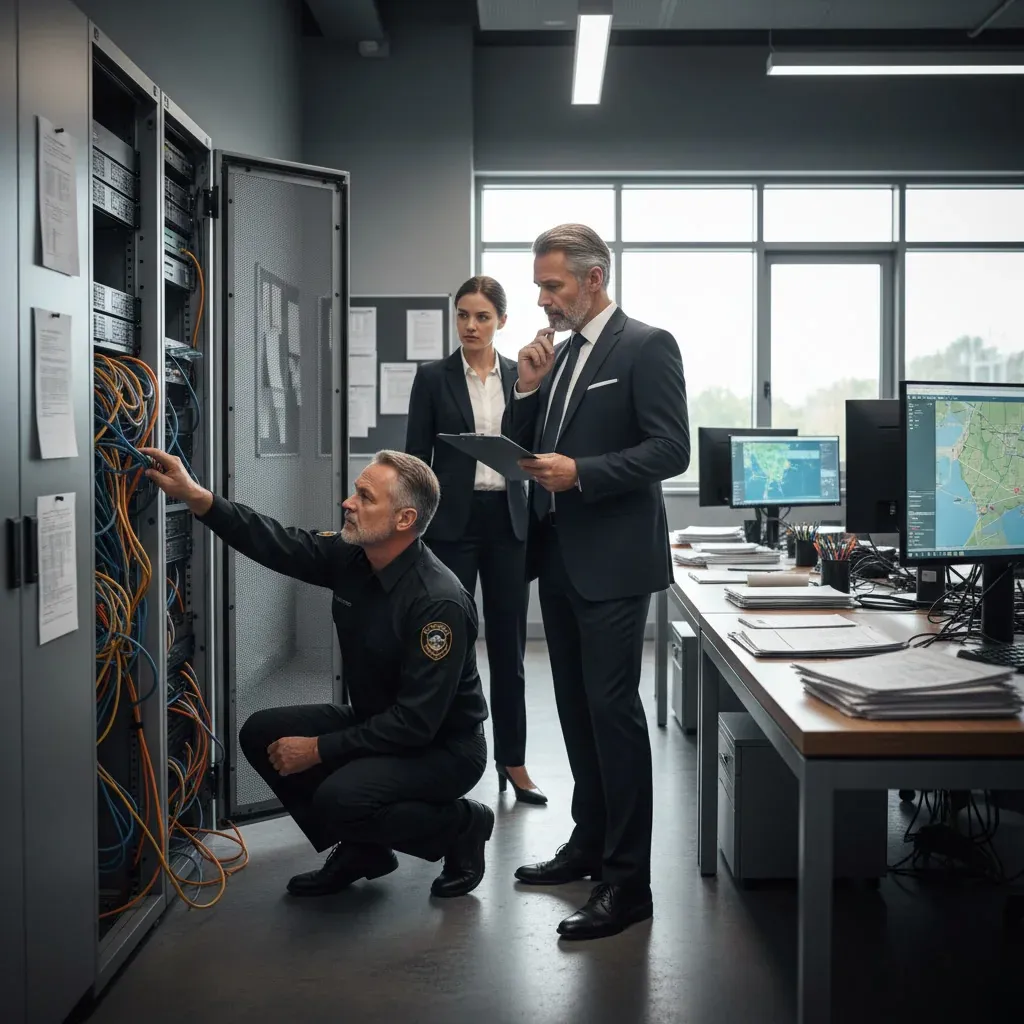
Editorial illustration for Agentic observability unites telemetry to cut incident investigation time
Agentic observability unites telemetry to cut incident...
Outage investigations follow a predictable, expensive script. Someone shouts, everyone scrambles for logs, and the clock ticks on revenue and reputation. A new category of software aims to scrap that script entirely.
It’s called agentic observability. The idea is simple but the execution isn't. Instead of just dumping your metrics, logs, and traces into a single pane, these systems try to connect the dots for you.
They reason across the noise, surface probable root causes, and hand investigators a shortlist instead of a haystack. The goal is to collapse investigation time from hours to minutes.
As telemetry spreads across systems, operators are often forced to piece together context across multiple tools. The Observability Agent addresses this fragmentation by reasoning across signals in real time and unifying that context into a single operational view.
This moves the goalposts. The endgame isn't a prettier dashboard. It's a closed loop.
Observability feeds an agent. The agent interprets, suggests an action or takes one, and learns from the result. Each cycle should, in theory, make the system slightly more resilient.
Slightly harder to break.
That shift demands a new kind of control. Letting software act autonomously on your production environment is a fast track to chaos without serious governance. Trust becomes the bottleneck.
The promise is that with the right guardrails, teams stop being full-time detectives. They get back to building things.
It's a fundamental rewrite of cloud operations. One where the system itself learns from every signal and every failure. The investigation is just the starting point.
Related Reading
 AI Tools & Apps
 Claude gains shared context in Excel, PowerPoint; Microsoft adds Copilot Cowork
 AI Tools & Apps
 OpenAI Developer: AI Agent "Swarms" Waste Tokens, Create "Coordination Tax
 AI Tools & Apps
 LG's recent webOS update adds Microsoft Copilot app, now removable
 From Archives
 NVIDIA OpenShell Secures Agentic AI in Telco Autonomous Networks
 From Archives
 OpenAI Codex records a task and repeats it, unavailable in EU, UK, Switzerland
Common Questions Answered
What is agentic observability and how does it differ from traditional observability tools?
Agentic observability is a new category of software that goes beyond traditional observability by connecting dots across metrics, logs, and traces to automatically reason through data and surface probable root causes. Unlike conventional tools that simply dump telemetry into a single pane of glass, agentic observability systems actively interpret the noise and suggest or take actions to resolve incidents, fundamentally changing how teams investigate outages.
How does agentic observability reduce incident investigation time?
Instead of teams manually scrambling through logs and data during an outage, agentic observability systems automatically connect telemetry signals and reason across the noise to identify root causes. This eliminates the expensive and time-consuming manual investigation process, allowing organizations to cut investigation time significantly and reduce revenue and reputation damage from outages.
What is the end goal of agentic observability according to the article?
The endgame of agentic observability is creating a closed loop where observability feeds an autonomous agent that interprets data, suggests actions or takes them directly, and learns from results. Each cycle should theoretically make the system more resilient and harder to break, moving beyond just providing better dashboards to actively improving system reliability.
What governance challenges does autonomous agentic observability present?
Letting software act autonomously on production environments without proper controls can quickly lead to chaos, making governance and trust critical bottlenecks for agentic observability adoption. Organizations must establish serious control mechanisms and governance frameworks to safely enable agents to take actions in production environments.
Further Reading
- What Is Agentic Observability? Definition, Benefits, and Real-World Use Cases — Splunk Blog
- Agentic AI Observability: A Practical Guide for 2026 — Coralogix
- What is Agentic Observability? — LogicMonitor
- Why observability is essential for AI agents — IBM Think
- Agentic Observability is Not a Chatbot Over Telemetry — DevOps.com
