
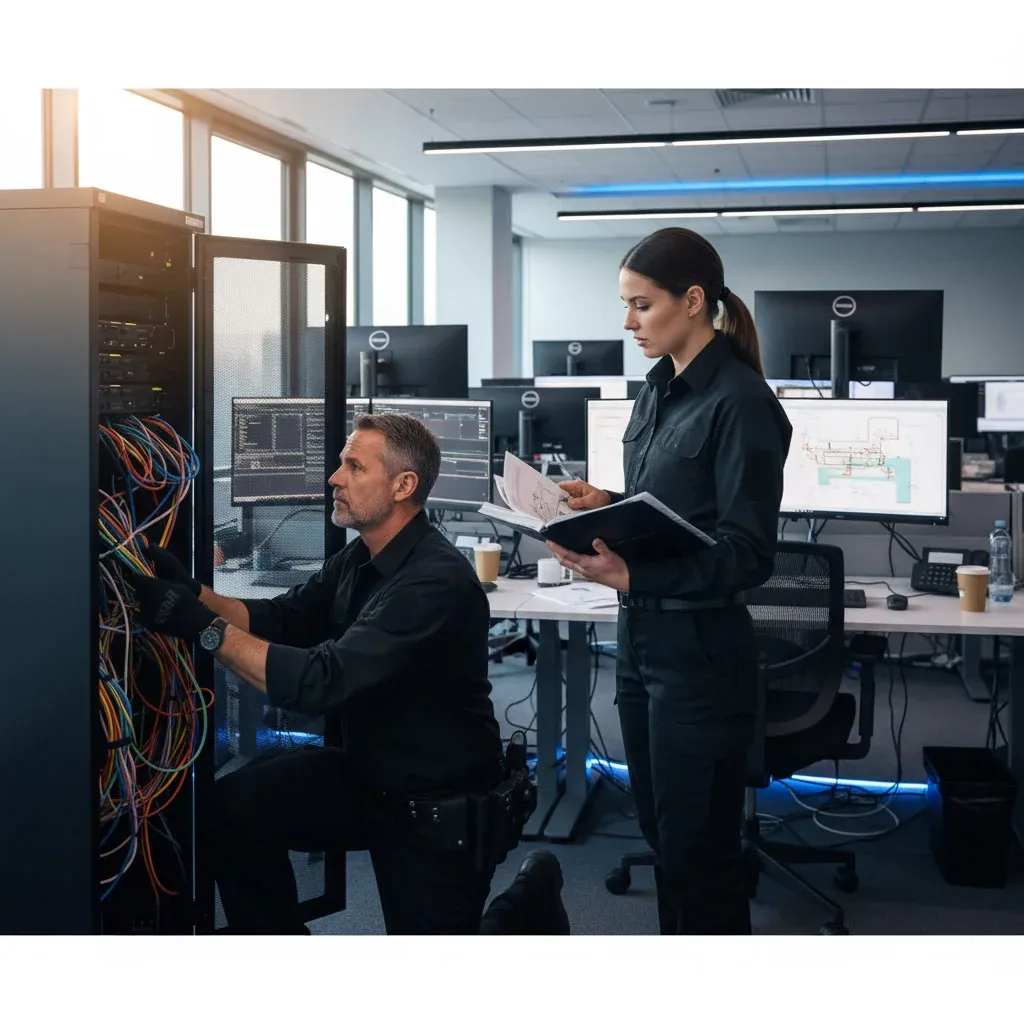
Editorial illustration for Trump's AI data center push stalls as U.S. manufacturing lags demand
Trump's AI Data Center Push Faces US Manufacturing Hurdle
Trump's AI data center push stalls as U.S. manufacturing lags demand
Donald Trump wants to make America's AI hardware in America. Right now, that's impossible.
U.S. factories cannot produce the equipment fast enough. Companies are so desperate they are paying extra tariffs to buy Chinese gear, accepting the very security risks the policy was meant to avoid.
According to a Bloomberg report, this manufacturing gap is the actual obstacle. A separate analysis by Sightline Climate puts numbers to the delay: of the big AI data centers planned for 2026, just one third have started construction.
Rather than rely on China, Trump would prefer that the US manufacture its own equipment. However, currently, "US manufacturing capacity for these devices cannot keep up with demand," Bloomberg reported. Analysts at the market intelligence firm Sightline Climate told Bloomberg that "only a third" of the largest AI data centers that are supposed to come online in 2026 are "currently under construction." For firms feeling "hamstrung" by the circumstances, many are willing to pay tariffs and take on alleged national security risks to try to get the goods from China on faster timelines.
The vision of a self-reliant tech empire is colliding with the reality of a hollowed-out industrial base. Tariffs have not reshored production. They have simply made imported parts more expensive.
The policy has created a paradox where American firms financially support the Chinese industry they are supposed to be escaping from, all because the domestic alternative does not exist at scale. This isn't a failure of will. It's a failure of capacity.
You can't tariff your way into a factory you haven't built.
Related Reading
 Open Source
 D&B rebuilds 642 million‑business database after AI agents hit limits
 Open Source
 Box CEO Aaron Levie Says AI Will Drive "Biggest Cybersecurity Upgrade
 Open Source
 Study: 6.7% of Deepfake Requests on Hugging Face Targeted Children
 From Archives
 OpenClaw update grants full user permissions, prompting compromise concerns
 From Archives
 Deepagents v0.5.0 Alpha adds async subagents multi‑modal support OS skill set
Common Questions Answered
Why is Trump's push to build AI data centers in the United States facing challenges?
The initiative is struggling due to insufficient domestic manufacturing capacity for specialized AI chips and servers. Analysts from Sightline Climate report that only a third of the largest AI data centers planned for 2026 are currently under construction, highlighting significant production bottlenecks.
How are tariffs on Chinese imports impacting the U.S. AI data center development?
Tariffs have complicated supply chains and are ironically hindering the very technology projects the administration aims to support. Bloomberg estimates that nearly half of this year's planned U.S. data centers will face delays as a result of these supply chain constraints.
What is the current state of U.S. manufacturing for AI hardware?
Domestic manufacturers are unable to meet the growing demand for specialized AI chips and servers needed for data centers. According to Sightline Climate, only a third of the required equipment can be produced locally, creating a significant gap between the administration's ambitions and actual production capabilities.
