
Editorial illustration for How Transformers Predict Language: A Step-by-Step Token Refinement Process
How Transformers Predict Language: Token Refinement Secrets
Transformers predict the next word by iteratively refining token representations
How does a transformer, that engine of modern language models, actually choose the next word? It doesn’t guess. It refines.
Token by token, layer by layer, the model iteratively reshapes its own representations, each pass adding nuance and stripping away ambiguity. This isn’t a single leap from input to output; it’s a gradual awakening. The process repeats: attend, transform, attend again.
With every cycle, the embeddings grow sharper, more context-aware, until they encode relationships too subtle for even skilled human eyes to trace outright. At journey’s end sits a single, special layer, one that finally asks: Given everything you’ve learned, what token comes next? It translates that deep, refined understanding into probabilities, one per word in the vocabulary.
The highest probability wins. But the magic isn’t the last step. It’s the iterative dance that precedes it.
At this point, we reach the final component of the transformer stack: a special layer that converts the final representation into a probability for every possible token in the vocabulary. That is, we calculate — based on all the information learned along the way — a probability for each word in the target language being the next word the transformer model (or the LLM) should output.
And that is the quiet miracle of the transformer: an architecture that never "thinks" in the human sense, yet arrives at a word by refining its own internal guesses across a stack of layers. Each iteration strips away ambiguity, sharpens context, and builds a representation so dense with relational nuance that the final probability distribution feels almost inevitable. No single step is the answer, only the accumulated pressure of all preceding steps, applied at once.
The model does not retrieve a word; it constructs the conditions under which one word becomes overwhelmingly more likely than any other. That is not prediction by brute memorization. It is prediction by convergence: a cascade of small transformations that, taken together, map raw tokens into something that looks, from the outside, like understanding.
The next word is never chosen. It is unearthed.
Related Reading
 LLMs & Generative AI
 ChatGPT's 'Nerdy' tweak rewards goblin metaphors in answers, study finds
 LLMs & Generative AI
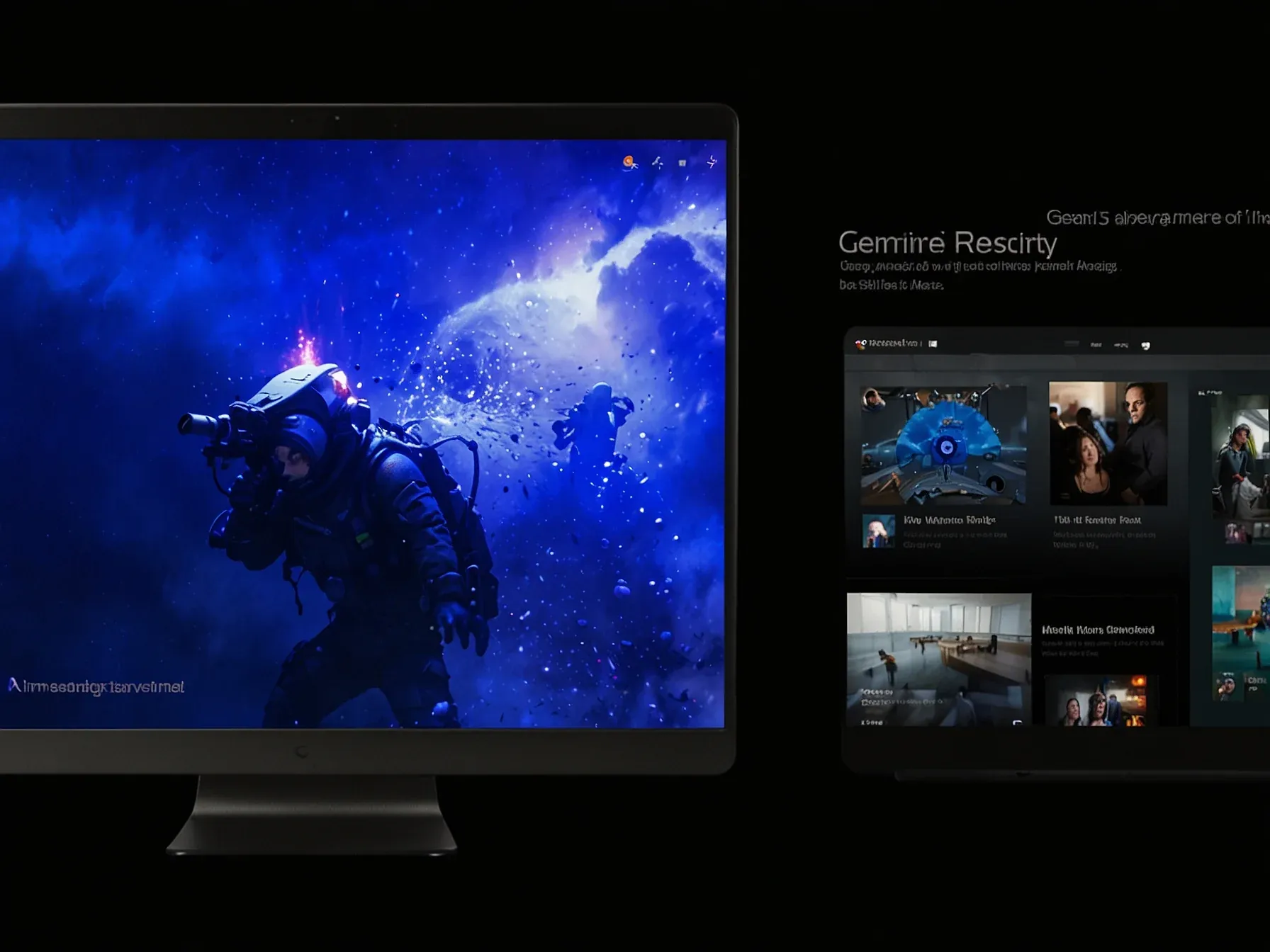
 Google tests visual 'magazine-style' UI for Gemini 3 Pro users
 LLMs & Generative AI
 AI Engineers Face Rising Costs, Need New Strategies for Efficiency
 From Archives
 Stack Overflow users skeptical of AI yet continue to rely on it
 From Archives
 Nvidia launches Nemotron 3; early adopters include Accenture, Oracle, Zoom
Common Questions Answered
How do transformers systematically refine their understanding of language tokens?
Transformers use a multi-step process of token representation that involves repeatedly processing and refining initial text representations. This method allows the model to build increasingly sophisticated understanding by recognizing complex linguistic relationships and connections between tokens.
What makes the transformer's token prediction process different from simple word-matching algorithms?
Unlike basic word-matching approaches, transformers build deep comprehension through an intricate layered process that repeatedly processes token representations. This approach enables the model to recognize subtle and complex linguistic connections beyond surface-level word relationships.
How does the final layer of a transformer model convert token representations into language predictions?
The final component of the transformer stack converts the refined token representations into a probability for every possible token in the vocabulary. This sophisticated mechanism allows the model to make nuanced predictions based on the deep understanding developed through multiple iterations of token processing.
Further Reading
- Looking Beyond the Top-1: Transformers Determine Top Tokens in Order — ICML 2025
- Looking Beyond the Top-1: Transformers Determine Top Tokens in Order — PMLR (ICML Proceedings)
- Circuit Tracing: Revealing Computational Graphs in Language Models — Transformer Circuits Pub
- Tokens & Transformers: the heart of modern Machine Learning models — PricePedia
