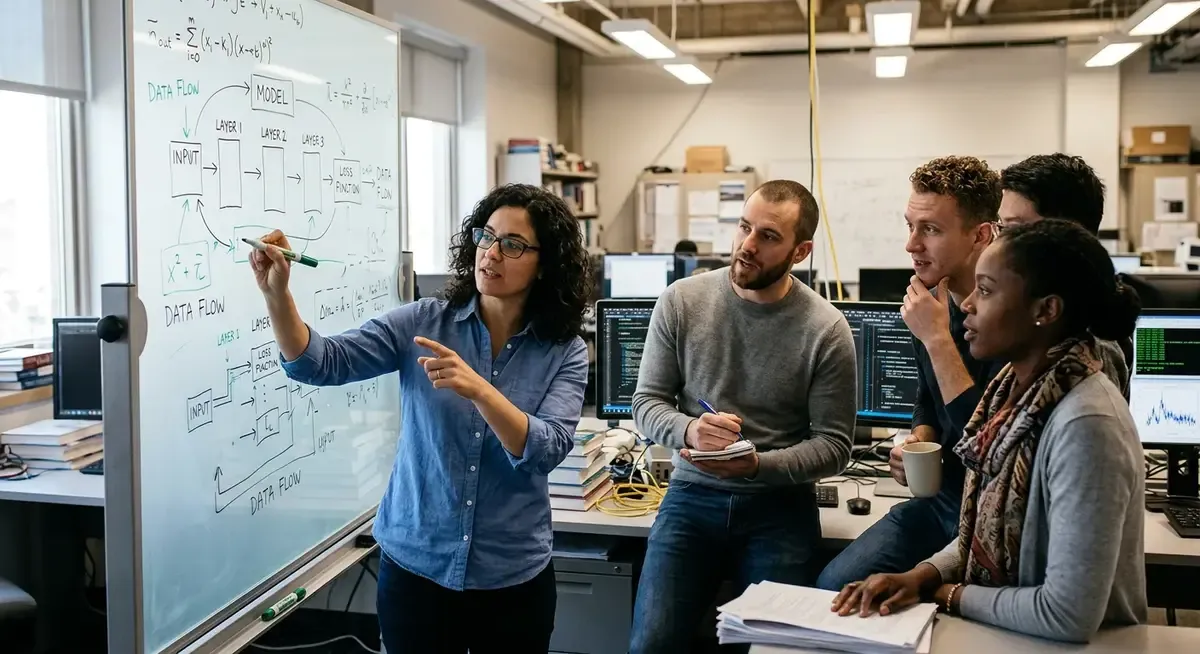
Editorial illustration for Singapore Leads in Daily AI Use, With High Hopes for Life Improvement
Singapore Leads Global AI Adoption With High Hope
Singapore Leads in Daily AI Use, With High Hopes for Life Improvement
Singapore tops a new global ranking on daily AI use, and its residents are also among the most optimistic that the technology will make their lives better. That combination, high adoption paired with high hope, sets Singapore apart from a country like the United States, where AI has become part of daily routines for millions but trust in it has not followed. Gallup, working with Microsoft, polled roughly 1,000 people in each of 37 countries between April and July, with plans to expand the survey to 140 countries eventually.
India, Australia and Malaysia are absent from the current results, but the data already spans enough countries to show a pattern: frequent use does not guarantee comfort. In the U.S., 68% of daily AI users say they're worried about the technology, and that number climbs higher among people who use it only occasionally. The timing matters.
Debates over AI safety, fears about systems acting unpredictably, and accusations of anti-competitive conduct by major AI companies have all intensified this year. Against that backdrop, Singapore's numbers offer a striking contrast to how Americans are responding to the same technology showing up in their everyday lives.
The findings appear to put the U.S. at the anxious end of an international chart even as people in other parts of the world expect the technology to improve their lives. According to Gallup, Western countries are most concerned about AI, with the United States leading in anxiety — 74% Americans reported feelings of worry, and only 36% expect AI to mostly help the country.
Why this matters
The gap between Singapore's 80% optimism and America's 68% daily-user anxiety is the number worth sitting with. Gallup's data suggests trust in AI isn't a byproduct of exposure, it's shaped by something else entirely: how a country's institutions frame the technology before people ever open an app. Singapore's government has spent years pitching AI as national infrastructure, not a Silicon Valley product.
China's numbers track a similar pattern. The US, where AI adoption came bundled with layoff headlines and copyright lawsuits, tells a different story.
For builders, this is a distribution problem disguised as a sentiment survey. If nearly seven in ten of your most engaged American users are uneasy about the thing they use daily, that's not a marketing gap, it's a trust deficit baked into the product experience itself. Founders selling into Singapore or China are working with tailwinds; those selling into the US are fighting headwinds their counterparts don't face. Worth asking which market's skepticism is actually the more rational one.
Related Reading
 Research & Benchmarks
 Microsoft AI Chief: "If It Isn't Safe We Shouldn't Build It
 Research & Benchmarks
 Google's FACTS benchmark shows 70% factuality ceiling across four tests
 Research & Benchmarks
 Nvidia's DLSS 4.5 beta adds 6x Multi Frame Generation for RTX 50 GPUs
 From Archives
 Meta's AI Agent Muse Draws 500,000 Users in First Week
 From Archives
 NVIDIA Showcases AI Advances Across Southeast Asia
Common Questions Answered
Why does Singapore rank higher in daily AI use and optimism compared to the United States?
Singapore tops the global ranking with high daily AI adoption paired with strong optimism about the technology improving lives, while the United States shows lower trust despite widespread daily use. According to Gallup's research, this difference is shaped by how countries' institutions frame AI before people adopt it, with Singapore's government positioning AI as national infrastructure rather than a Silicon Valley product.
What percentage of Americans reported worry about AI according to the Gallup and Microsoft survey?
According to the Gallup survey conducted between April and July across 37 countries, 74% of Americans reported feelings of worry about AI. Additionally, only 36% of Americans expect AI to mostly help the country, reflecting significant anxiety despite high adoption rates.
How does Singapore's optimism rate compare to the United States regarding AI's potential to improve lives?
Singapore demonstrates 80% optimism that AI will improve lives, while only 68% of daily AI users in the United States expect the technology to be beneficial. This gap highlights that trust in AI is not simply a byproduct of exposure or daily use, but rather shaped by institutional messaging and framing.
What does Gallup's data suggest about the relationship between AI exposure and trust in the technology?
Gallup's research indicates that trust in AI is not automatically generated by exposure or daily use of the technology. Instead, trust appears to be shaped by how a country's institutions frame and position AI before people ever adopt it, as evidenced by the contrasting patterns between Singapore and the United States.
Further Reading
- AI Optimism Globally Widespread Despite Uneven Use - Gallup
- New Microsoft data: AI adoption continues to rise, Switzerland remains well above the global average - Microsoft News
- Local workers beat global peers in AI use despite corporate lag - Singapore Business Review
- Singapore's AI ambitions: How the city-state is keeping up in an arms race dominated by the US and China - Singapore Economic Development Board
- Heavy AI use meets productivity doubt in Singapore workplaces - Singapore Business Review
