
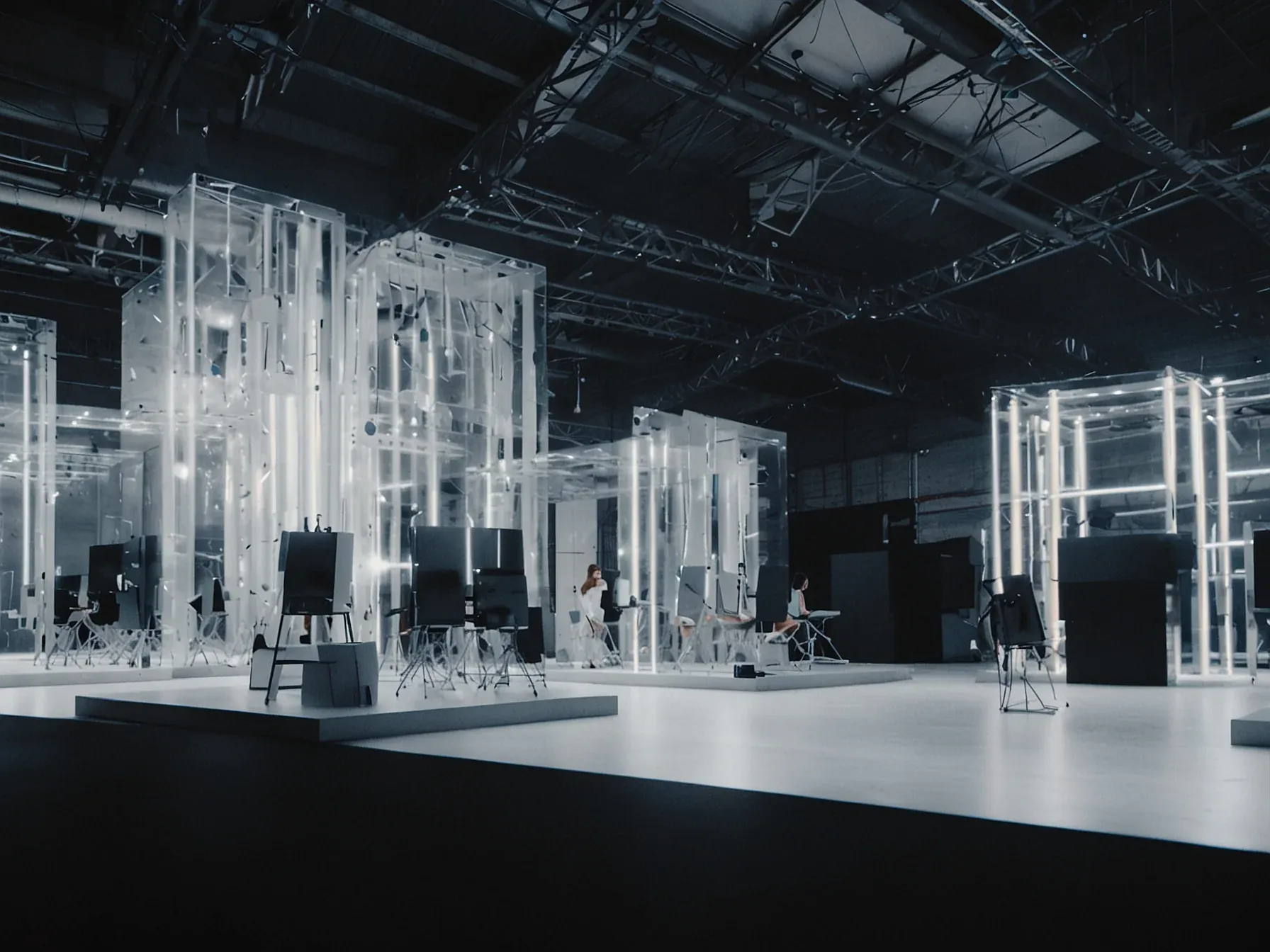
Editorial illustration for Nvidia's Halos for Robotics aims for safer autonomous systems
Nvidia's Halos Makes Robotics Safer, Smarter
Nvidia's Halos for Robotics aims for safer autonomous systems
Nvidia's stock market story runs through AI data centers, but the company is spending heavily on a different bet: machines that move through the physical world without hurting anyone. In June 2026, Nvidia announced Halos for Robotics, extending a safety architecture that debuted in 2025 for self-driving cars into warehouses, factory floors, and operating rooms. The original Halos system gave automakers hardware and software to build guardrails into autonomous vehicles. The robotics version applies the same logic to autonomous mobile robots hauling pallets, humanoid robots working alongside people, and even surgical robots operating inside hospitals.
The timing isn't random. CEO Jensen Huang told the All-In Podcast in March 2026 that physical AI already generates close to $10 billion a year for Nvidia, a category he's been flagging since 2025 as the company's second-biggest growth driver after data centers. Nvidia has backed that priority with direct investments in humanoid robotics startups. Amit Goel, who heads Nvidia's robotics ecosystem and edge computing work, frames the push as solving a bottleneck that's about to become unavoidable as both AI models and robot hardware get more capable.
Investors bullish on AI data centers may be fueling Nvidia’s multitrillion-dollar market capitalization, but the AI chipmaker has also bet billions of dollars on physical AI technologies such as robotics and self-driving cars. Part of that gambit has involved developing a full-stack safety system that companies can build upon to reduce the risk of their machines harming nearby people.
Why this matters
Nvidia is trying to become the safety layer for physical AI the way it became the compute layer for generative AI, and that's worth watching closely if you build on its stack. A full-stack safety system sounds reassuring until you remember it's also a lock-in mechanism: once warehouse robots, humanoid platforms, and surgical devices are certified against Nvidia's guardrails, switching vendors gets a lot harder. For founders building robotics companies, Halos could cut real engineering time and liability risk, which matters when a mobile robot or surgical arm hurts someone.
For researchers, the open question is who audits these safety claims and against what standard, since Nvidia is both the chip supplier and now the arbiter of what counts as "safe" behavior in its own ecosystem. We'd want to see independent verification before treating Halos as a solved problem rather than a product category Nvidia is racing to own before regulators or competitors define the rules themselves. The 2026 expansion into humanoids and surgical robots is the real test, not the 2025 launch.
Related Reading
 Business & Startups
 Nordic pilot adds Gemini for Education, NotebookLM to boost AI literacy
 Business & Startups
 Kling launches Video O1, all-in-one model with MVL bridge using transformer
 Business & Startups
 DeepSeek Seeks More Capital Weeks After USD 7B Funding Round
 Related Topic
 NVIDIA and Google Cloud let developers scale AI from prototype to production
Market Trends
 Related Topic
 NVIDIA NeMo powers telco reasoning model for autonomous network workflows
Industry Applications
 From Archives
 Architect Launches Real-Time AI Compute Auction, Acquires Futures Market
 From Archives
 OpenAI Launches Decisions API for GPT-6-Luna
 From Archives
 Microsoft Debuts Surface Laptop Ultra with Nvidia's First Arm PC Chip
Open Source
 From Archives
 NVIDIA's New DGX Spark 64GB Runs 100B-Parameter Models On-Device
Research & Benchmarks
Common Questions Answered
What is Nvidia's Halos for Robotics and how does it differ from the original Halos system?
Halos for Robotics, announced in June 2026, extends Nvidia's safety architecture that originally debuted in 2025 for self-driving cars into new domains like warehouses, factory floors, and operating rooms. While the original Halos system provided automakers with hardware and software to build guardrails into autonomous vehicles, the robotics version applies this same full-stack safety framework to help companies reduce the risk of their machines harming nearby people in physical environments.
How does Nvidia's Halos safety system create vendor lock-in for robotics companies?
Once warehouse robots, humanoid platforms, and surgical devices are certified against Nvidia's Halos guardrails, switching to alternative vendors becomes significantly more difficult and costly. This lock-in mechanism means that companies investing in Halos-certified systems face substantial barriers to migration, effectively tying their long-term infrastructure decisions to Nvidia's ecosystem.
What is Nvidia's broader strategy with physical AI technologies like robotics and self-driving cars?
Nvidia is betting billions of dollars on physical AI technologies to become the safety layer for physical AI systems, similar to how it became the compute layer for generative AI. The company is developing a full-stack safety system that other companies can build upon, positioning itself as the foundational infrastructure provider for autonomous systems that operate in the physical world.
What are the key application areas for Halos for Robotics?
Halos for Robotics is designed for use in warehouses, factory floors, and operating rooms, extending beyond the automotive industry where the original Halos system was deployed. These diverse environments require robust safety mechanisms to protect people working alongside or near autonomous machines in different operational contexts.
Further Reading
- Nvidia’s big bet on physical AI aims for safer robotaxis, humanoid robots - Ars Technica
- Nvidia introduces Halos for Robotics to bridge the physical AI safety gap - SiliconANGLE
- Automate 2026: NVIDIA announces Halos for Robotics - Robotics 24/7
- TÜV Rheinland Supports NVIDIA HALOS for Robotics Safety - TÜV Rheinland
- Inside NVIDIA Halos for Robotics: A Full-Stack Functional Safety System for Physical AI - NVIDIA Technical Blog
