
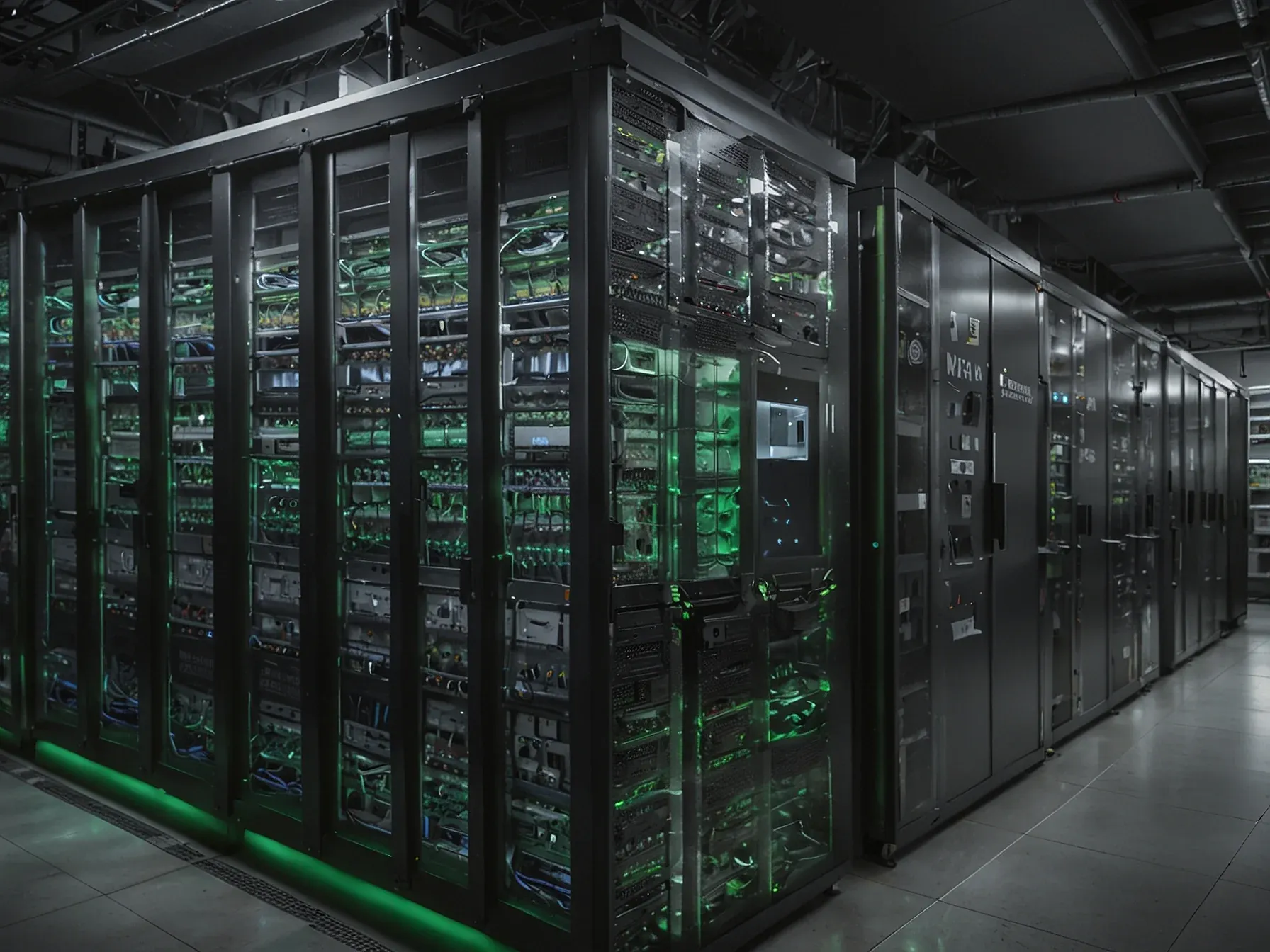
Editorial illustration for NVIDIA FLARE Auto-FL Enables Agent-Led Coding in Controlled Experiments
NVIDIA FLARE Auto-FL Enables Agent-Led Coding in...
The most tedious part of federated learning research isn’t the thinking, it’s the iterating. You define a hypothesis, code a variant, run the experiment, log the result, and do it again. And again.
The loop is essential but exhausting. NVIDIA FLARE Auto-FL breaks that grind by turning the AI agent into a disciplined experimenter. The agent reads the control plane, scours the literature, proposes a candidate, mutates only what you allow, runs the trial, extracts a score, and decides whether to keep, narrow, or discard.
You stay the research lead: you define the question, set the budget, choose which mutations are permitted, and review the ledger. The agent does the repetitive, bounded work. When progress stalls, Auto-FL enters a structured literature-review loop, source-backed search, challenge cards, filtered proposals, and feeds contract-safe ideas back into the same controlled loop.
The result is a workflow that accelerates exploration without sacrificing rigor.
Auto-FL turns agent-led coding into a controlled experiment workflow.
The true power of Auto-FL lies not in automation alone, but in the deliberate architecture of constraint. The agent moves fast, but only within a cage built by the researcher. Every mutation is bounded, every result logged, every stall met with a structured retreat to the literature.
This is not abdication; it is delegation with a ledger. The human remains the curator of intent, the arbiter of budget, the reviewer of what works and what does not. Meanwhile, the machine grinds through candidate after candidate, never guessing, always recording.
Federated learning research accelerates without sacrificing reproducibility, or control. The loop closes not on a black box, but on a transparent chain of experiments. And that chain is exactly what science demands.
Related Reading
 Research & Benchmarks
 Microsoft AI Chief: "If It Isn't Safe We Shouldn't Build It
 Research & Benchmarks
 Google's FACTS benchmark shows 70% factuality ceiling across four tests
 Research & Benchmarks
 Nvidia's DLSS 4.5 beta adds 6x Multi Frame Generation for RTX 50 GPUs
 Related Topic
 NVIDIA NeMo powers telco reasoning model for autonomous network workflows
Industry Applications
 Related Topic
 China offers cheaper electricity to AI firms abandoning NVIDIA chips
Business & Startups
 From Archives
 Multiverse reduces inference cost by favoring low‑cost prefill over decoding
 From Archives
 AI agents solve neuroscience pipeline tasks on datasets larger than benchmarks
 From Archives
 NVIDIA Nemotron Speech and Agent Skills Speed Clinical ASR Evaluation
AI Tools & Apps
 From Archives
 NVFP4 recipe speeds JAX/MaxText training on NVIDIA Blackwell and Rubin
LLMs & Generative AI
Common Questions Answered
What problem does NVIDIA FLARE Auto-FL solve in federated learning research?
NVIDIA FLARE Auto-FL addresses the tedious iterative cycle of federated learning research by automating the repetitive process of defining hypotheses, coding variants, running experiments, and logging results. Instead of researchers manually repeating this exhausting loop, the AI agent takes over as a disciplined experimenter, significantly reducing the time spent on iteration rather than innovation.
How does Auto-FL maintain researcher control while automating experiments?
Auto-FL operates within a deliberate architecture of constraints set by the researcher, ensuring the agent moves fast but only within defined boundaries. The human researcher remains the curator of intent, arbiter of budget, and reviewer of results, while the machine handles the computational grinding through candidate solutions with every mutation bounded and every result logged.
What role does the AI agent play in the Auto-FL experimental workflow?
The AI agent reads the research constraints and automatically generates and tests coding variants, handling the repetitive experimentation cycle that would otherwise require manual intervention. When the agent encounters a stall or dead end, it performs a structured retreat to the literature rather than continuing unproductively, maintaining scientific rigor throughout the process.
Why is the constraint-based architecture important to Auto-FL's design?
The constraint-based architecture ensures that automation does not mean abdication of researcher responsibility, but rather delegation with accountability through a complete ledger of experiments. This deliberate design allows researchers to maintain oversight and control while the machine efficiently explores the solution space within predetermined parameters.
Further Reading
- Accelerating Federated Learning Research with AI Agents and NVIDIA FLARE Auto-FL — NVIDIA Developer Blog
- NVIDIA/NVFlare: NVIDIA Federated Learning Application Runtime Environment — GitHub
- Research Tools - NVIDIA FLARE — NVIDIA FLARE Docs
- Supercharging Federated Learning with Flower and NVIDIA FLARE — arXiv
- Federated Learning Research using NVIDIA Flare on AWS — YouTube
