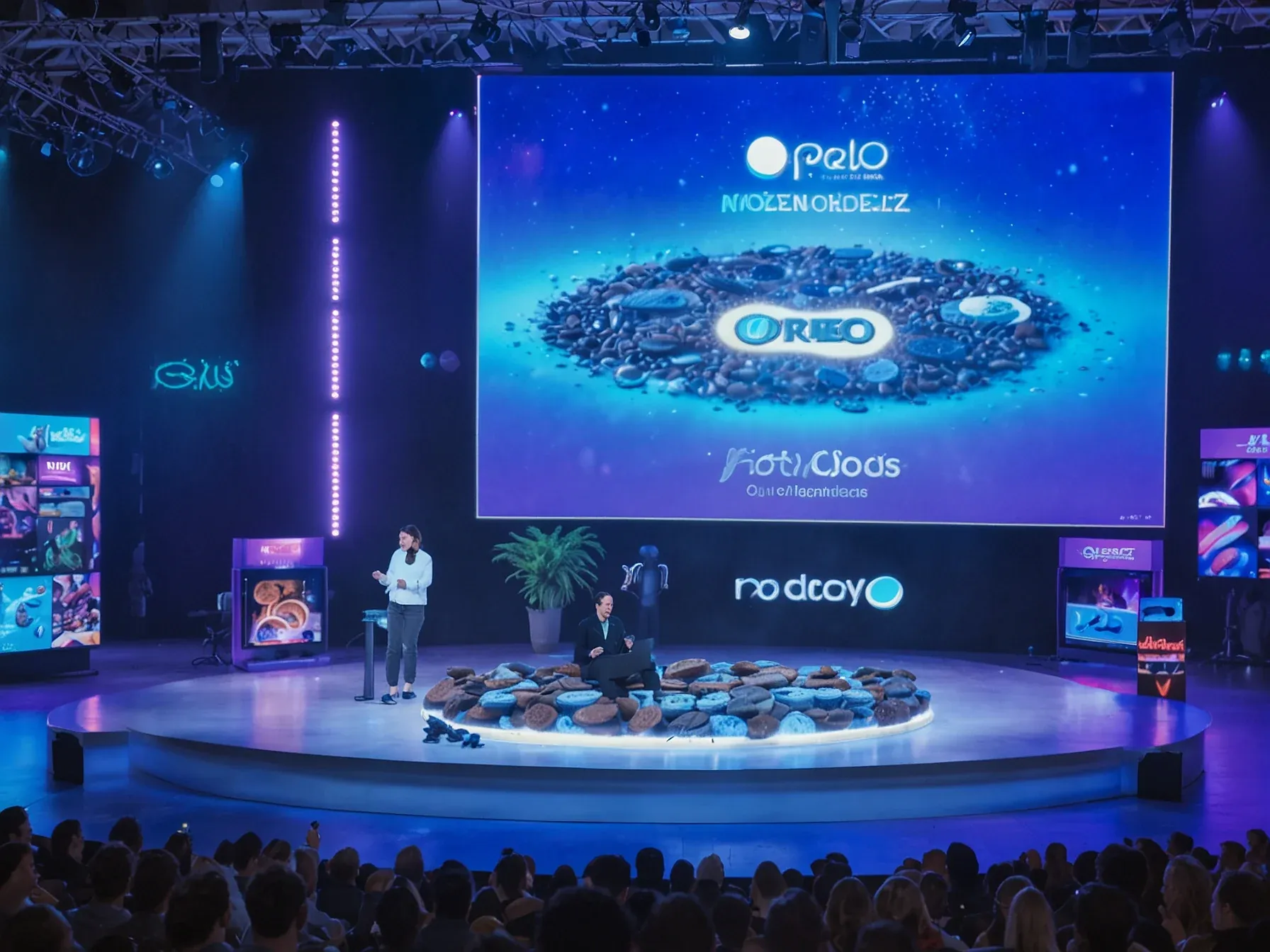
Editorial illustration for Mondelez Plans AI-Generated TV Ads to Trim Marketing Expenses in 2024
Mondelez Taps AI to Slash TV Ad Production Costs
Mondelez to Deploy Generative AI Next Year for TV Ads, Cutting Marketing Costs
Next year, during your favorite show, an ad for Oreos might not have a human director. Mondelez, the global snacking giant, is betting forty million dollars that you won't care. The goal is to cut production costs in half with AI-generated TV spots. It's a massive operational shift, not a trial.
Just ask Coca-Cola. Their AI-made holiday videos last Christmas were immediately branded as weird and soulless by viewers. For Mondelez, this is the emotional gamble. They’re charging ahead anyway, betting a familiar jingle will cover for the machine-dreamed images.
Last year, Coca-Cola’s AI-generated Christmas ads were savaged online as “soulless” and creepy.
Mondelez saw the backlash. The math is simply too tempting: half the cost, endless scale. They can test a thousand concepts in the time it once took to film one. The real question isn't about the technology's capability anymore.
It's about that fragile contract of persuasion. Advertising works until an audience feels tricked. If the result feels hollow, any savings evaporate.
So next year, during a prime-time sitcom or a crucial football game, an AI's vision of snack bliss gets its very public test. We'll decide what's worth keeping human.
Related Reading
 LLMs & Generative AI
 ChatGPT's 'Nerdy' tweak rewards goblin metaphors in answers, study finds
 LLMs & Generative AI
 Google to End Free Access to Gemini AI for Non-Subscribers
 LLMs & Generative AI
 AI Engineers Face Rising Costs, Need New Strategies for Efficiency
 From Archives
 Anthropic rolls out memory upgrade for Claude, enabling recall of prior chats
 From Archives
 Guardrails Needed for Probabilistic LLMs Beyond Traditional Engineering
Common Questions Answered
How does Mondelez plan to use generative AI in their marketing strategy for 2024?
Mondelez intends to generate television commercials using artificial intelligence as a method to reduce marketing expenses. The company aims to leverage AI technology to create more cost-effective advertising content across their brand portfolio, including popular products like Oreo.
What risks is Mondelez acknowledging with their AI-generated TV ad approach?
Mondelez recognizes potential consumer backlash, as demonstrated by previous controversial AI advertising attempts like Coca-Cola's 2024 Christmas videos. The company is aware that public sentiment remains mixed about machine-created marketing content, which could impact brand perception and consumer engagement.
Who at Mondelez is leading the company's generative AI marketing initiative?
Jon Halvorson, Mondelez's global senior vice president of consumer experience, is spearheading the company's AI-driven marketing strategy. Halvorson is overseeing the exploration of generative AI as a potential tool for creating more efficient and cost-effective advertising content.
Further Reading
- Oreo-Maker Mondelez Bets $40M on Generative AI Video Ads, Plans 2026 Holiday TV Launch — MLQ.ai
- Oreo Manufacturer, Mondelez, Uses New Generative AI to Create TV Ads for Next Year — VOI
- Papers with Code - Latest NLP Research — Papers with Code
- Hugging Face Daily Papers — Hugging Face
- ArXiv CS.CL (Computation and Language) — ArXiv
