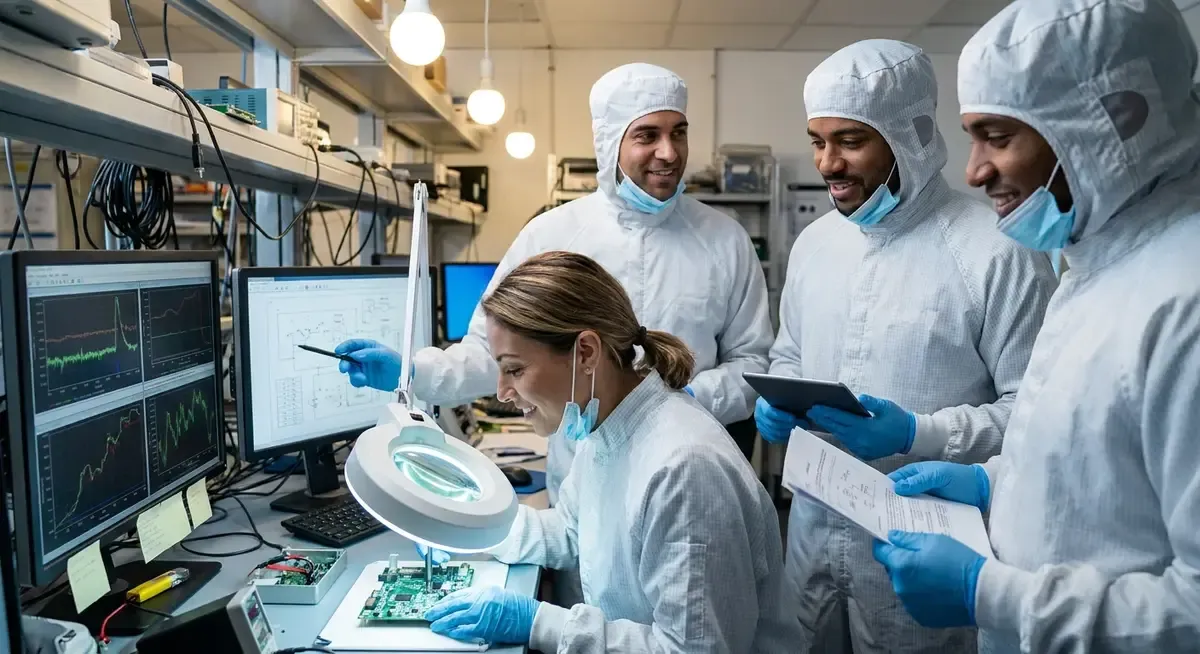
Editorial illustration for Microsoft adds AMD-powered Azure HXv2 for complex chip design workloads
Microsoft Launches AMD-Powered Azure HXv2 for Chip Design
Microsoft is adding a new AMD-powered virtual machine line to Azure aimed squarely at chip designers. The company confirmed HXv2 VMs, built for electronic design automation work, as part of a broader infrastructure push that also includes HDv2 VMs for data processing and ND MI455X v7 VMs for AI inference. All three draw on AMD's newest Helios AI platform and its next-generation EPYC processors, marking one of the more concrete steps yet in the two companies' ongoing collaboration on cloud silicon.
The timing tracks with a shift Microsoft has been flagging across its AI fleet: workloads are getting more specialized, not less, as agent-driven systems and larger models push past what generic compute can handle efficiently. EDA workloads in particular, the simulation and verification work behind modern chip design, demand a different profile than training or inference jobs. HXv2 is Microsoft's answer for that specific niche, layered alongside HDv2 and the MI455X v7 line rather than replacing existing Azure options. Together they represent Microsoft's attempt to build out a platform wide enough to cover data pipelines, inference and now the chip design process itself.
Building on our close collaboration with AMD, Microsoft is bringing AMD’s latest Helios AI platform and next-generation EPYC datacenter processors to Azure. These technologies will power three upcoming Azure offerings: HDv2 VMs for data processing, HXv2 VMs for electronic design automation (EDA) and ND MI455X v7 VMs for AI inference workloads.
Why this matters
Chip design has always been the bottleneck few outside semiconductor companies think about, but it's the thing that decides how fast the next generation of AI accelerators actually ships. EDA workloads (the simulations that verify a chip before it's manufactured) are brutal on compute, and Azure HXv2's AMD partnership is Microsoft betting that specialized infrastructure for this narrow use case pays off more than throwing generic GPU clusters at it. For chipmakers and the researchers who depend on their output, faster verification cycles mean faster iteration on the silicon that everything else in AI runs on.
For developers and founders further up the stack, the direct impact is minimal today, but the signal is worth tracking: Microsoft is willing to build bespoke hardware tiers for specific workload types rather than one-size-fits-all Azure instances. If that pattern holds, expect more targeted infrastructure announcements aimed at narrow, high-value technical workloads. Watch whether AMD's collaboration language turns into measurable throughput gains for EDA customers, not just another cloud SKU announcement.
Related Reading
Browse all Microsoft news → Research & Benchmarks
 Microsoft AI Chief: "If It Isn't Safe We Shouldn't Build It
 Research & Benchmarks
 Google's FACTS benchmark shows 70% factuality ceiling across four tests
 Research & Benchmarks
 Nvidia's DLSS 4.5 beta adds 6x Multi Frame Generation for RTX 50 GPUs
 Related Topic
 Claude gains shared context in Excel, PowerPoint; Microsoft adds Copilot Cowork
AI Tools & Apps
 Related Topic
 Microsoft adds ’vibe working’ to Word and Excel; Copilot Agent Mode now default
Business & Startups
 From Archives
 NVIDIA TAO Agent Skills Accelerate Vision Model Post-Training
 From Archives
 Meta Shuts Down AI Token Leaderboard Amid Rising Cost Concerns
 From Archives
 Z.ai launches ZCode to challenge GitHub Copilot, Claude Code
Business & Startups
 From Archives
 NYT says Microsoft built supercomputer that trained ChatGPT on its articles
Policy & Regulation
Common Questions Answered
What are the three new AMD-powered Azure VM offerings that Microsoft announced?
Microsoft announced three new Azure virtual machine lines: HXv2 VMs designed for electronic design automation work, HDv2 VMs for data processing, and ND MI455X v7 VMs for AI inference workloads. All three offerings are built on AMD's latest Helios AI platform and next-generation EPYC datacenter processors as part of Microsoft's expanded collaboration with AMD.
Why is the HXv2 VM specifically important for chip designers and semiconductor companies?
The HXv2 VM is optimized for electronic design automation (EDA) workloads, which involve complex simulations that verify chip designs before manufacturing. These EDA simulations are extremely compute-intensive, and specialized infrastructure like HXv2 is more effective for this use case than generic GPU clusters, making it critical for accelerating the development of next-generation AI accelerators.
What role does AMD's Helios AI platform play in these new Azure offerings?
AMD's Helios AI platform serves as the foundational technology powering all three new Azure VM lines announced by Microsoft. Combined with AMD's next-generation EPYC processors, the Helios platform enables the specialized compute capabilities needed for chip design, data processing, and AI inference workloads.
How does this announcement reflect Microsoft and AMD's collaboration on cloud infrastructure?
This announcement represents a concrete step in Microsoft and AMD's ongoing partnership to advance cloud silico capabilities. By integrating AMD's latest Helios AI platform and EPYC processors into three specialized Azure offerings, the companies are demonstrating their commitment to providing enterprise customers with optimized infrastructure for demanding workloads like chip design and AI inference.
Further Reading
- Do more with less using new Azure HX and HBv4 virtual machines for HPC - Microsoft Azure Blog
- Přehled virtuálních počítačů řady HX, architektura, topologie – Azure Virtual Machines - Microsoft Learn
- Máquinas virtuales (VM) de Microsoft Azure con tecnología AMD para cargas de trabajo EDA y HPC - AMD
- Announcing new AMD EPYC™-based Azure Virtual Machines - Microsoft Azure Blog
- High Performance Computing in Azure - with Mark Russinovich - Microsoft Tech Community
