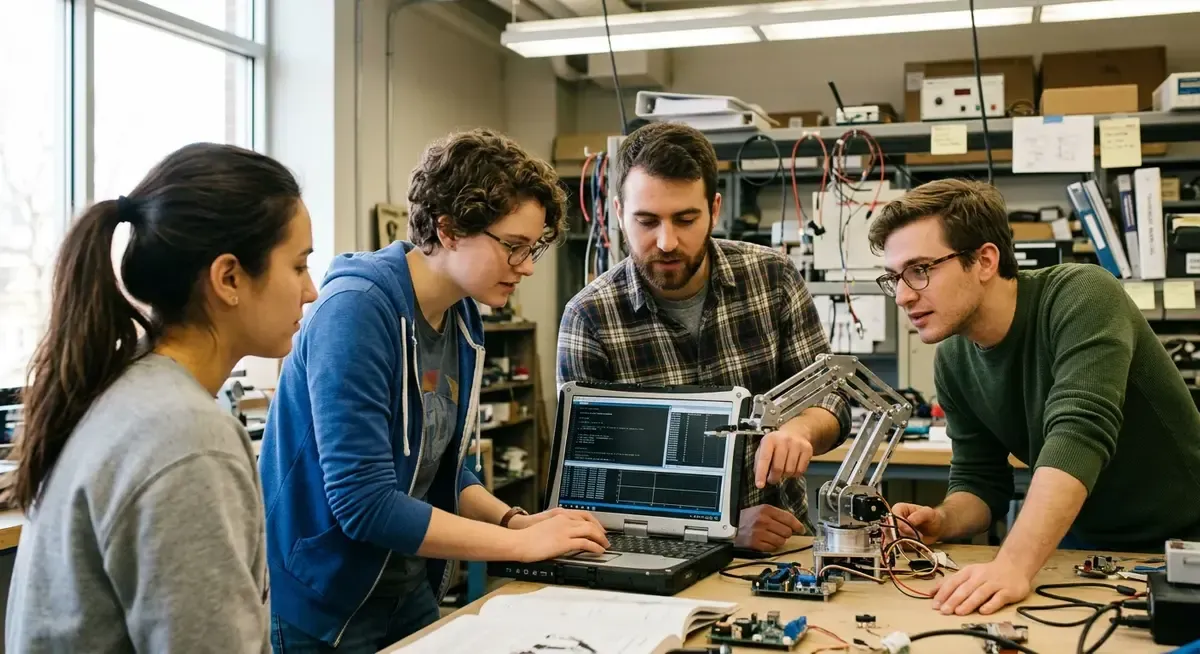
Editorial illustration for The Download: AI's New Sense of Smell and Hydropower's Challenges
AI's First Smell Foundation Model Trained by Osmo
The Download: AI's New Sense of Smell and Hydropower's Challenges
A lab in New Jersey is cataloging the smells of the world, one careful note at a time: nutty, peachy, marine. The company behind it, Osmo, says it's built the first foundation model for smell, trained by cross-referencing those human descriptions against chemical data. Founder Alex Wiltschko wants to give computers a sense of smell, and he's already claiming the system has hit "human-level olfactory intelligence." Fragrance brands are reportedly using it to design new scents, but Osmo's ambitions stretch further, toward spotting counterfeit goods and catching disease before symptoms show up. Whether the technology can actually do all that is still an open question.
Elsewhere, the US Southwest just posted its worst hydropower summer in a decade. New federal data show electricity generation from dams dropped 28% below the ten-year average between April and August, as the region's two largest reservoirs sit at dangerously low levels. A prolonged drought is the immediate cause, but climate change is piling on, raising hard questions about how reliable this source of renewable power will remain.
Today's issue of The Download also covers a wave of outages hitting the US government and Apple.
Wiltschko claims the model has already achieved “human-level olfactory intelligence” and is helping fragrance brands design new scents. But Osmo has bigger ambitions, from detecting counterfeit goods to diagnosing diseases.
Why this matters
A startup claiming its AI nose matches a human's is a bigger deal than it sounds. Smell has resisted digitization longer than sight or sound because it's chemistry, not pixels or waveforms, and training a model on "nutty" versus "peachy" means someone has to build a data set from scratch, one sniff at a time. If this New Jersey team's approach holds up outside the lab, it opens a sensor category that's been mostly theoretical for decades, with obvious applications in food safety, diagnostics, and environmental monitoring. We'd want to see independent validation before taking "as good as a human" at face value.
The hydropower piece and the outages hitting Apple and the US government are a reminder that AI's growth is bottlenecked by unglamorous infrastructure: power grids, cloud uptime, physical plumbing. Founders chasing model capability should pay as much attention to these failure points as to benchmark scores. The smartest systems are worthless if the water, power, or servers behind them aren't reliable.
Related Reading
 Research & Benchmarks
Microsoft AI Chief: "If It Isn't Safe We Shouldn't Build It
 Research & Benchmarks
Google's FACTS benchmark shows 70% factuality ceiling across four tests
 Research & Benchmarks
Nvidia's DLSS 4.5 beta adds 6x Multi Frame Generation for RTX 50 GPUs
 From Archives
Chain-of-Thought controllability reduces gpt-oss-20b side-task monitorability
 From Archives
Perplexity Deploys Up to 16 AI Agents for Cross-Checked Tasks
Common Questions Answered
How did Osmo build the first foundation model for smell?
Osmo trained its smell foundation model by cross-referencing human descriptions of scents, such as "nutty," "peachy," and "marine," against chemical data. This approach allowed the company to create a dataset from scratch, cataloging the smells of the world one careful note at a time, which was necessary because smell is based on chemistry rather than pixels or waveforms like sight and sound.
What does Osmo claim about its AI system's olfactory capabilities?
Founder Alex Wiltschko claims that Osmo's AI system has achieved "human-level olfactory intelligence," matching the smell-detection abilities of humans. The system is already being used by fragrance brands to design new scents, demonstrating its practical application in the industry.
What are Osmo's broader applications beyond fragrance design?
Beyond helping fragrance brands design new scents, Osmo has ambitions to use its smell-detection technology for detecting counterfeit goods and diagnosing diseases. These applications represent significant potential uses for artificial olfactory intelligence across multiple industries.
Why has smell been more difficult to digitize than sight or sound?
Smell has resisted digitization longer than sight or sound because it is based on chemistry rather than pixels or waveforms, requiring someone to manually build a dataset from scratch by cataloging scents one sniff at a time. This fundamental difference in how smell works made training an AI model on subjective human descriptions like "nutty" versus "peachy" a unique challenge that previous approaches could not overcome.
Further Reading
- This smell startup says its AI nose is as good as a human’s - MIT Technology Review
- The Download: AI learns to smell and hydropower struggles - MIT Technology Review
- Osmo says its smell foundation model reaches human-level performance - GenAInews
- Hydropower hit record lows in the US Southwest this summer - MIT Technology Review
- Digital tools help hydropower plants respect nature while generating energy - European Commission Horizon Magazine
