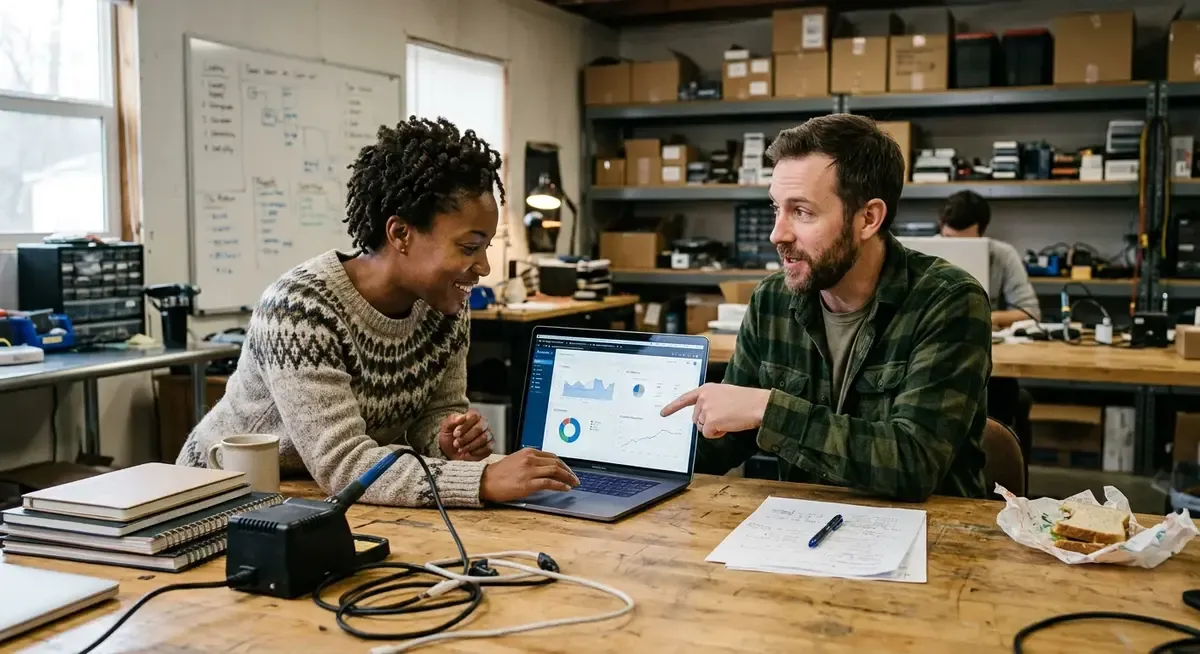
Editorial illustration for Anthropic launches Claude Meetings beta to turn discussions into tasks
Anthropic Launches Claude Meetings to Automate Task Creation
Anthropic launches Claude Meetings beta to turn discussions into tasks
Anthropic rolled out a set of workplace tools on Tuesday aimed at a problem every office worker knows: meetings end, and then someone still has to write up the notes, chase down the action items, and turn vague agreements into an actual plan. The centerpiece is Claude Meetings, which puts the AI assistant inside a video call as a visible participant rather than a transcription tool that works after the fact. Alongside it, Anthropic introduced Claude Whiteboards and Claude Sheets, pushing further into territory that looks a lot like a full office suite.
The timing isn't incidental. OpenAI unveiled its own batch of workplace features just weeks earlier, letting ChatGPT users build presentations and visualize company data. Meta has its own entry too, an agent called Muse that builds mini-apps on demand to knock out specific tasks. Three companies, three bets that the next battleground for AI isn't chatbots answering questions but AI embedded in the daily grind of calls, spreadsheets, and planning docs, the kind of work Microsoft and Google have owned for decades.
With Claude Meetings, teams can add Claude to a video call as a visible participant. Claude then follows the conversation and gets to work on tasks in real time. As participants talk, it can draft the plan being discussed, map out a timeline on a whiteboard, answer questions in the meeting chat, and access connected work apps to retrieve information, such as last year’s figures.
Why this matters
For founders and teams running on Claude's Team or Enterprise plans, this is the first real test of whether an AI model can act inside a live meeting rather than just summarize it afterward. Google Meet-only support at launch is a meaningful limit, not a footnote. Most companies juggle Zoom, Slack huddles, and Teams calls alongside Meet, so the useful version of this product is the one that works everywhere, not the beta that works in one place.
The timing matters too. OpenAI shipped its own collaboration tools just weeks earlier, and now both companies are racing to own the moment where AI stops transcribing meetings and starts acting on them in real time. That's a different, harder problem than summarization, and it's one neither company has proven it can solve reliably yet.
Whiteboards and Sheets look like the more conservative bets here, extending familiar interfaces rather than inserting an agent into a live conversation. Worth watching: how Claude handles ambiguous or contradictory instructions mid-meeting, and whether Enterprise customers trust it enough to let it actually start tasks before a meeting ends.
Related Reading
Browse all Anthropic news → Business & Startups
Nordic pilot adds Gemini for Education, NotebookLM to boost AI literacy
 Business & Startups
Kling launches Video O1, all-in-one model with MVL bridge using transformer
 Business & Startups
DeepSeek Seeks More Capital Weeks After USD 7B Funding Round
 Related Topic
Claude gains shared context in Excel, PowerPoint; Microsoft adds Copilot Cowork
AI Tools & Apps
 Related Topic
Anthropic: Hackers Stole Claude Tokens Via Compromised Session Key
LLMs & Generative AI
 From Archives
Nvidia CEO Jensen Huang's alleged spy affair involves USD 7.5B chip partner
 From Archives
Anthropic sets IPO price range at USD 70-USD 78 for USD 1.404 trillion valuation
 From Archives
Anthropic kicks off IPO roadshow, targeting USD 1 trillion valuation
 From Archives
Anthropic paces Fable 5.2 as Vanta hosts six-session AI governance series
Common Questions Answered
How does Claude Meetings differ from traditional AI transcription tools?
Claude Meetings places the AI assistant as a visible participant directly inside video calls rather than working after the fact as a transcription tool. This real-time presence allows Claude to actively draft plans, map out timelines on whiteboards, answer questions in meeting chat, and access connected work apps while the conversation is happening, rather than summarizing notes after the meeting ends.
What specific tasks can Claude perform during a Claude Meetings session?
During a meeting, Claude can draft the plan being discussed in real time, map out timelines on a whiteboard, answer participant questions in the meeting chat, and access connected work apps to retrieve information such as historical figures or data. These capabilities help teams turn vague agreements into actionable plans without requiring manual follow-up work after the call concludes.
What are the current limitations of Claude Meetings in its beta launch?
Claude Meetings currently only supports Google Meet at launch, which is a significant limitation since most companies use multiple video conferencing platforms including Zoom, Slack huddles, and Microsoft Teams. The product's full utility depends on expanding support to work across these other widely-used platforms, not just the beta version limited to one service.
Which Anthropic plans have access to Claude Meetings, Whiteboards, and Sheets?
Claude Meetings, Whiteboards, and Sheets are available to teams running on Claude's Team or Enterprise plans. These workplace tools represent Anthropic's first major test of whether an AI model can effectively function as a live meeting participant for organizations with these subscription levels.
Further Reading
- Anthropic launches Claude Meetings to turn workplace discussions into plans and tasks - TechCrunch
- Anthropic wants Claude to join your meetings - Axios
- Claude can now join your weekly meeting to take notes and even start work for you - TechRadar Pro
- Anthropic takes on Google and Microsoft with Claude Sheets - Engadget
- Anthropic has its own AI-powered office suite now - The Verge
