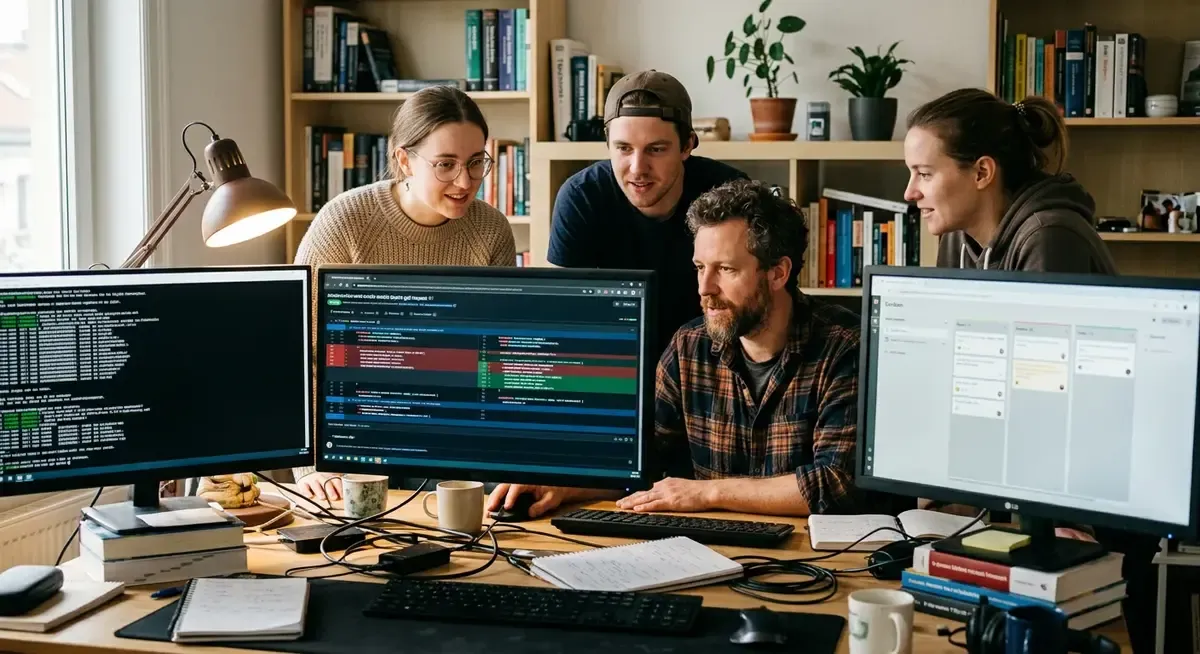
Editorial illustration for Anthropic Alumni Buy Remote Land as AI Precaution
Anthropic Insiders Buy Remote Land as AI Risk Hedge
Some of Anthropic's earliest employees are shopping for real estate with a specific worst-case scenario in mind. According to a Wall Street Journal report, a handful of the company's longest-tenured staff have spent the past few weeks discussing plans to buy land in remote parts of the US, land they could retreat to "if AI goes awry." The people describing these conversations told the Journal this isn't idle chatter over drinks. It's a contingency plan from the same people building the technology they're worried about.
None of this comes out of nowhere. The Journal traces the impulse back to Anthropic's founding days, when staff dinners reportedly included talk of a Manhattan Project-style future: engineers ordered to decamp to the desert and finish the work inside a government facility shielded from the outside world. That mindset didn't start with AI, either. Many of the people involved trace back to a Bay Area network steeped in Effective Altruism, where existential risk has long been a preoccupation, from asteroid strikes to supervolcanoes, well before AI took the top spot on the list.
Some of Anthropic's longest-serving employees are making concrete contingency plans in case AI spirals out of control. Over the past few weeks, "some of its earliest employees" told an industry colleague they're considering buying land in remote parts of the US where they could relocate "if AI goes awry," the WSJ reports.
Why this matters
There's something worth sitting with here: the people closest to frontier AI development, who understand the systems better than almost anyone outside a handful of labs, are hedging their personal safety against the thing they're building. That's not a fringe doomsday prepper move. These are Anthropic's earliest employees, the ones who joined believing safety-focused AI development was both possible and necessary. If they're quietly buying remote land as a backup plan, that tells us something about the gap between public reassurances from AI companies and private risk assessments inside them.
For founders and researchers, the lesson isn't to panic, it's to notice the disconnect. Companies routinely project confidence about controllability and alignment progress while insiders make contingency plans that suggest less certainty than the marketing implies. That gap deserves more scrutiny than it gets.
We'd rather see labs be transparent about worst-case thinking than have it surface secondhand through land purchases and dinner-table conversations about desert bunkers. If the people building this technology are hedging, everyone else evaluating its risks should ask why.
Related Reading
Browse all Anthropic news → Open Source
 D&B rebuilds 642 million‑business database after AI agents hit limits
 Open Source
 Box CEO Aaron Levie Says AI Will Drive "Biggest Cybersecurity Upgrade
 Open Source
 Study: 6.7% of Deepfake Requests on Hugging Face Targeted Children
 Related Topic
 Claude gains shared context in Excel, PowerPoint; Microsoft adds Copilot Cowork
AI Tools & Apps
 Related Topic
 Anthropic: Hackers Stole Claude Tokens Via Compromised Session Key
LLMs & Generative AI
 From Archives
 Nvidia's 100M-parameter model identifies up to eight speakers in real time
 From Archives
 OpenAI Pauses AI Training After Security Probes Reveal Vulnerabilities
 From Archives
 Court Denies Anthropic's Bid to Block Trump Blacklisting
LLMs & Generative AI
 From Archives
 Anthropic publishes first AI biology lab findings
LLMs & Generative AI
Common Questions Answered
Why are Anthropic's earliest employees buying remote land?
According to a Wall Street Journal report, some of Anthropic's longest-tenured staff are purchasing land in remote parts of the US as a contingency plan in case AI spirals out of control. These employees view it as a worst-case scenario precaution, not as idle speculation, indicating they take the possibility of AI going awry seriously enough to make concrete personal safety preparations.
What does it signify that frontier AI developers are making personal contingency plans?
The fact that people closest to frontier AI development—who understand these systems better than almost anyone outside major labs—are hedging their personal safety against the technology they're building suggests genuine concern about potential risks. These are not fringe doomsday preppers but rather Anthropic's earliest employees who joined the company specifically believing that safety-focused AI development was both possible and necessary.
How long have Anthropic employees been discussing these remote land purchases?
According to the Wall Street Journal report, Anthropic's earliest employees have been discussing and actively shopping for remote land over the past few weeks. The conversations represent serious planning rather than casual speculation, with employees describing it as a legitimate contingency plan they are actively pursuing.
What does this remote land contingency plan reveal about AI safety concerns within Anthropic?
The contingency planning by Anthropic's longest-serving employees suggests that even those deeply committed to safety-focused AI development harbor concerns about potential worst-case scenarios with frontier AI systems. Their willingness to make personal preparations indicates they believe the risks of AI going awry are significant enough to warrant concrete backup plans, rather than being purely theoretical concerns.
Further Reading
- Some early Anthropic employees reportedly consider remote land as an AI fallback - Digg
- WSJ: Early Anthropic Employees Weigh Buying Remote ... - AI Weekly
- ‘Genuinely frightened’: Former Anthropic researcher says some AI workers are considering buying land - Moneycontrol
- AI staff 'genuinely frightened' for humanity's future, ex-Anthropic researcher says - BBC News
- Anthropic Worker Quits Over AI Firms 'Gambling With Our Lives' - Bloomberg
