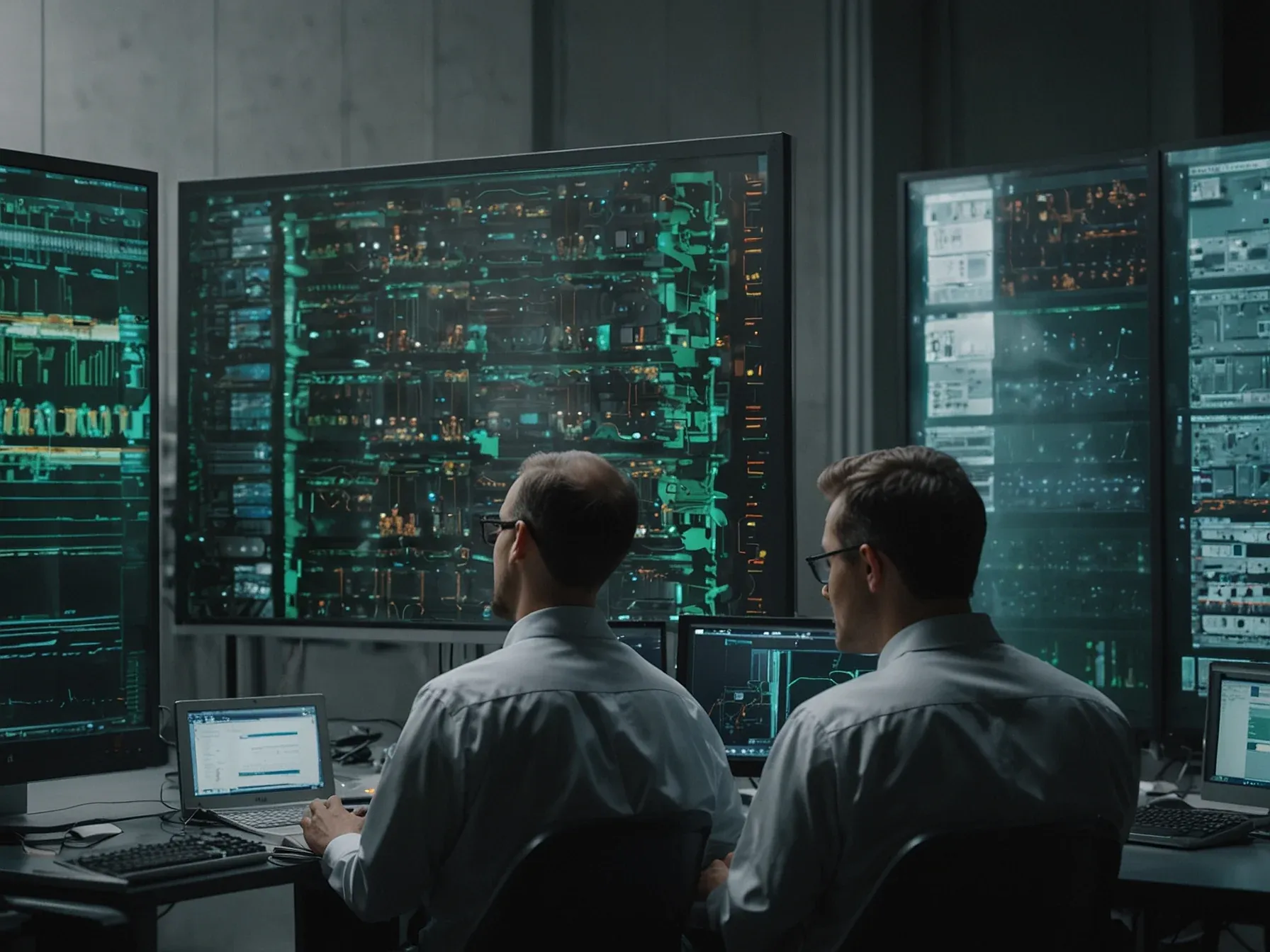
Editorial illustration for AI Data Centers Set to Consume Over Half Their Power by 2028, Study Reveals
AI Data Centers' Power Consumption to Skyrocket by 2028
AI workloads projected to use >50% of data-center power by 2028, paper warns
We keep talking about AI as software. A model, a chatbot, an assistant. We should talk about it as hardware.
As a physical object that sits in a building, demands current from the grid, and turns electricity into heat. A new paper makes the case that this physicality is about to become impossible to ignore.
By 2028, those AI systems will likely account for more than half of all power used in data centers. The number is startling on its own. The context is worse. It represents not a spike but a permanent new floor for the industry's energy appetite.
The problem isn't just electricity. It's a chain reaction of consumption. Cooling all those chips requires water, often in drought-prone regions.
Building and replacing the specialized hardware creates e-waste and demands rare minerals. The paper from NTT DATA maps this entire chain, presenting a picture of an infrastructure straining under its own ambition.
Researchers predict AI workloads will account for more than 50% of data centre power consumption by 2028. In addition to rising energy use, the paper highlights growing water consumption for cooling systems, e-waste generation and the extraction of rare-earth minerals for hardware production. "The resource consequences of AI's rapid growth and adoption are daunting, but the technology also can empower innovative solutions to the environmental problems it creates," David Costa, head of sustainability innovation headquarters at NTT DATA, said.
"AI's amazing capabilities can help manage energy grids more efficiently, reduce overall emissions, model environmental risks and improve water conservation. It's vital for organisations to recognise the challenge and build sustainability into AI systems from the start." The paper urges organisations to move beyond traditional performance metrics such as accuracy and speed, and to incorporate efficiency and sustainability as core design principles. Moreover, it calls for standard and verifiable metrics to quantify AI's environmental impact, including its energy use, carbon emissions and water footprint, with benchmarks such as the 'AI Energy Score' and 'Software Carbon Intensity for AI'.
NTT DATA's researchers advocate a lifecycle-centric approach to AI, incorporating sustainability from raw material extraction and hardware manufacturing to system deployment and eventual disposal.
David Costa's quote points to the central paradox. The very technology causing this strain might be essential for managing it. AI could optimize power grids or model climate risks.
That's a hopeful footnote, but the paper's urgency suggests it cannot be an afterthought. The proposed metrics, like an 'AI Energy Score', are attempts to make this consumption visible and accountable from the first line of code.
For years, tech progress was measured in flops and parameters and latency. The next benchmark might be liters of water per query. The industry's old priorities, pure speed and scale, are colliding with a physical reality. The paper is a warning that this collision is scheduled for 2028.
Further Reading
- How Researchers Are Driving Advances for Data Centers - Lawrence Berkeley National Laboratory News Center
- Why robust planning is central to data center success - Utility Dive
- AI data centers bring energy challenges - Carolina Journal
Related Reading
 Open Source
 D&B rebuilds 642 million‑business database after AI agents hit limits
 Open Source
 Box CEO Aaron Levie Says AI Will Drive "Biggest Cybersecurity Upgrade
 Open Source
 Study: 6.7% of Deepfake Requests on Hugging Face Targeted Children
 From Archives
 Confluent and Redpanda race to build agent-ready streaming data infrastructure
 From Archives
 gpt-oss-safeguard lets developers apply custom policies via model reasoning
Common Questions Answered
How much power are AI data centers expected to consume by 2028?
According to the study, AI workloads will account for more than 50% of data centre power consumption by 2028. This represents a dramatic increase in energy demand that could potentially exceed the current digital infrastructure power usage of entire countries.
What environmental challenges are associated with AI infrastructure growth?
The AI infrastructure growth presents multiple environmental challenges, including massive electricity consumption, significant water usage for cooling systems, substantial e-waste generation, and extensive rare-earth mineral extraction. These resource consequences pose a complex sustainability challenge for the technology sector.
What perspective does David Costa offer on AI's environmental impact?
David Costa suggests that while the resource consequences of AI's rapid growth are daunting, the technology also has the potential to empower innovative solutions to the environmental problems it creates. This nuanced view acknowledges both the challenges and the potential for technological solutions to environmental issues.
Further Reading
- US data centers' energy use amid the artificial intelligence boom — Pew Research Center
- AI: Five charts that put data-centre energy use – and emissions into context — Carbon Brief
- How AI Is Transforming Data Centers and Ramping Up Power Demand — Goldman Sachs
- 5 insights into AI data center energy — Hanwha
