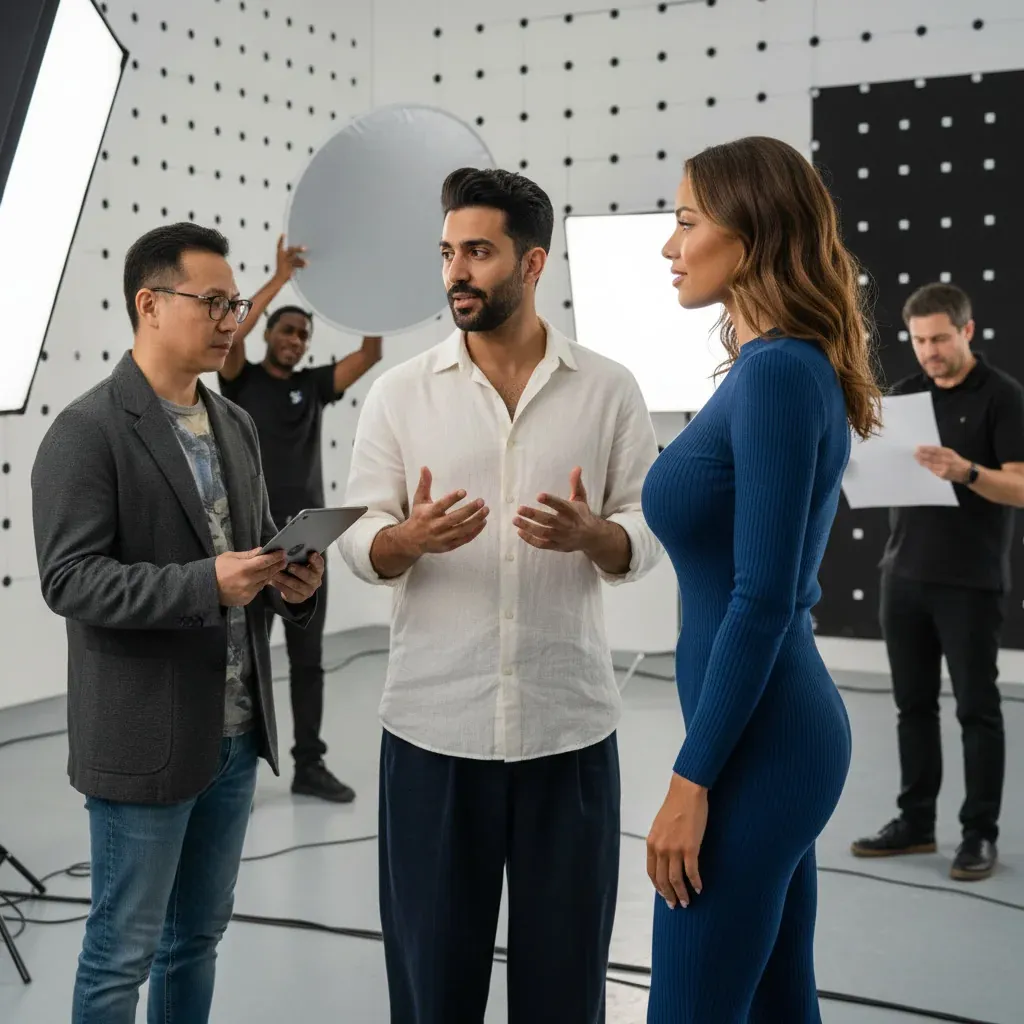
AI Image Generators Improve, Yet Still Look Over‑Smooth
AI image generators had a signature style: that weirdly smooth, airbrushed gloss. They made digital porcelain statues, not photos. It's changing now, but not cleanly.
The new trend is a harsher, more accurate reality. It feels like a downgrade, even as the technology gets more things right.
AI doesn’t have to make a scene look realistic — in a way, that’s a dead giveaway. It just has to mimic the way we record reality, with all its flaws, and use it as a kind of cheat code to make an image look believable.
That polished gloss persists because it's easier. Training data is curated and idealized. Replicating that glow is simple.
The hard part? Capturing the chaotic noise of a real face. It demands a model actively choose not to fix imperfections.
To leave a crooked nose crooked, as Google's Nano Banana did for Robert Hart. This is the awkward phase where the tech learns accuracy is inherently messy. The old gloss was a safety net.
They're taking it away. The results wobble. They get strange.
And they are, finally, far more interesting.
Related Reading
 AI Tools & Apps
 Claude gains shared context in Excel, PowerPoint; Microsoft adds Copilot Cowork
 AI Tools & Apps
 OpenAI Developer: AI Agent "Swarms" Waste Tokens, Create "Coordination Tax
 AI Tools & Apps
 LG's recent webOS update adds Microsoft Copilot app, now removable
 From Archives
 Integrated AI tools unify CRM, communication, workflow for Indian firms
 From Archives
 Disney pours USD 1 billion into Sora characters, challenging Google’s API push
Common Questions Answered
Why do many AI‑generated images still appear overly smooth and stylized?
Most AI image generators were trained on datasets that favor polished, studio‑like photography, which imprints a glossy, perfect finish on outputs. This training bias leads to surfaces that look too smooth and shadows that melt into a soft halo, resembling stylized portraits rather than candid shots.
What recent trend is emerging in AI image generation regarding realism?
Newer models are gradually dialing back the characteristic glow and glossy finish, aiming for more realistic, candid‑style imagery. While the shift is incremental, it reflects an effort to reduce the stylized look and produce pictures that better mimic real‑world lighting and texture.
How does the article describe the tension between technical progress and aesthetic residue in AI image generators?
The article notes that despite significant improvements in detail and composition, AI tools retain a visual fingerprint of polished surfaces and soft shadows. This creates a tension where technical advances coexist with lingering aesthetic artifacts that make images look more like studio portraits than natural photographs.
According to the Stepback newsletter, what is the likely future of the smooth, painted quality in AI‑generated images?
The newsletter suggests that while newer models are nudging toward realism, the smooth, almost painted quality persists due to entrenched training biases. Whether this trend toward less stylized imagery will become lasting or remain a peripheral tweak remains an open question.
Further Reading
- The Weird Aesthetic of AI-Generated Images - The New Yorker
- AI art is getting shockingly good. But it still has a telling flaw - MIT Technology Review
- Why AI images still look like AI images - Vox
- AI image generators are better than ever — so why do they still look the same? - The Verge
- Why all AI-generated images look kind of the same - Fast Company
