
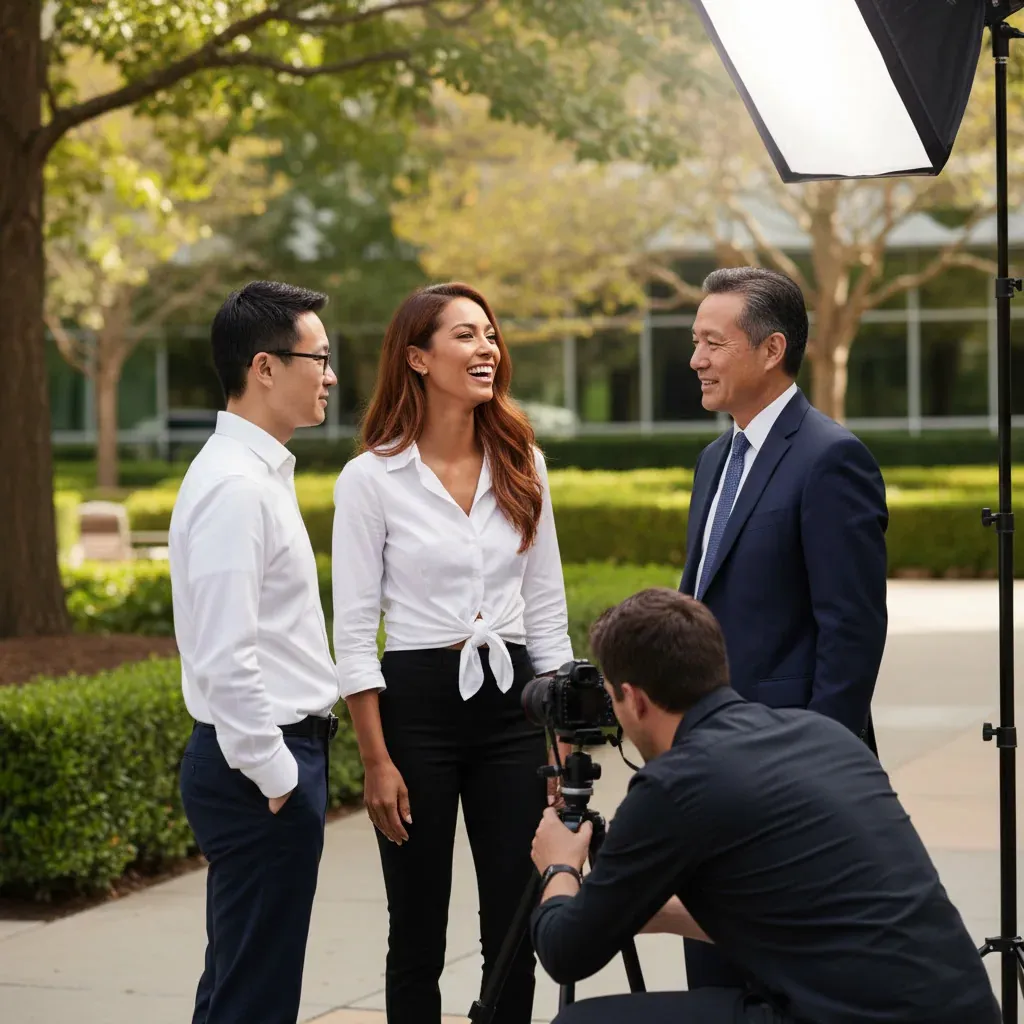
Editorial illustration for YouTube lets celebrities locate and request takedown of AI deepfakes
YouTube Empowers Celebrities to Combat AI Deepfake Abuse
YouTube lets celebrities locate and request takedown of AI deepfakes
YouTube is giving celebrities a new lever of control over their digital twins. Starting now, public figures can track AI-generated videos that use their likeness and request their removal, though YouTube’s privacy policy, not an automatic ban, determines what actually disappears. The feature, tested with content creators last fall and expanded to politicians and journalists in March, now covers any public figure, even those without a YouTube account.
Participants must submit an ID and a selfie video; the system scans faces, not voices or other identifiers. But removal is far from guaranteed, parody, satire, and other protected uses get a pass. YouTube has been careful: early data shows creators requested takedowns for only a “very small” number of videos.
And here’s the twist, the same platform that now helps you erase unauthorized deepfakes also let creators legally clone their own likeness just weeks ago. Talent agency CAA, which backed the expansion, already sits on a vault of biometric data, waiting for the moment likeness detection matures into something more than a takedown tool: a market.
Public figures can use it to keep track of AI content on YouTube of themselves or request removal (takedowns are evaluated against YouTube's privacy policy, and not every request will be approved). YouTube began testing the feature with content creators last fall; in March, the company expanded the program to politicians and journalists. YouTube says the tool will cover celebrities regardless of whether they have a YouTube account.
The system requires participants to submit an ID and a selfie video of themselves. (Likeness detection is focused on faces specifically, as opposed to a voice or other identifying characteristics.) Removal of deepfakes isn't guaranteed, and there are protected use cases like parody or satire. YouTube has previously said that when content creators used the feature, they requested only a "very small" number of videos of themselves be removed.
YouTube has compared likeness detection to Content ID, its system for finding (and removing) copyrighted material on the platform. The difference is that with Content ID, rights holders can opt to monetize other users' videos that use their material and split the revenue. That's not yet possible with likeness detection, but that clearly seems like the direction the industry is moving toward.
Earlier this month, YouTube announced a feature allowing creators to digitally clone their likeness using AI, which could then be inserted into videos. Talent agency CAA (which YouTube says supported the likeness detection expansion) has a database filled with clients' biometric data that entertainers can retain -- or deploy for commercial opportunities.
YouTube is drawing a line in the sand. But it’s a line drawn in pixels, one that can blur, shift, or be erased by parody, satire, or a simple policy decision. The mechanism exists now: submit your ID, your selfie, and you can hunt for your own face in the machine.
Yet the tool’s ultimate purpose remains in beta. Will it become a shield , or a license to sell? The same infrastructure that flags a deepfake for takedown could just as easily greenlight a licensed digital doppelgänger for profit.
Talent agencies are already banking biometric data. Creators are cloning themselves. The industry is pivoting from removal to revenue, from “this isn’t me” to “this is me, for a price.” Celebrity likeness is becoming a controlled asset, not a protected identity.
YouTube’s experiment isn’t really about takedowns. It’s about ownership , and who gets to cash in.
Related Reading
 AI Tools & Apps
 Claude gains shared context in Excel, PowerPoint; Microsoft adds Copilot Cowork
 AI Tools & Apps
 OpenAI Developer: AI Agent "Swarms" Waste Tokens, Create "Coordination Tax
 AI Tools & Apps
 LG's recent webOS update adds Microsoft Copilot app, now removable
 Same Week
 91% of businesses now use video marketing — AI cut the cost of keeping up by 91% too
Market Trends
 From Archives
 Free Python hosting: fast, no‑infra for MCP backends and AI agents
 From Archives
 AI-Powered File Type Detection and Security Pipeline Using Magika and OpenAI
Common Questions Answered
How does YouTube's new AI deepfake detection tool work for celebrities?
YouTube's tool allows high-profile users to track and request takedowns of AI-generated content featuring their likeness across the platform. The system covers celebrities regardless of their YouTube account status, and requests are evaluated against YouTube's privacy policy, with not all requests guaranteed to be approved.
When did YouTube first start testing its AI deepfake detection feature?
YouTube initially began testing the AI content detection tool with content creators in the fall of 2023, then expanded the program in March to include politicians and journalists. The feature aims to help public figures manage and potentially remove AI-generated content that uses their image or likeness.
What limitations exist in YouTube's AI deepfake takedown process?
Not every request for AI content removal will be automatically approved, as takedowns are evaluated against YouTube's privacy policy. The specific criteria for approval remain somewhat opaque, which means celebrities may not have complete control over removing AI-generated content featuring them.
